
Elon Musk vs OpenAI: US judge clears way for jury trial over nonprofit promise row
 Follow Us
A US judge has ruled that Elon Musk’s lawsuit against OpenAI will go to a jury, rejecting efforts to have it dismissed early.
The case focuses on claims that OpenAI, under CEO Sam Altman, moved away from its original nonprofit mission despite assurances given to Musk.
A jury trial is scheduled for March 30, 2026, with Microsoft also named as a defendant but denying any wrongdoing.
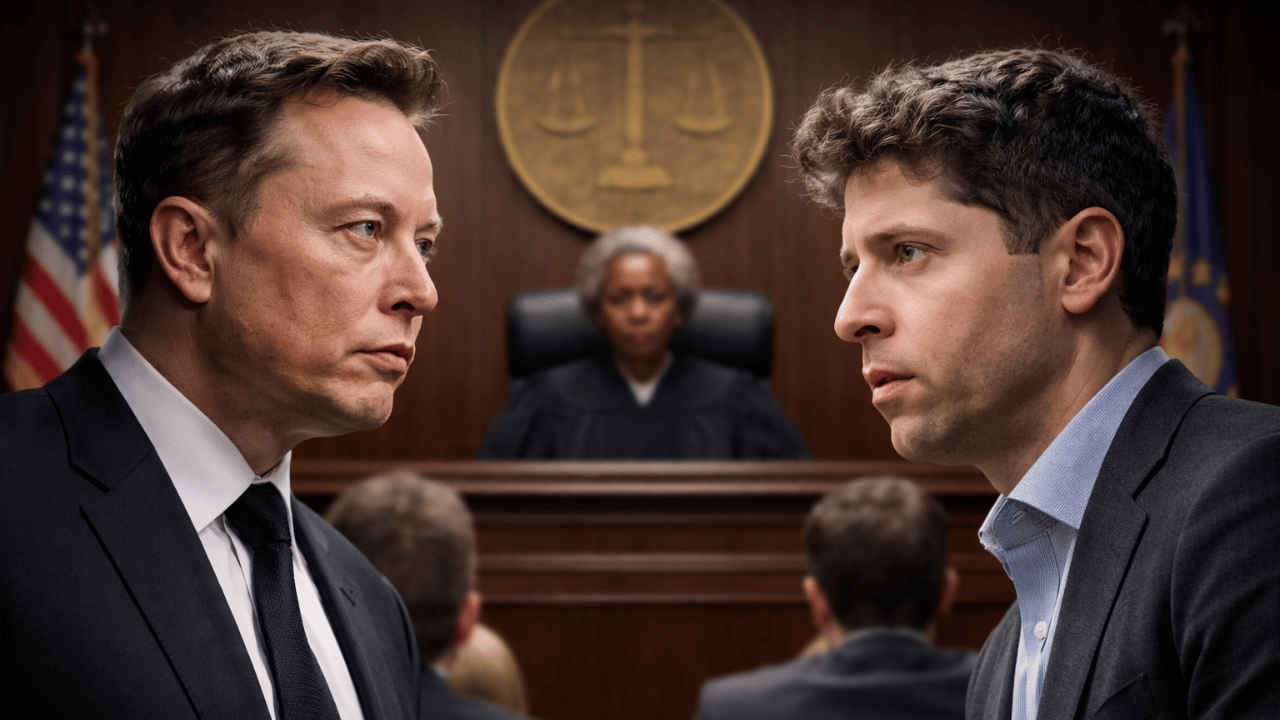

The legal fight between billionaire entrepreneur Elon Musk and artificial intelligence firm OpenAI has reached a decisive stage. A US federal judge in California has signalled that Musk’s lawsuit will not be dismissed and should instead be weighed by a jury. The case centres on Musk’s claim that OpenAI moved away from the nonprofit purpose he originally backed with large donations. While the court acknowledged that the evidence presented so far is not direct, it ruled that the issues raised are serious enough to deserve a full trial. The decision sets the stage for a public courtroom battle involving broken trust, corporate change and the future direction of a major AI organisation.
 Survey
At a hearing in Oakland, US District Judge Yvonne Gonzalez Rogers said Musk had presented sufficient grounds for his fraud and unjust enrichment claims to proceed. She rejected OpenAI’s argument that the case lacked substance, explaining that many disputes of this kind rely on indirect proof and disputed promises. The judge also noted that OpenAI has strong defences but stressed that resolving these competing narratives is the role of a jury. The trial for the case has been set for March 30, 2026.
Also read: Oppo Reno 15 Pro, 15 Pro Mini and 15 launched in India: Check price and specs
Musk was one of the founders of OpenAI in 2015, when the organisation positioned itself as a nonprofit focused on developing artificial intelligence for the benefit of society. He stepped away from the board in 2018. Years later, Musk filed a lawsuit, alleging that OpenAI and its chief executive, Sam Altman, had abandoned the original vision while continuing to accept his financial support. Musk says he contributed around $45 million based on assurances that the nonprofit structure would remain intact.
Also read: Poco M8 5G launched in India: Check price and specs
According to Musk’s lawyers, Altman made promises that OpenAI would not become profit-driven, despite internal changes being underway. They argue that major decisions, including large investments and restructuring plans, were not fully disclosed to Musk. Judge Rogers said a jury could reasonably decide that these alleged assurances mattered and that important information may have been withheld.
Also read: Samsung files patent for unique reversible flip phone design: Here’s what we know
OpenAI has pushed back strongly. The company says Musk knew about possible shifts toward a profit-based model years ago and maintains that its nonprofit arm still holds control. OpenAI has described Musk’s lawsuit as baseless and part of an ongoing effort to interfere with its work. Microsoft, which is also named as a defendant, denies any wrongdoing and says it had no direct agreement with Musk.
Beyond the central dispute, the court is also weighing whether the claims were filed too late. The judge suggested that the question of timing, known as the statute of limitations, could be handled first at trial. If a jury finds the deadline has passed, the rest of the case may never be heard.


