

Blood moon eclipse on September 7: Timing, visibility and key details
 Follow Us
Eclipse visible in India: Delhi, Mumbai, Kolkata, Hyderabad & more.
Red glow from 11:00 PM–12:22 AM IST, lasting 82 minutes.
Caused by Earth’s shadow & Rayleigh scattering, giving copper to crimson hues.
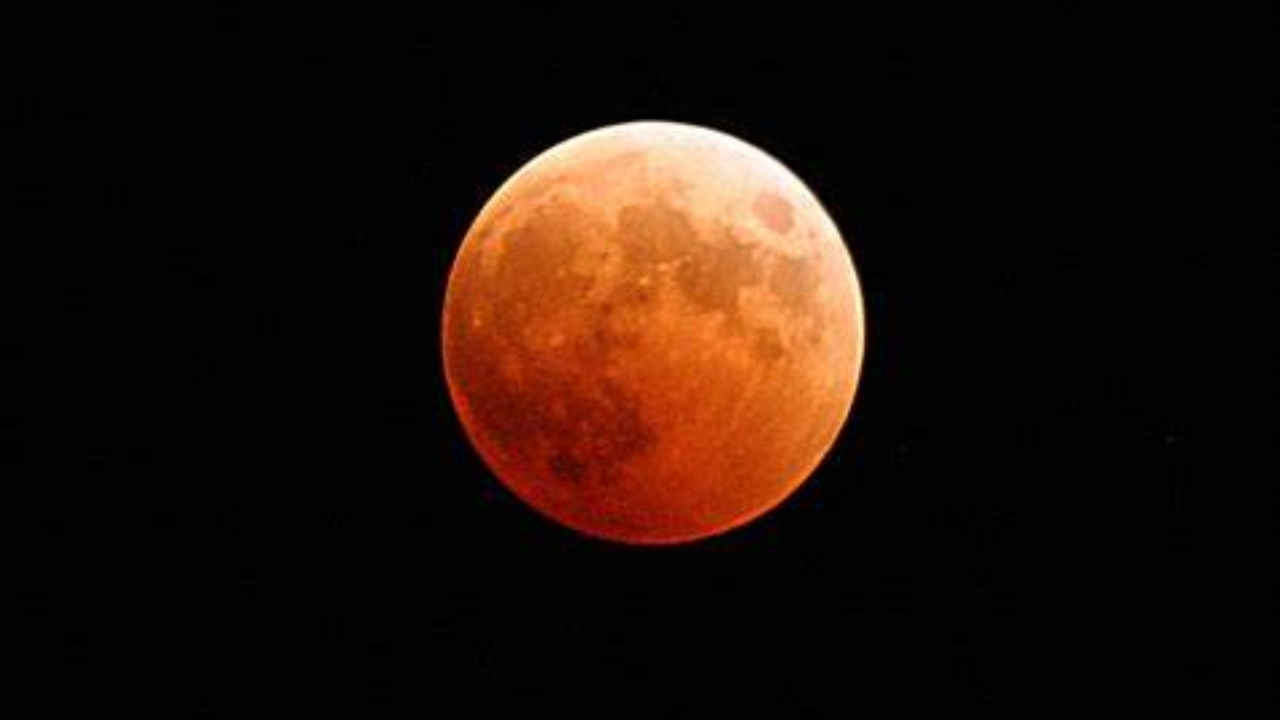

Skywatchers are in for a rare treat this September. On the night of September 7-8, a full lunar eclipse will turn the Moon into a glowing shade of red for more than an hour, offering one of the most striking celestial sights of the year. According to astronomers, the eclipse will last an impressive 82 minutes, making it one of the longest full lunar eclipses in recent times.
 Survey
During the event, the Earth will move directly between the Sun and the Moon, blocking sunlight and casting its shadow on the lunar surface. Instead of disappearing in darkness, the Moon will take on coppery-red hues, a phenomenon known as a “blood moon.”
Blood Moon lunar eclipse: When and where to watch
The eclipse will be visible across Asia, Australia, Africa, and Europe. In India, cities including Delhi, Mumbai, Kolkata, Hyderabad, Lucknow, Pune, and Chandigarh will get a good chance to witness it, provided the skies stay clear.
The celestial show will begin at 8:58 PM IST on September 7 and end at 2:25 AM IST on September 8. The Moon is expected to glow red, between 11:00 PM and 12:22 AM IST, lasting for 82 breathtaking minutes.
Why does the Moon turn red?
A total lunar eclipse happens when the Moon passes through the Earth’s umbra, or darkest shadow. As sunlight filters through Earth’s atmosphere, shorter blue wavelengths scatter away, while longer red and orange wavelengths bend toward the Moon. This effect, known as Rayleigh scattering, causes the lunar surface to turn into a reddish hue due to a natural phenomenon called Rayleigh scattering. This is the same effect that makes sunrises and sunsets glow red.
Also read: Anthropic on using Claude user data for training AI: Privacy policy explained
Interestingly, the exact shade of red varies. Depending on atmospheric conditions like dust, cloud cover, or even volcanic ash, the Moon can appear anything from a soft copper glow to a deep crimson.


