Apple killed the keyboard to give software infinite room to grow.
Reclaiming the keyboard’s space made the modern App Store possible.
They traded tactile buttons for a "glass slab" that shapeshifts.
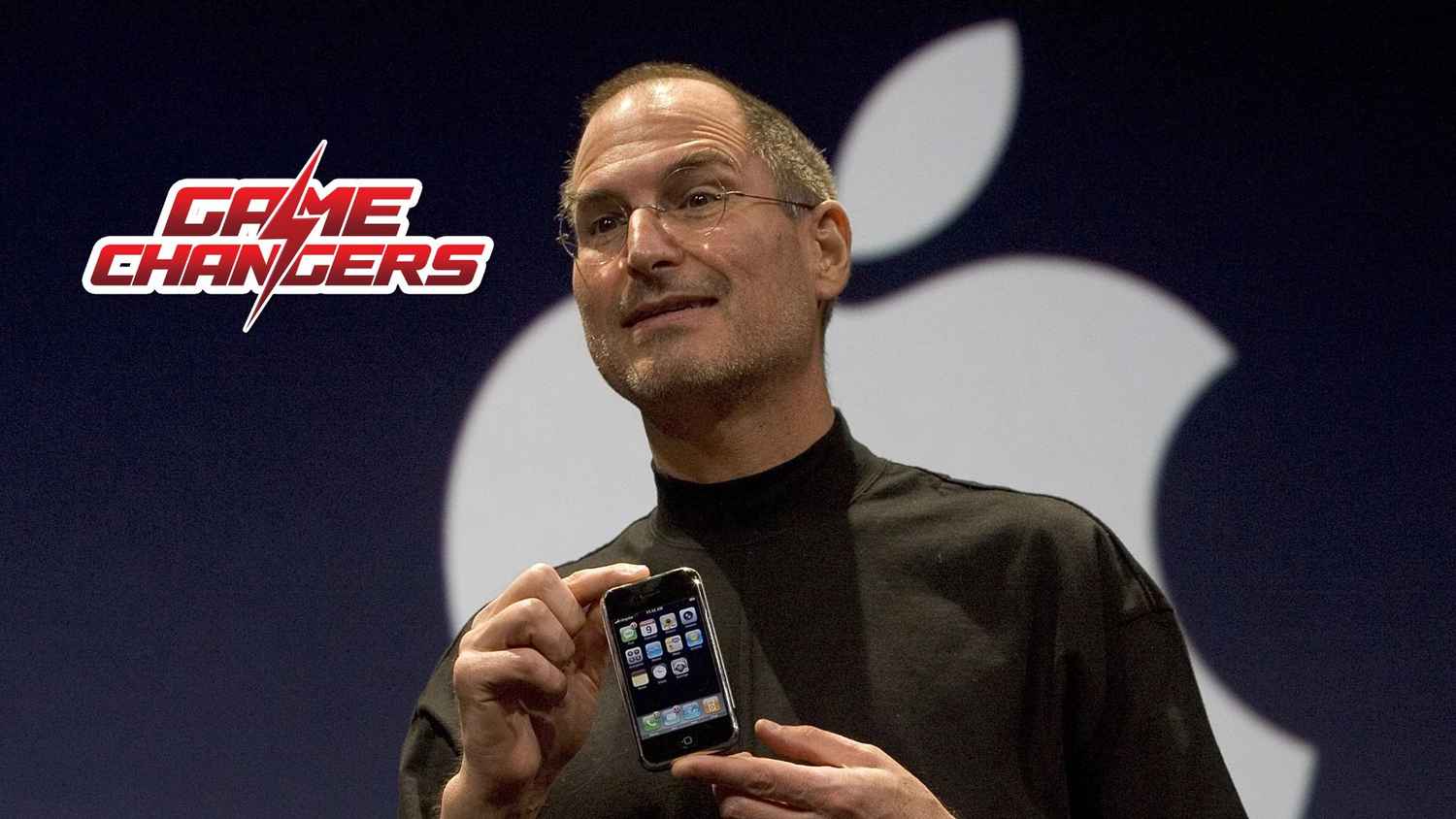
Back in 2007, at the launch of the original iPhone, Steve Jobs said, “Every once in a while, a revolutionary product comes along that changes everything.” And well, safe to say the iPhone really changed the smartphone market, forever.
 Survey
Before Jobs set foot on the Macworld Expo back in the day, all the phones at the time followed a rather simple design. There was a little screen at the front, along with the physical keyboard, taking up most of the space. While this was the industry standard back in the day, it really limited what innovations could be made.


But Apple being Apple, did not want to do the same thing that every other company at the time was doing. Instead, they did something out of the box, playing a very big gamble, by completely ditching the physical keyboard. A decision that was laughed at first by many, but eventually, something that changed the smartphone game forever.
Today, let’s take a detailed look at how Steve Jobs’ boldest move of killing the Physical Keyboard changed smartphones, in our new content series, the Game Changers!
Also Read: DeepSeek to Nano Banana: Top AI highlights of 2025
The “glass slab” smartphone gamble
The concept of a phone launching without a physical keyboard was not something that the world expected to see in 2007. Apple knew it and saw it as a big gamble; that is why they kept the iPhone launch a secret. While smartphones are leaked months before launch these days, that was not the case with the original iPhone.
Only a handful of Apple’s employees were able to interact with the prototype of the original iPhone before its launch. Because the company had put a strict NDA policy in place to ensure no details of the phone leaked outside.
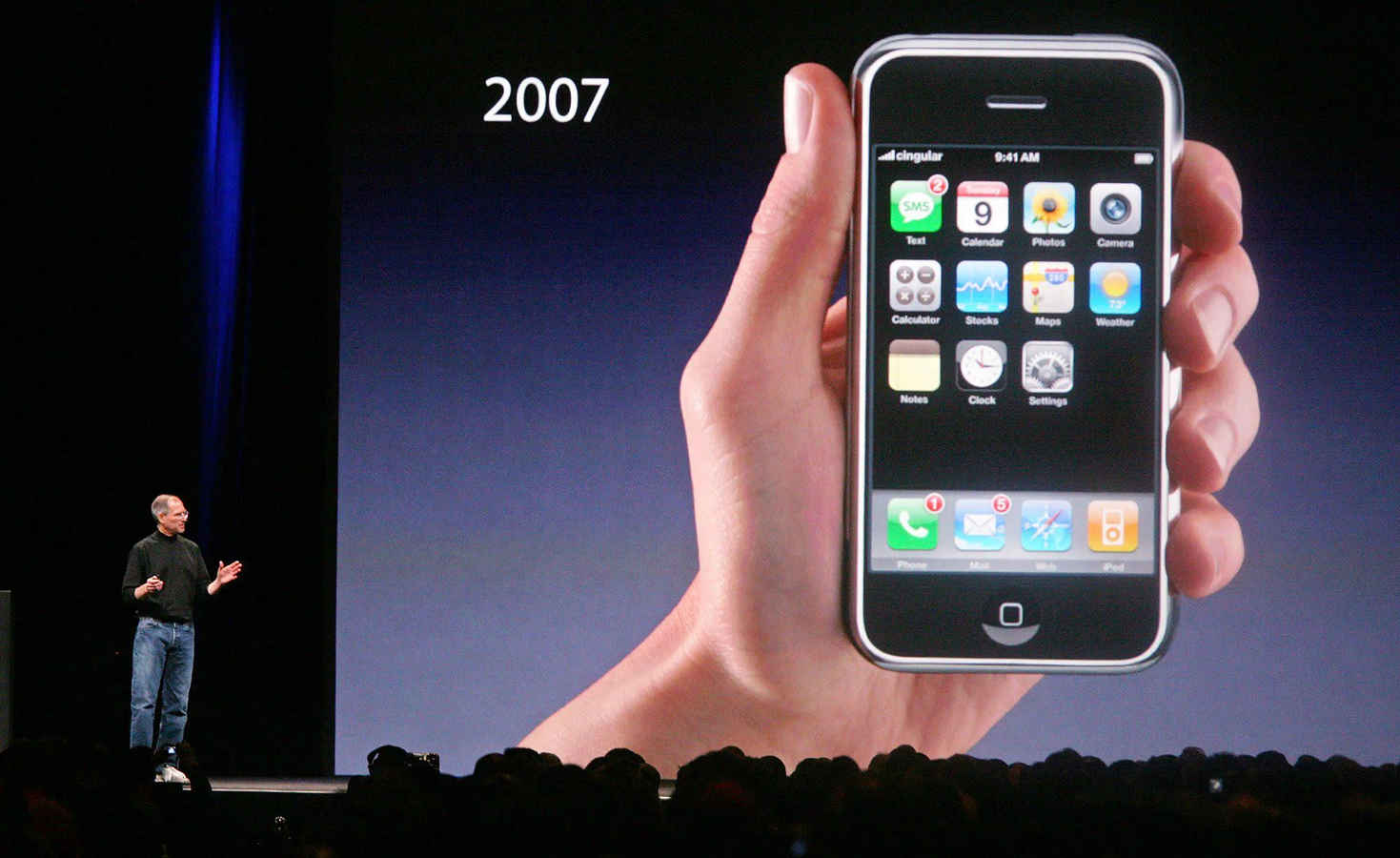
After months of anticipation, the Macworld Expo 2007 Stage was all set for Steve Jobs to finally reveal to the world the iPhone. The room full of Journalists and Media personnel was simply shocked to see a phone without a keyboard. With a single slide at the launch event, Jobs didn’t just introduce a new product; he declared war on every company using physical buttons. He proposed the idea of a “giant screen” that could be anything that the user wants!
The problem that Jobs proposed with physical keyboards was that they were fixed hardware. Whenever something new is planned, after the release of the phone, he found that it was not possible to change the physical hardware.
That’s the reason he wanted the entire world to shift to software. Since it would be possible for them to change the design, even if something new is planned later on. Basically, allowing themselves not to be limited due to the physical hardware of the smartphone.
Glass vs Keypad: War for future of smartphones
Before the launch of the iPhone in 2007, the smartphone market was dominated by all the Nokias, the BlackBerrys, and the Motorolas. All the devices made by these companies were very popular in the market, and they had something in common, which was the presence of a physical keyboard.
Phones with keyboards were a big thing in the early 2000s, and a major reason behind that was the rise of text messaging.
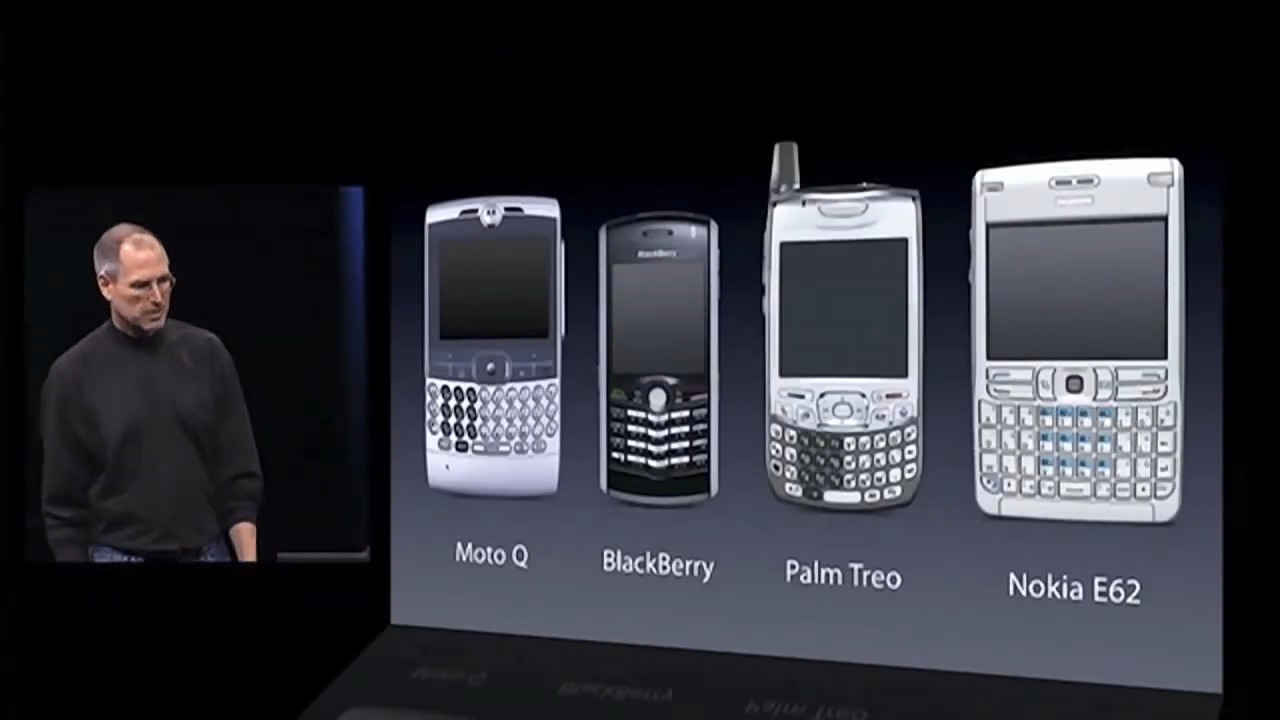
With the entire world being so big on texting, no one could imagine a phone without a physical keyboard at all. After the initial showcase of the iPhone, the world was split into two different opinions. While a large part of the media called the iPhone a revolution, at the same time, competitor brands were sure that the iPhone would never manage to take over. Simply because people were way too used to the feel of a physical keyboard.
The industry reactions included competitor brands like BlackBerry, simply thinking that the entire demo was a lie. They believed the giant 3.5” screen of the iPhone would eat the battery in minutes and that no one could actually type on glass.
Meanwhile, Microsoft’s CEO at the time, Steve Ballmer, famously laughed during an interview, calling it “the most expensive phone in the world” and saying it wouldn’t appeal to business customers because it didn’t have a keyboard.
Jobs’ logic of flexibility
The problem Steve Jobs had with the keyboard was that he didn’t find the keyboard to be flexible; rather, he always found it to be hardware-limited. In his view, a physical button was a permanent commitment for a single function.
By moving the interface into software, Apple wanted the iPhone to have different personalities, so that it could change its entire personality based on the app you were using.
Different apps work differently; by sticking to the same physical keys, developers were overall limited by what they could do on the phone. Even with the keyboard itself, Jobs showed the power of a touchscreen keyboard.
He showed how they could change the keyboard based on the app itself. At the stage demo, he showed the world how the keyboard had added a “.com” button while using Safari, which would never have been possible on a physical keyboard.
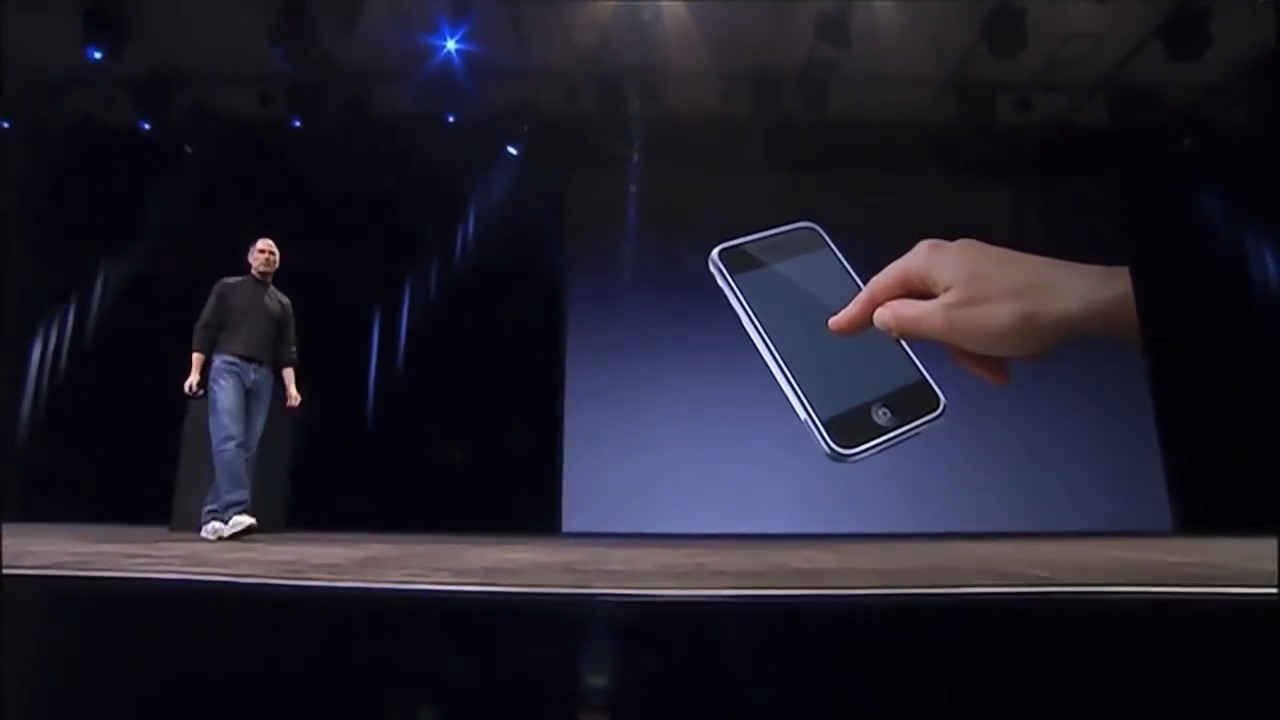
Another reason why the iPhone was more flexible than the rest had majorly been due to the introduction of multi-touch. Before the iPhone, users interacted with the phone through either a stylus or a directional pad with a keyboard. But by killing the keyboard, Apple enabled Direct Manipulation. Using your own fingers felt much more natural.
Jobs famously introduced the multi-touch feature by talking about using our fingers as a touch input! He said, “It’s the most accurate pointing device in the world, and it’s a pointing device we’re all born with”
Overcoming phone users’ muscle memory
Another important aspect that Apple had to overcome with the removal of the keyboard was the muscle memory everyone had formed with their physical keyboards. Due to the rise of texting, everyone at the time became used to physical keyboards.
The raised ridges on a BlackBerry or the tactile “snap” of a Nokia keypad helped users fire off entire paragraphs without ever looking at the keyboard. So, seeing Apple’s decision to kill the physical keyboard, for many, was the equivalent of trying to play a piano with no keys.
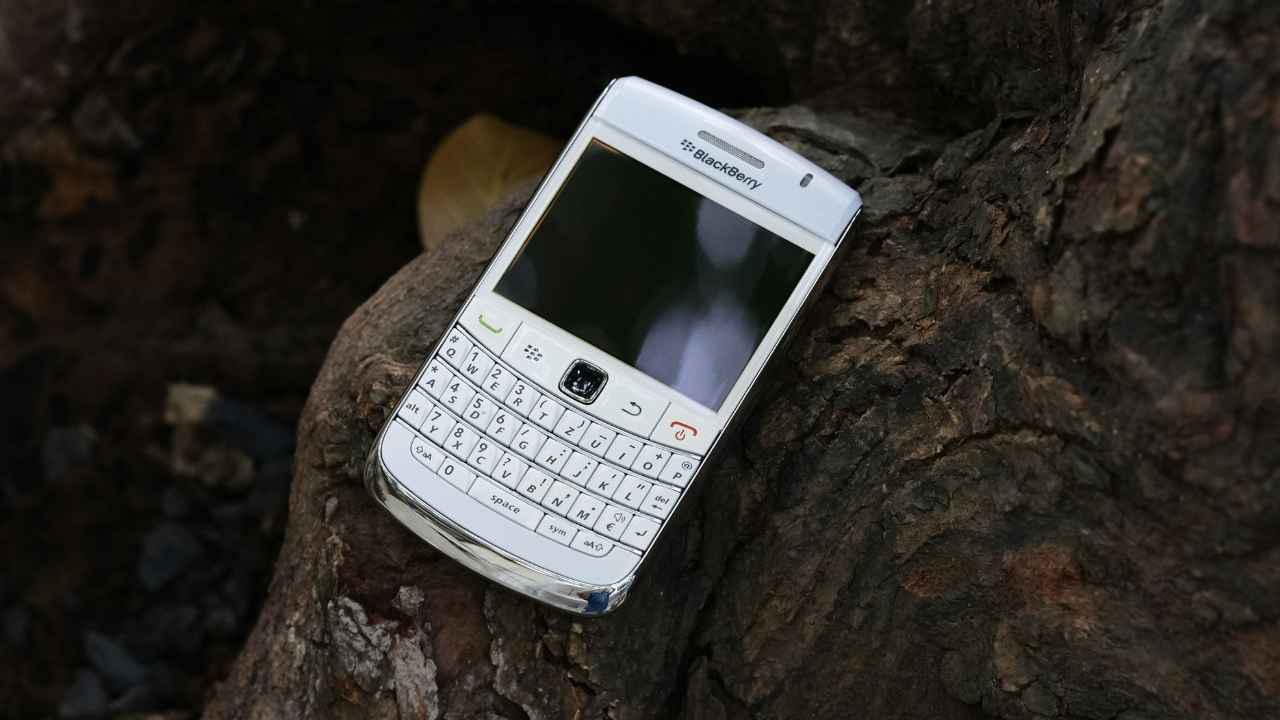
To tackle this muscle memory formed by most, Apple went full-on while designing the keyboard. The keys on the original iPhone had 3D shadows and a “pop-up” animation when touched, which signalled the brain that this is a button you can press. It gave the brain the tactile feedback that the fingers were missing due to the lack of a physical keyboard. The keyboard sound helped a lot during the early days, as it was used to tackle the tactile feedback of the physical keyboard.
Birth of mobile apps and games ecosystem
By killing the physical keyboard, Apple didn’t just leave a hole in the hardware; they created a blank slate, too. Before the iPhone, third-party apps weren’t that big, simply because phones were very limited. But by transforming the phone’s face into a 100% software-controlled surface, Apple gave developers a level of freedom that was impossible before.
To make it simple, on a BlackBerry, a developer was always fighting for space against the plastic keys. But that wasn’t a problem on the iPhone, and that’s because they had access to every single pixel.
While Jobs had first opposed the idea of native apps, thinking web apps would be bigger, he later listened to the developers about the idea of native apps. Due to the tight constraints, during the original iPhone launch, the App Store was introduced later in 2008, with the launch of the first major software update for the iPhone. After its launch, the App Store was simply a revolution, as within the first two months, it had hit over 100 million downloads worldwide.
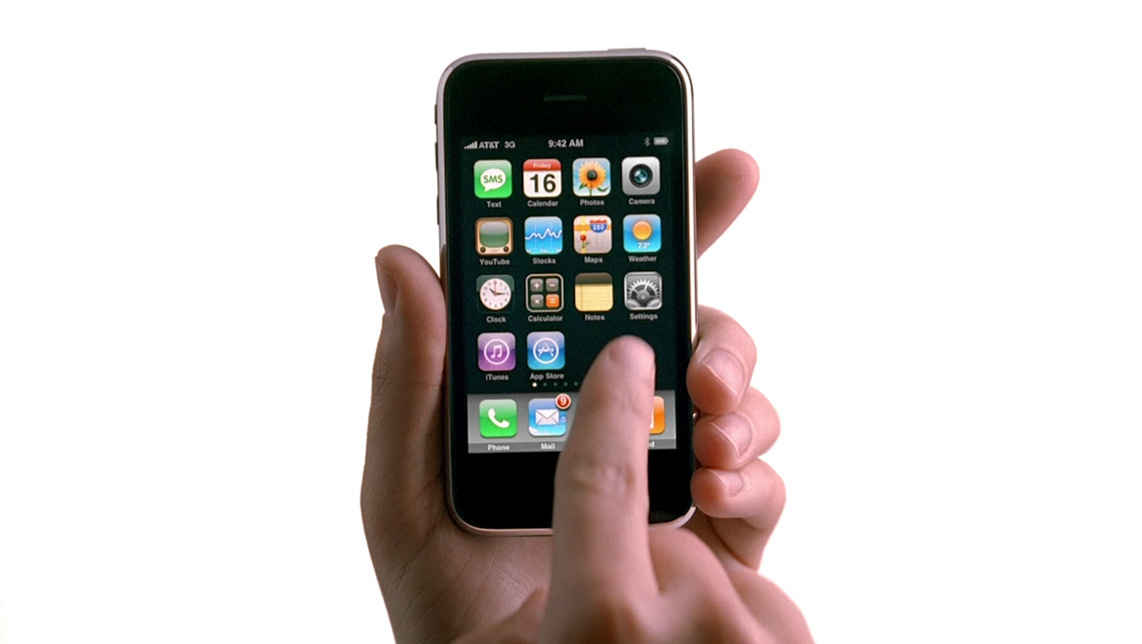
With the birth of apps, gaming on a mobile was possible too. All of a sudden, users weren’t just limited to Snake. Building bigger games like Angry Birds and Temple Run became possible, and that’s because the developers didn’t need a button for a specific function; rather, they made the user pull back on the screen itself for that.
Due to the iPhone supporting both Vertical and Horizontal orientations, developers had the flexibility to target different audiences, with more casual and time-killer games opting for the vertical orientation. While story-focused and entertaining games went for the wide-screen horizontal feel.
Lasting impact on smartphones
Apple didn’t just kill the keyboard to be different; it killed it because it knew that the hardware is a cage, which can only be freed by shifting to software. By moving the keys to the screen, they unlocked the full potential of software to change our lives.
Today, we don’t think twice about typing on glass, pinching a map, or swiping a photo. We live in a world that Apple’s Glass Slab gamble built, a world where the only limit to what our phones can do is the imagination of the people writing the code. This one bold move by Apple really changed smartphones forever.
Also Read: Our favourite gadgets of 2025: Picks from the Digit Team
 Follow Us
Madhav Banka
Madhav works as a Consultant at Digit, covering branded content and feature stories. He has been a part of the Consumer Tech Industry for over 4 years, covering news, features & reviews. While not busy working, you'll usually find him playing video games, or watching films. View Full Profile


