Redmi Note 15 Pro Plus and Note 15 Pro in Digit Test Labs: Most refined Note lineup yet?
 Follow Us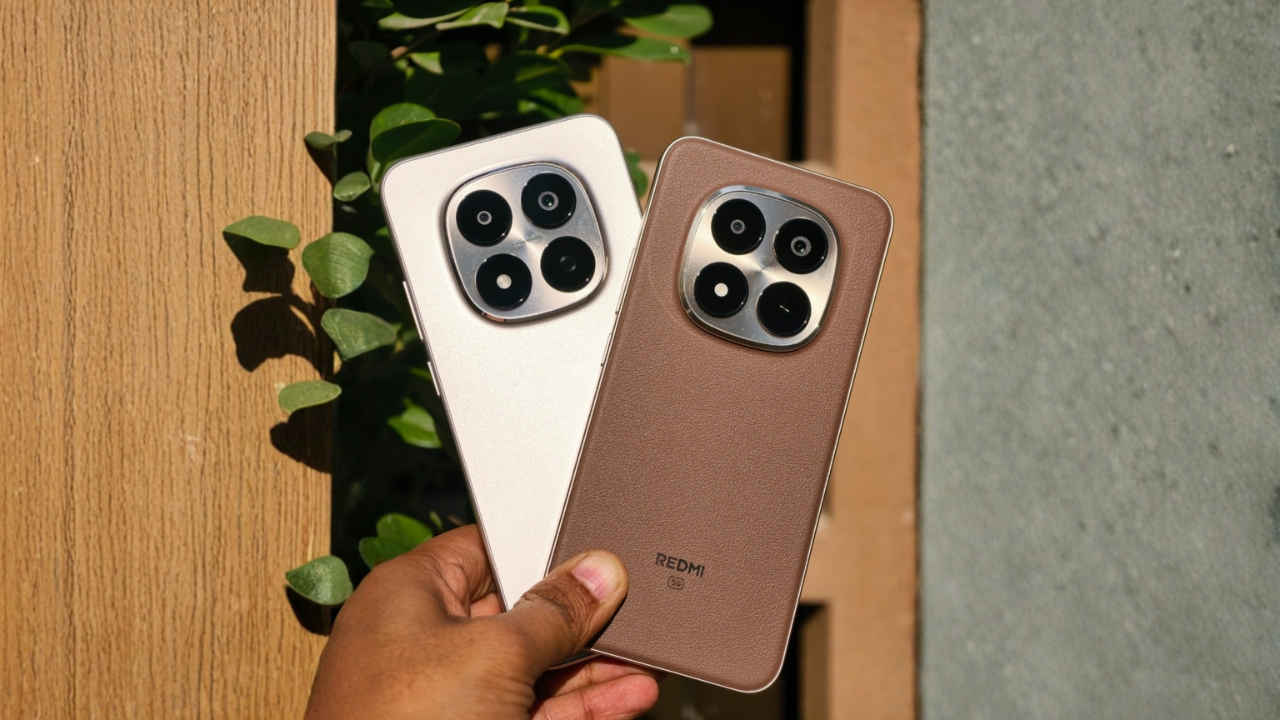

The Redmi Note series has always been Xiaomi’s blue-eyed boy in India. In its decade long journey, Xiaomi has shipped over 460 million+ Redmi Note phones globally out of which 77.5 million have been in India. But in 2026, with the Note 15 Pro series the brand seems less interested in chasing last year’s formula and is more focused on re-examining what a “Pro” Redmi Note phone means in the Indian context. Sitting in Digit Test Labs this week are both the Redmi Note 15 Pro and the Redmi Note 15 Pro+.
 Survey
Both phones look very familiar on paper yet are a result of a fairly aggressive reset compared to last year’s Note 14 Pro series. Xiaomi has pushed harder on durability, battery tech, long term software support and those decisions are backed by data and insights from actual users. You can read all about that in our interview with Xiaomi here.
Over the next few days, we’ll be putting both devices through our full test suite. Before that, here’s an early look at what’s changed, what hasn’t and where these phones now sit in Redmi’s lineup.
Also Read: Redmi Note 15 Pro series and Xiaomi’s strategy to win back India’s mid-premium buyers
Redmi Note 15 Pro Series Pricing and Availability
The Redmi Note 15 Pro starts at Rs 29,999 for the base model with 8GB RAM and 128GB storage and Rs 31,999 for the 256GB storage variant. The Note 15 Pro+ starts at Rs 37,999 for the 8GB+256GB model, Rs 39,999 for the 12GB+256GB storage variant and Rs 43,999 for the 12GB+512GB model. Both phones will go on sale February 4 onwards across Amazon, Mi.com and mainline retail stores.
Design and Display: Bigger and Tougher
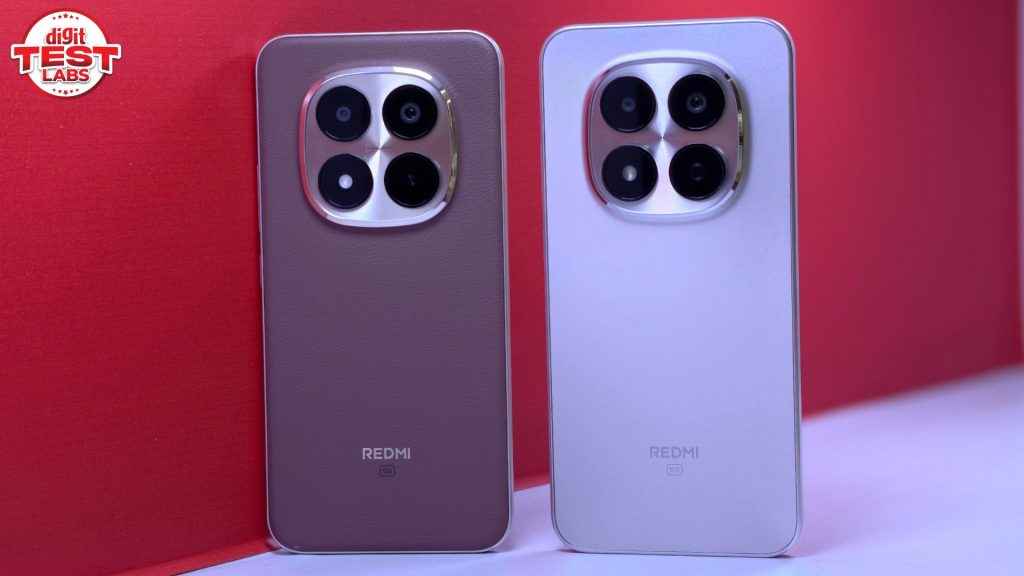
The most immediate visual change across both phones is the display. Redmi has moved decisively to a larger 6.83-inch panel on both the Note 15 Pro and Pro+, stepping up from the 6.6-inch screens on last year’s models. Still there are some obvious differences.
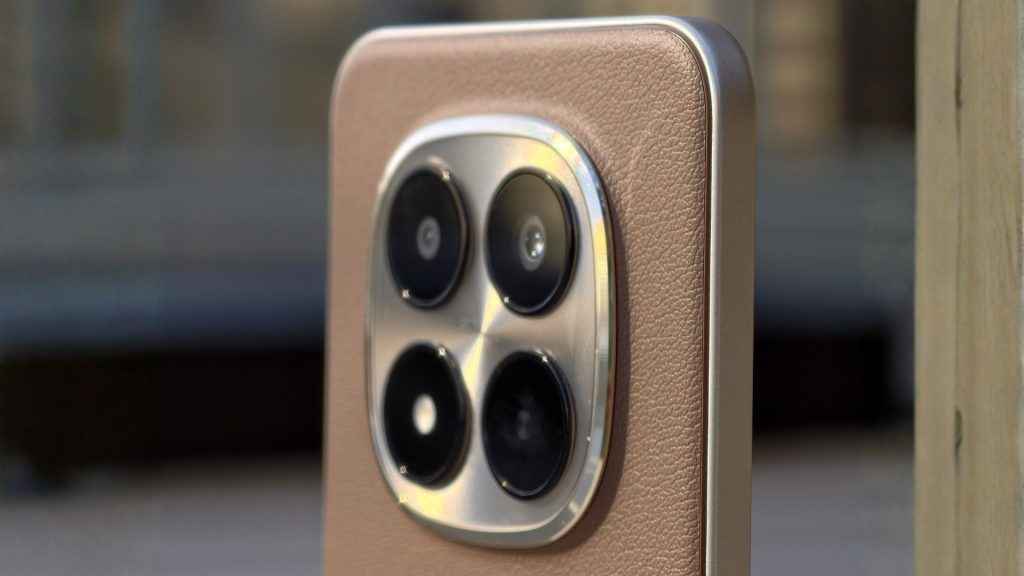
The Note 15 Pro+ features a quad-curved AMOLED panel leaning a bit into flagship-styled aesthetic while the Note 15 Pro goes flat moving away from the curved display on the Note 14 Pro. In both cases, the resolution jumps to 1.5K, peak brightness is rated at up to 3,200 nits and support for HDR10+ and Dolby Vision remains intact. Eye comfort also gets a boost with 3840Hz PWM dimming and TÜV Rheinland certifications carried over and refined.
Durability is another area where the Redmi Note 15 Pro series raises the bar, as both phones now support IP66, IP68, IP69, and IP69K ratings making them some of the most water and dust resistant devices in this segment. Upfront, we get the same Gorilla Glass Victus 2 protection as on the Note 14 Pro lineup.
Despite all of this, both phones are slimmer than their predecessors, with the Pro+ dropping to around 8.1mm and the Pro going even thinner at 7.9mm.
Performance: Two Chips, One Philosophy
The Redmi Note 15 Pro+ is powered by Qualcomm’s Snapdragon 7s Gen 4, while the Note 15 Pro runs on the MediaTek Dimensity 7400-Ultra. Neither SoC is positioned as a flagship chipset, but both are built on 4nm processes and target sustained performance rather than peak benchmark numbers.
What’s more interesting this year is that Xiaomi has replaced the traditional vapor chamber used in the Note 14 Pro series with a new liquid cooling system, branded as IceLoop on the Pro+, which is a first for the Redmi Note lineup. It’s designed to improve heat transfer during extended gaming, streaming and multitasking sessions.
Both phones now start at 8GB RAM as standard, addressing one of the quiet criticisms of last year’s base variants. We’ll be examining closely the performance of both phones in normal usage scenarios rather than on spec sheets alone for our full review which drops soon.
Software and AI Features: Playing the Long Game
Out of the box, both phones run Xiaomi HyperOS 2 and more importantly, come with a significantly improved update promise. Xiaomi has committed to four years of OS updates and six years of security patches, up from three and four years on the Note 14 Pro series. In a segment where longer shelf life is increasingly becoming an important aspect, this is a meaningful upgrade.
AI features are also more tightly integrated this time with Xiaomi HyperAI tools sitting alongside Google Gemini and Circle to Search.
Battery and Charging: Capacity Takes Center Stage
Battery capacity sees a substantial jump on both models. The Redmi Note 15 Pro+ packs a 6,500mAh silicon-carbon battery, while the Note 15 Pro goes even further with a 6,580mAh battery pack, up from 5,500mAh last year. Despite the size increase, both phones remain slimmer, thanks to higher-density battery tech.
Charging speeds differ between the two. The Pro+ steps up to 100W wired charging, overtaking the 90W system on the Note 14 Pro+, while the Note 15 Pro sticks with 45W wired charging, unchanged from its predecessor. Both models now support 22.5W reverse wired charging, a feature that was previously absent on the Pro variant.
Cameras: Fewer Sensors, Higher Ambition
Perhaps the most controversial change lies in the camera setup. Xiaomi has moved away from the triple-camera system seen on the Note 14 Pro+ and simplified the hardware to a 200MP main camera paired with an 8MP ultra-wide sensor on both models. The telephoto lens is gone, replaced by in-sensor zoom and a new 200MP HPE imaging sensor with advanced pixel binning and multi-focal-length processing.
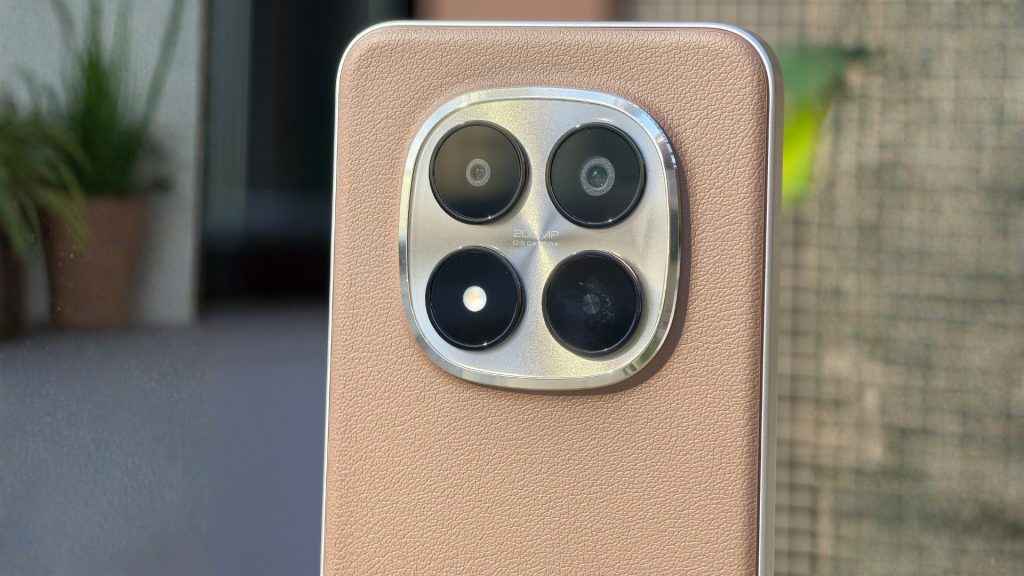
On paper, this is a bold trade-off and you can read why the brand made this decision here. In essence, Xiaomi is betting that improved sensor technology, AI processing and software features like DAG HDR, dynamic shots and enhanced portrait algorithms can compensate for the lack of a dedicated telephoto lens. Selfie cameras also get an upgrade on the Pro+ with a new 32MP front camera, while the Pro retains a 20MP unit.
How well this approach works in daily photography is something we’ll be evaluating extensively in Digit Test Labs, particularly in low light, portrait consistency, and zoom performance.
Early Thoughts
The Redmi Note 15 Pro series doesn’t feel like a routine annual refresh. Instead, it seems Xiaomi’s attempt to reposition the Note lineup as more durable, longer-lasting and more mature, even if that means making selective compromises elsewhere. Bigger batteries, better ingress protection, longer software support and refined cooling suggest a shift toward endurance and reliability rather than usual spec-sheet fireworks.
Whether this strategy pays off will depend on how these phones perform under sustained testing, and how users respond to changes like the simplified camera system. For now, both the Redmi Note 15 Pro and Pro+ are shaping up to be more deliberate upgrades than their predecessors and that alone makes them worth a closer look.
Redmi Note 15 Pro+ vs Redmi Note 14 Pro+: What’s Different?
| Aspect | Redmi Note 15 Pro+ | Redmi Note 14 Pro+ |
|---|---|---|
| Base RAM | 8GB | 6GB |
| Cooling system | New liquid cooling (IceLoop) | Vapour chamber |
| Software updates | 4 years OS + 6 years security | 3 years OS + 4 years security |
| Display size | 6.83-inch | 6.6-inch |
| Display type | Quad-curved AMOLED | Curved AMOLED |
| Resolution | 1.5K | 1.5K |
| Front camera | 32MP | 20MP |
| Rear camera setup | 200MP (HPE) + 8MP ultra-wide | 50MP main + 50MP telephoto + 50MP ultra-wide |
| Telephoto camera | In-sensor zoom | Dedicated telephoto |
| Battery capacity | 6500mAh | 6200mAh |
| Battery tech | Silicon-carbon | Conventional Li-ion |
| Wired charging | 100W | 90W |
| Wireless / reverse charging | 22.5W reverse wired charging | Not supported |
| Water & dust resistance | IP66 / IP68 / IP69 / IP69K | IP68 / IP69 |
| eSIM support | Yes | No |
| Thickness | 8.1mm | 8.8mm |
Redmi Note 15 Pro vs Redmi Note 14 Pro: What’s Different?
| Aspect | Redmi Note 15 Pro | Redmi Note 14 Pro |
|---|---|---|
| Base RAM | 8GB | 6GB |
| Cooling system | New liquid cooling | Vapour chamber |
| Software updates | 4 years OS + 6 years security | 3 years OS + 4 years security |
| Display size | 6.83-inch | 6.6-inch |
| Display type | Flat AMOLED | Curved AMOLED |
| Resolution | 1.5K | 1.5K |
| Rear camera setup | 200MP + 8MP ultra-wide (same as Pro+) | 50MP main + ultra-wide |
| Front camera | 20MP | 20MP |
| Battery capacity | 6580mAh | 5500mAh |
| Battery tech | Silicon-carbon | Conventional Li-ion |
| Wired charging | 45W | 45W |
| Reverse charging | 22.5W reverse wired charging | Not supported |
| Water & dust resistance | IP66 / IP68 / IP69 / IP69K | IP68 / IP69 |
| Thickness | 7.9mm | 8.5mm |