iPhone 17e in Digit Test Labs: Apple’s most accessible iPhone yet, but is it enough?
 Follow Us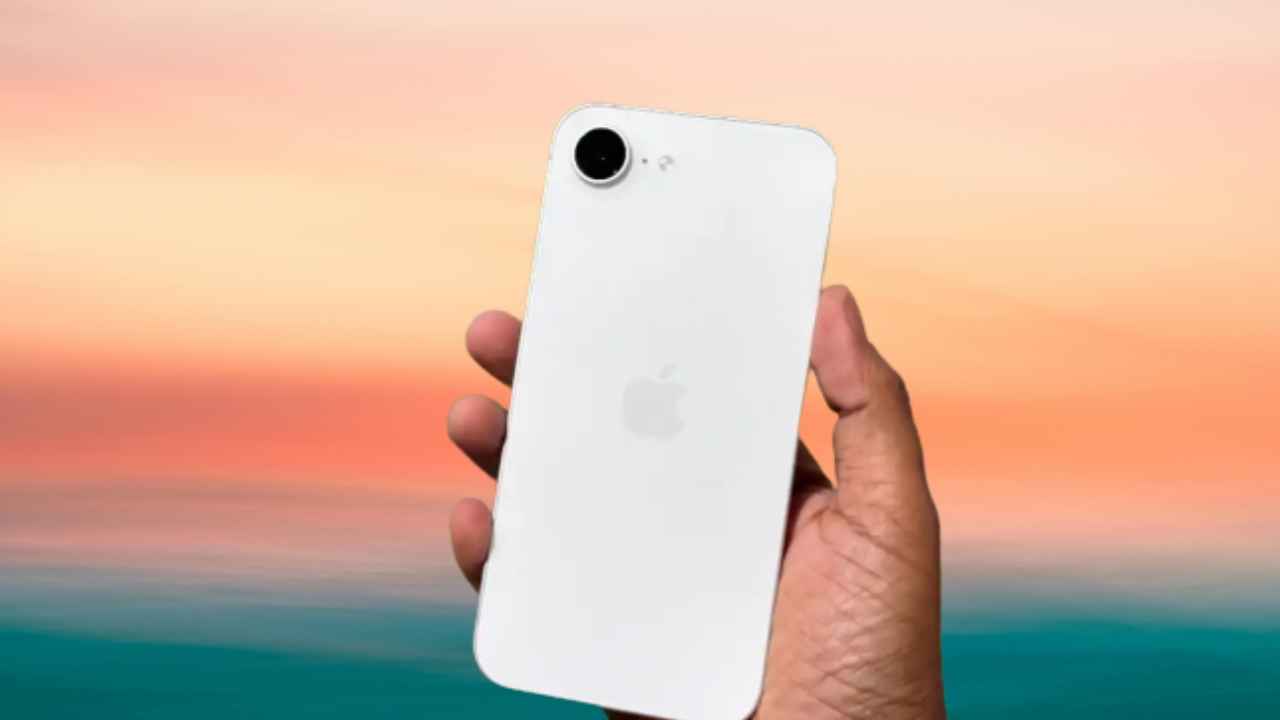

Apple has never explained what the “e” in it’s iPhone e-series actually stands for. Functionally, this lineup has always resorted to giving buyers enough of the Apple experience to feel legitimate while holding back just enough to keep the flagship phones desirable. You could say that the iPhone 16e walked that line with varying degrees of success and now the iPhone 17e is here in Digit Test Labs to make a stronger case this week.
 Survey
At Rs 64,900 for the base 256GB variant, the 17e enters a relatively more competitive price bracket than its predecessor. It also arrives with a few upgrades, most notably the A19 chip, MagSafe support and a new C1X modem. Whether these additions are enough to justify its place in the iPhone 17 (review) lineup or whether the Rs 82,900 standard iPhone 17 makes it look like a compromise dressed up as a value play, is exactly what we’ll be finding out over the coming days. But here’s an early look at what the iPhone 17e brings to the table.
Also Read: Apple MacBook Neo in Digit Test Labs: For the first time Mac users
Design and Build: Familiar and Refined
Pick up the iPhone 17e and there’s very little about it that feels like a step down. It measures 7.8mm and weighs 170 grams making it slightly slimmer and lighter than the standard iPhone 17 and uses the same aluminium frame and glass back construction. Up front, Ceramic Shield 2 offers the same protection Apple claims provides three times better scratch resistance over the previous generation and the IP68 rating covers up to six metres of water immersion for 30 minutes, so there are no compromises on durability.
The 17e comes in three colours, Black, White and Soft Pink. We have the Black unit in the lab, which carries that clean, no-nonsense aesthetic Apple has always done well.
Display: The 60Hz Question
The iPhone 17e uses a 6.1-inch Super Retina XDR OLED panel with a 2532 x 1170 pixels resolution at 460ppi, HDR support and a peak brightness of 1200 nits. While that is the same panel as the one on 16e, the ceiling is a 60Hz refresh rate with no ProMotion and no always-on display functionality.
At Rs 64,900 in 2026, 60Hz is a concession that Android competitors in this price band and well below it simply do not ask buyers to make. Whether Apple’s overall software optimisation makes scrolling and animations feel fluid enough to bridge that gap is something we’ll be evaluating closely, but it’s a real point of friction for buyers upgrading from older iPhones or considering a switch.
The standard iPhone 17’s 6.3-inch LTPO panel with 120Hz and a 3000 nit peak brightness is a meaningfully different experience and the display gap between the two phones is arguably the single biggest reason to consider spending the additional Rs 18,000.
Performance: A19, No Asterisks
The iPhone 17e runs on the same A19 chip that’s built on TSMC’s 3nm process as the rest of the iPhone 17 lineup. The configuration is a hexa-core CPU (2×4.26GHz performance cores, 4×2.60GHz efficiency cores) paired with a 4-core GPU. The standard iPhone 17 gets a 5-core GPU, which gives it a marginal edge in graphics-heavy scenarios, but for day-to-day performance, productivity and most gaming, both phones are operating at the same tier.
You also get 8GB of RAM across both storage options and NVMe storage and that’s exactly the same setup as the 16e. The new C1X modem, Apple claims, it’s up to twice as fast as the C1 modem in the 16e and more power-efficient. Combined with Wi-Fi 6 and Bluetooth 5.3, connectivity is modern and capable, even if it doesn’t quite match the Wi-Fi 7 and Bluetooth 6.0 on the iPhone 17.
Cameras: One Sensor to Rule Them All
The iPhone 17e carries a single 48MP rear camera with f/1.6 aperture, OIS, PDAF capable of 4K Dolby Vision at up to 60fps. That’s the same setup as the 16e, sans the Dolby Vision recording support. It also offers a 2x telephoto crop mode that Apple handles through the sensor itself rather than a dedicated lens. Portrait mode gains an improved image pipeline with post-capture depth adjustment. On the front, a 12MP TrueDepth camera handles selfies and Face ID.
What it doesn’t have is the 48MP ultrawide sensor that the standard iPhone 17 carries. For travel photography, architectural shots or anyone who uses the wider field of view regularly, this is a real limitation. For everyone else including portrait shooters, casual photographers, video creators, the main sensor’s capabilities are strong enough on paper that the missing ultrawide may not sting quite so much. We’ll be testing this extensively across lighting conditions before a final verdict.
Battery and Charging: MagSafe Arrives
The headline upgrade over the 16e is MagSafe. The iPhone 17e now supports MagSafe and Qi2 wireless charging up to 15W which is a meaningful quality-of-life addition for anyone embedded in Apple’s ecosystem of accessories. Wired fast charging can reach 50 percent in approximately 30 minutes.
The battery itself is rated at 4,005mAh which is the same as the 16e and Apple quotes up to 26 hours of video playback. The standard iPhone 17’s 3,692mAh battery with faster 25W MagSafe charging means the 17e actually holds an advantage in raw capacity, even if peak wireless charging speed is lower.
Early Thoughts
The iPhone 17e is a more convincing proposition than the 16e at launch. The A19 chip ensures it doesn’t feel like a generation behind, MagSafe finally brings it into the modern Apple accessory ecosystem and 256GB as the base storage removes a long-standing frustration. At Rs 64,900, it’s asking buyers to make peace with a 60Hz display and a single rear camera and whether those trade-offs are acceptable will depend entirely on what matters most to each buyer.
Our full review will answer the harder questions: how much does 60Hz actually matter in day-to-day use on iOS, how far does that single 48MP sensor stretch across shooting scenarios and does the C1X modem deliver on its efficiency promises in Indian network conditions.
Read More: iPad Air M4 in the Digit Test Labs: Mac muscle in a tablet body