
Common AC problems during monsoon and how to prevent them
 Follow Us

The monsoon season brings some relief from the summer heat, but it also creates some problems for ACs. High humidity and rain make it harder for ACs to work. If not looked after properly, your AC may start giving off bad smells, leak water or stop cooling the room effectively. A little care during the rainy season can help you avoid these issues. Steps like cleaning the filters and using the right cooling mode can improve performance and increase the life of your AC. Keep reading to know the common AC problems that may be caused during the monsoon season and how you can fix them.
 Survey
✅ Thank you for completing the survey!
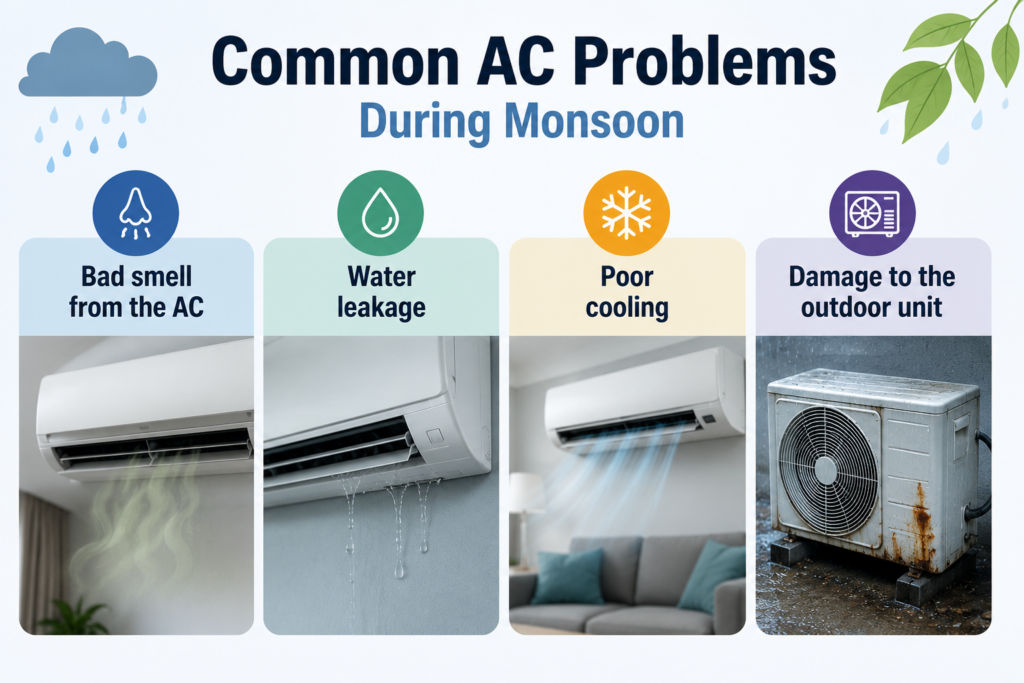
Common AC problems during monsoon
- Bad smell from the AC: If your AC starts giving off an unusual smell, moisture could be the reason. Increased humidity creates the perfect condition for mold and bacteria to grow inside the indoor unit. When you switch on the AC, the smell spreads across the room.
- Water leakage: Water leaking from the indoor unit is another common problem during the rainy season. The AC produces more condensation because of the high moisture in the air. If the drain pipe gets blocked, the water cannot flow out properly. It then starts leaking from the unit.
- Poor cooling: Your AC may not cool the room properly during monsoon. High humidity makes the system work harder. Dirty air filters can make the problem worse by reducing airflow. This also increases electricity use.
- Damage to the outdoor unit: Heavy rain and waterlogging can affect the outdoor unit. Standing water around the unit may lead to rust over time. Moisture near electrical parts can also increase the risk of damage if the unit is not properly protected.
How to prevent these problems
- Use dry mode: Most ACs come with a Dry Mode. This setting removes extra moisture from the air without making the room too cold. It helps reduce humidity and keeps the room comfortable.
- Clean the air filters regularly: Dust and moisture block air filters during monsoon. Clean the filters every 15 to 30 days for good airflow. Clean filters also improve cooling and indoor air quality.
- Keep the drain pipe clear: You should check the AC drain pipe regularly. A clean drain allows water to flow out smoothly and prevents leakage. If you notice frequent blockage, get it cleaned by a professional.
- Protect the outdoor unit: Place the outdoor unit on a raised platform to keep it above standing water. Also, keep the area around it free from leaves and dirt.
- Set the right temperature: You should not keep the AC at very low temperatures. A setting between 24-degree celcius and 26-degree celcius is enough.
Also read: AC vs air cooler: Which is better for humid monsoon weather and why


