
Why India is right to halt WhatsApp’s username feature
 Follow Us
India's MeitY halts WhatsApp username rollout over impersonation and fraud fears
Legal experts cite IT Act, 2021 Rules backing Indian govt's WhatsApp username stance
Telegram precedent shows government's architecture-based enforcement argument holds

Yeah, it’s understandable to blame government overreach at first, when India’s Ministry of Electronics and Information Technology (or MeitY) ordered WhatsApp usernames feature from rolling out in India. But the government’s action is well-grounded, according to cyber experts commenting on the matter.
 Survey
The point of the matter is pretty simple, a reality that’s increasingly commonplace in the country. MeitY’s notice to Meta warns that WhatsApp usernames “may materially increase the incidence of online fraud, phishing, digital arrest scams and impersonation attacks” by allowing bad actors to message victims without prior connection.
The experts I spoke with are all pretty much in agreement that the Indian government isn’t wrong in directing Meta from pausing WhatsApp’s username feature rollout in the country. In fact, the Indian government’s action has sound legal grounding.
Advocate Dr. Prashant Mali, practicing at Bombay High Court and a cyber law expert, framed it as a matter of proportionality. “I feel whether the government response is proportionate to the technical risks should be the question, identity theft being the biggest cybercrime now in the age of AI,” he said. “I think the government’s cautious call is justified.”
Mali’s deeper point is easy to understand. We all know how our phone numbers are deeply linked to our personal identities, with direct privacy implications. “WhatsApp’s username feature significantly improves privacy by allowing users to communicate without revealing their mobile numbers. But the same feature can also weaken an important layer of identity verification that Indian users have unconsciously relied upon for years,” Mali pointed out.
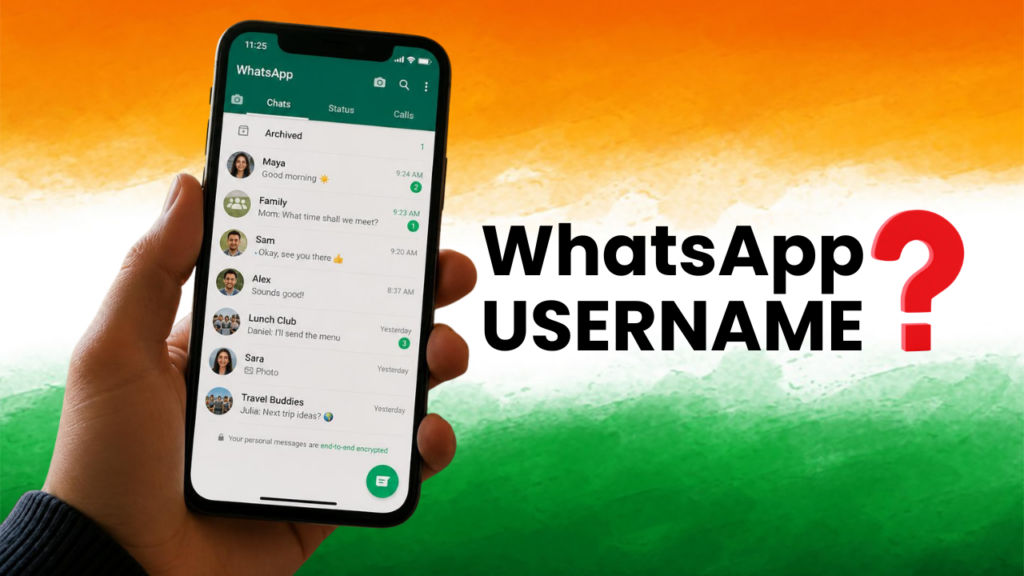
Also read: WhatsApp username row: Meta explains how the feature works after govt raises concerns
In the AI era, Mali warns, the threat compounds much more. “Today, cybercriminals don’t merely copy usernames. They combine AI-generated profile photos, cloned voices, deepfake videos, and convincing conversation styles.” A username, in his view, “becomes only one component of a sophisticated impersonation attack.”
Advocate Dr. Chinmay Bhosale, co-founder of NYAI, echoed Mali’s sentiment. “The apprehension of the Indian government is real. The magnitude of the situation going south is quite significant if such a feature is misused,” Bhosale said.
The danger of misuse extends well beyond high-profile targets, as Bhosale points out how hundreds of millions of Indian WhatsApp users could potentially get impacted. “It’s not just government officials and office bearers being impersonated for scams like digital arrests, extortion of money, etc, but this can very well extend to other day-to-day frauds involving ordinary individuals as well.”
The sheer size of the exposure is what makes India a special case. As one Silicon Valley-based entrepreneur of Indian origin put it, on the condition of anonymity. “The general opinion is that Meta should not relax their phone number requirement for WhatsApp because this will increase the likelihood of misrepresentation, deception, impersonation fraud. This is especially true for India which is the largest market for WhatsApp, with close to a billion users utilizing the platform for payments, business, and commerce, in addition to chat comms. The government is justified in raising the alarm.”
Also read: Why Govt ordered Meta to stop WhatsApp usernames feature: Everything we know so far
Crucially, the government’s position isn’t legally freestanding. Sonam Chandwani, Managing Partner at KS Legal & Associates, located it within the existing statute. “The Government’s concerns are not without legal basis,” she said. “India has witnessed a sharp rise in digital financial crimes where individuals are deceived by accounts appearing to belong to trusted persons or institutions. In that context, the Government is justified in examining whether a feature that permits users to interact without relying on verified phone numbers could unintentionally facilitate such misuse.”
She pointed to the Information Technology Act, 2000, and the Information Technology (Intermediary Guidelines and Digital Media Ethics Code) Rules, 2021 as the framework under which intermediaries are expected to exercise due diligence and prevent misuse.
The Indian government’s action against WhatsApp features also has precedent. This isn’t the government’s first rodeo, as a matter of fact, because just recently – earlier in June 2026 – the Indian government defended its temporary ban on Telegram in the Delhi High Court. How? By suggesting how Telegram (as a social media platform) enables unlawful activity to re-emerge quicker than enforcement can act. In this case, the Solicitor General had specifically highlighted username-based communication that conceals user identities as a cyber risk.
None of the experts I interviewed argued for a permanent ban on WhatsApp username feature, and neither, in fairness, has the Indian government — it has only asked Meta not to proceed until the government completes consultations. Given the stakes involved, it’s only fair, don’t you think?
Also read: WhatsApp vs Indian govt: A brief history of disagreements


