
Sennheiser India at InfoComm: Spectera,TCC M and a market that has outgrown the emerging label
 Follow Us


A few years ago, Petteri Murto had told Digit that India would sit at the centre of Sennheiser’s growth in Asia Pacific. When I met him at InfoComm India, he had earned a small victory lap, and he took it. “I now feel like I was the Nostradamus,” he said. India used to be filed under emerging markets. Murto, who looks after Sennheiser’s business communication sales across the region, says it has moved on to “the next step already.” Naveen Sridhara, who leads the business in India, gave me the ground-level reasons.
 Survey
Also read: How Sennheiser is simplifying pro audio for India’s exploding concert and corporate circuit
Spectera finds a bigger room
Spectera won best of show at NAB, and the obvious audience is stages and broadcasters. Sridhara says the surprise sits elsewhere, in corporate event spaces that hold 3,000, 5,000 or even 10,000 people and answer to CXOs who want gear that is reliable, flexible and easy to use. The handheld mic arriving now fills the last gap, since bodypacks and in-ear monitors were already in the range. Murto reached for a racing line. “We are actually on the starting grid,” he said, with Sennheiser in pole position and redefining wireless transmission again.
A ceiling mic that plays with others
Is TCC M Plus a simple refresh of the older ceiling line? Sridhara says no. Coverage is wider, beam tracking is better, and PartnerLink brings plug and play control with Q-SYS, the first partnership of its kind, with more to follow.
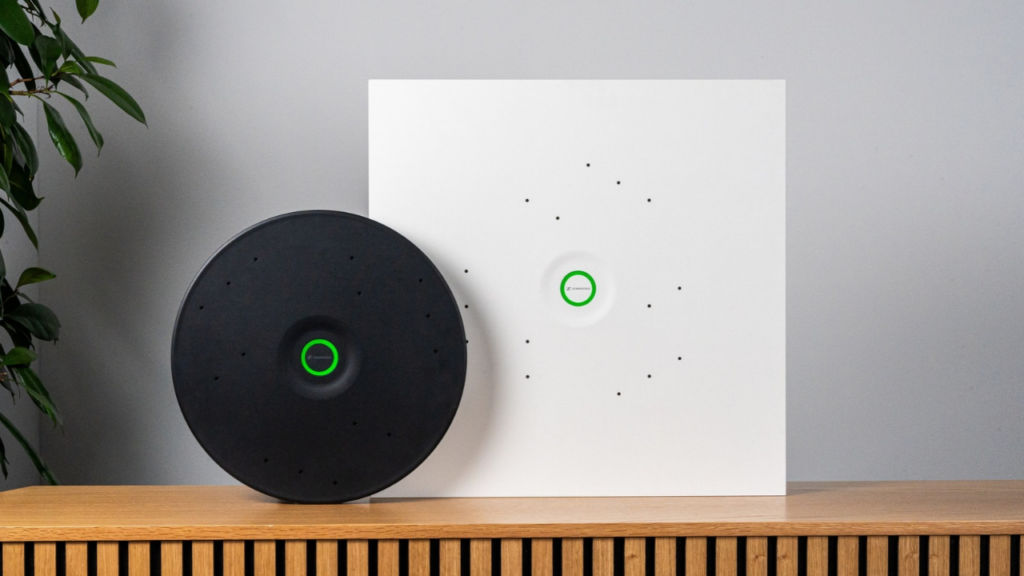
Indian integrators juggle many brands, so does that create friction? He says the customer’s room decides, and Sennheiser works with QSC and Crestron too. Murto sees an industry moving from single products to whole ecosystems, where someone walks in and the lights, the video call and the blinds just work.
Also read: Workday opens its platform to AI agents: Autopilot Agents and Headless Access explained
Software is the real story
This looks like a hardware story. It isn’t. Sridhara says Indian customers want rooms managed from a central location, with entire buildings on one system, for control and privacy. Murto points to TCC 2, which picked up a voice lift option through a software update after launch.
“The investment of the customer is secured,” Sridhara said, because nothing new has to be bought. He added that the bundle starts as a value add but “eventually, this becomes more of a license.”
Offices are paying for experience
Return to office has not dented spending, Murto said, because multinationals still need hybrid calls across continents. Sridhara says Indian firms asking staff to come in at least three days know an ordinary room won’t persuade anyone, so “they’re spending a lot on experience.” Customers refresh their equipment every four to seven years, he said.
Education adds demand, with colleges becoming universities and foreign institutions opening campuses in India. Government spending on convention centres and greenfield projects adds more. “This is not a global thing,” Sridhara said.
Partners, podcasts and deepfakes
Sennheiser sells nothing direct. “We don’t do anything direct,” Sridhara said, and Murto added that this is how the company works worldwide. Podcasting, once outside their plans, now turns up in corporate and education settings. Sridhara called it “a huge market which has opened up for us.”
On AI, Murto talked about security. Sennheiser has software that can tell whether a voice is human or synthetic, and boardroom customers should “rest assured that nobody’s coming to listen to you,” he said. Sridhara said AI sits behind audio quality in the range, in things like beamforming and deepfake detection.
Asked which gap in the lineup he still wants to close, Murto named none. Sennheiser moves only where it can excel in audio, he said. Then he looked ahead. “I want to sit down here in five years from now and see how everything has grown.”
Also read: Microsoft launches new voice agents: MAI-Transcribe-2-Streaming and MAI-Voice-2.1 explained


