
Removing Digital Friction: How OneHP Aims to Fix Modern Workplace Complexity
 Follow Us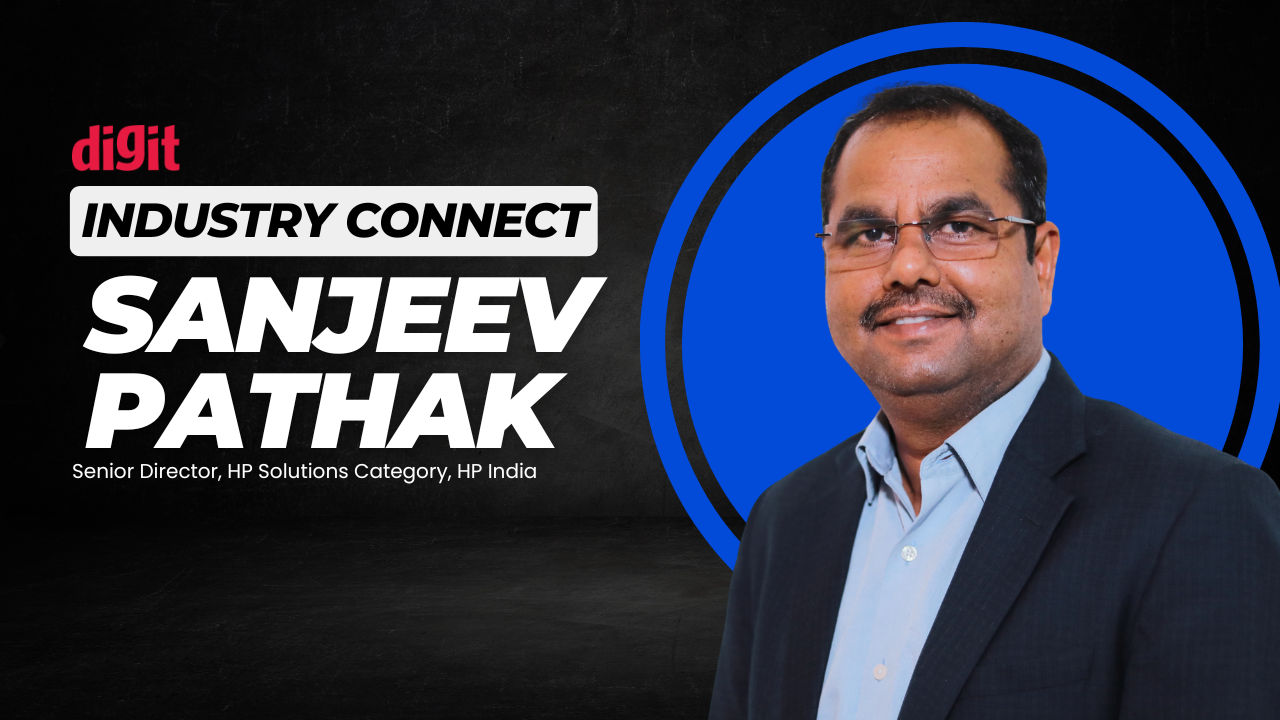

For years, enterprise PC launches were mostly about faster processors, better graphics, thinner designs and longer battery life. Obviously, those things continue to be the key performance and comfort drivers, especially in workstation-class products. However, HP’s latest OneHP showcase points to a broader shift in how the company wants to be seen by enterprise customers. Gone are the days when the underpinning conversation was just about remote management and “Pro” features. All competing brands have the same set of features since they’re sourcing the hardware components from the same set of OEMs. So the value addition is now achieved through the software that interconnects your entire office ecosystem. That way, HP finds itself in a rather advantageous position. They’ve been making PCs for decades, and they also acquired Poly a couple of years ago. Poly, if you’ve not heard of the brand, is more of an enterprise collaboration and communication company. Companies use Poly products for their conference room audio and video gear, for room access and much more. So when the two product families come together, HP ends up being in a position to remove any and all user friction from the mix. It is about putting all of them into one connected workplace stack. HP calls it OneHP.
 Survey
OneHP or One HP is HP’s internal business strategy for a unified technology ecosystem for workplaces. For a long time, if you bought tech from HP, your computers, office printers and video conferencing fear felt as if they were made by completely separate companies with them all having different approaches to the software, different support lines and so on. The OneHP approach ties them all together. Sanjeev Pathak, Senior Director, HP Solutions Category, says OneHP is about “delivering a seamless experience across how people work today, whether they are at home, in the office, or moving between locations.” According to him, enterprise customers no longer want “standalone products or fragmented workflows.” Instead, they want technology that “works together intuitively and helps teams stay productive wherever work happens.”
That ecosystem thinking is now becoming central to HP’s enterprise lineup. HP Z workstations and ZBooks cover the compute side of the equation, especially for AI, engineering, simulation and creative workloads. Poly solutions address the collaboration layer across rooms and hybrid environments. WXP Pro sits on top as the IT and employee experience layer, giving organisations visibility across devices, applications and collaboration systems. WXP Pro is a subscription-based management software that allows companies to see the entire office hardware from a unified dashboard.
“The value of OneHP is that these technologies work together as one connected workflow rather than separate product categories,” Pathak says. He gives the example of an engineer working on complex AI or design workloads on a Z device, collaborating with distributed teams through Poly-enabled environments, while IT teams monitor and optimise that experience through WXP Pro. “One of the biggest challenges enterprises are dealing with today is that work has become far more fragmented,” Pathak says. Employees are working across different devices, applications, collaboration platforms and locations, but the experience is not always consistent. “Something as simple as poor meeting quality, device issues, or application slowdowns can start affecting productivity very quickly.”
For IT teams, this creates a different kind of challenge. They are not only managing endpoint fleets, but also the experience of work itself. According to Pathak, IT teams are dealing with “increasingly complex environments with limited visibility across the ecosystem.” That makes the issue less about any one product category and more about managing the entire work environment at scale. “The core problem we are addressing is the disconnect between how work happens and how technology is managed,” he says. HP’s response is to bring together connected devices, collaboration solutions and workplace intelligence so employees can work more seamlessly while IT teams manage environments more proactively.
Local AI compute is becoming practical
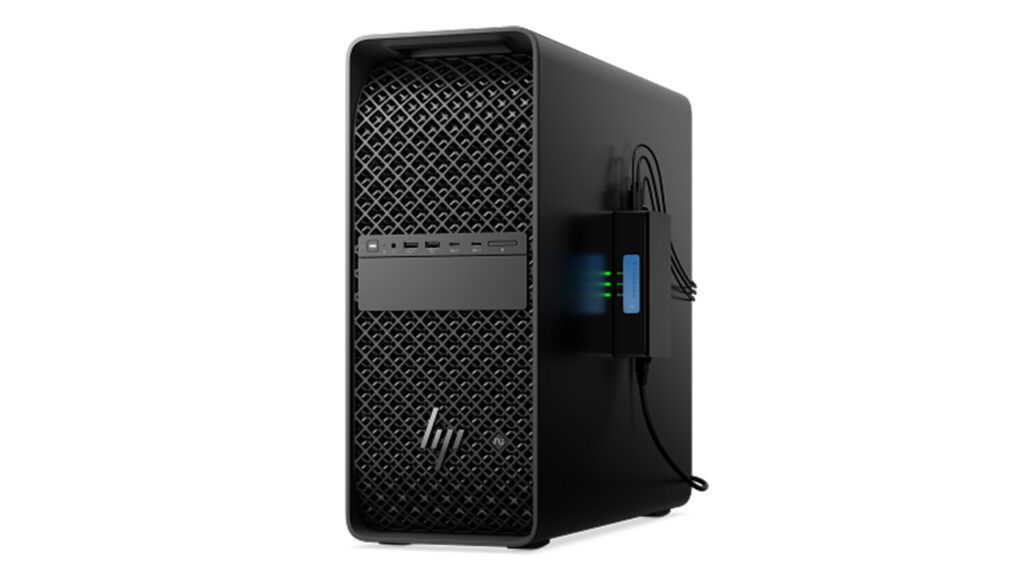
The AI discussion is another major part of HP’s OneHP offereing. The industry conversation around AI PCs has often focused on NPUs and on-device assistants, but HP’s workstation portfolio points to a heavier class of local AI workloads. With systems such as the HP Z8 Fury G6i and HP Z4 G6i, the company is positioning workstation-class compute as a practical requirement for enterprises that want to process larger datasets, iterate faster and work with AI models, simulation, visualisation or real-time analytics closer to where the work is happening.
Pathak says AI adoption is now becoming “much more practical and use-case driven.” Enterprises, he adds, are deciding based on what the workload requires. In manufacturing, for example, AI is being used directly on the shop floor for quality inspection or defect detection, where response time is critical. In retail, companies are using AI closer to customer interaction points for video analytics and personalisation.
“In these scenarios, local AI compute becomes important because latency, responsiveness, and data handling matter a lot,” he says.
The privacy and compliance bit is equally important. HP is seeing interest from healthcare, financial services and legal sectors, where data privacy, compliance and IP protection are major considerations. At the same time, Pathak acknowledges that many enterprises are still figuring out how AI scales across the organisation, especially around governance, workflow integration and moving from pilots to production.
“What is becoming clearer is that the future will be hybrid,” he says. “Some workloads will run locally or at the edge, while the cloud will continue to play an important role for larger-scale training, orchestration, and deployment.” That hybrid view is quite practival because it avoids the simplistic local-versus-cloud framing. HP’s argument is that enterprises will need both. Local compute helps where latency, privacy, responsiveness and cost control matter. Cloud infrastructure remains relevant for scale, training and broader deployment.
The workstation is no longer just for CAD
This changing AI landscape is also expanding the role of the workstation. Traditionally, workstations were associated with CAD, animation, VFX, engineering and architecture. Those remain important markets, but HP says demand is broadening. The recent Unreal 5.8 reveal wherein entire digital worlds can be quickly orchestrated with an AI agent doing most of the heavy lifting is proof of this very concept.
“Workstations are no longer limited to traditional CAD or animation environments,” Pathak says. HP is seeing demand from AI startups, manufacturing companies, media and entertainment studios, research institutions and data science teams that need higher compute capability closer to where work is happening. Pathak says smaller businesses are also showing interest in local compute as they look to optimise AI development costs instead of depending entirely on cloud infrastructure. “The role of the workstation has evolved quite a bit,” he says. “It is increasingly becoming the high-performance compute layer for modern AI and data-intensive workflows, rather than a niche device category.”
The buying criteria are changing as well. HP acknowledges that raw performance still matters, but enterprises increasingly evaluate performance alongside reliability, security, certification and manageability. That matters because these systems are being used for mission-critical work, where compatibility issues, downtime or instability can directly affect output. “The conversation has evolved from ‘What is the fastest machine?’ to ‘What is the most dependable and enterprise-ready platform for long-term deployment?’” Pathak says.
For creative professionals, engineers, architects and data science teams, that means ISV certifications, enterprise-grade security, thermal reliability and fleet manageability are no longer secondary considerations. They are becoming central to the purchase decision.
Mobile workstations get more serious
The ZBook line brings another part of the OneHP ecosystem into focus. The HP ZBook 8 G2i, ZBook 8 G2a and ZBook X G2i represent the portable side of HP’s workstation portfolio, addressing professionals who need to move between office, home, client sites and field environments without relying only on desktop workstations. Pathak says mobile workstations have “evolved quite dramatically” over the last few years. The key change is that professionals now want flexibility without compromising on performance, reliability or security. Advances in processor and graphics efficiency have allowed higher workstation-class performance in thinner designs, while improved thermal engineering has made sustained workloads more practical.
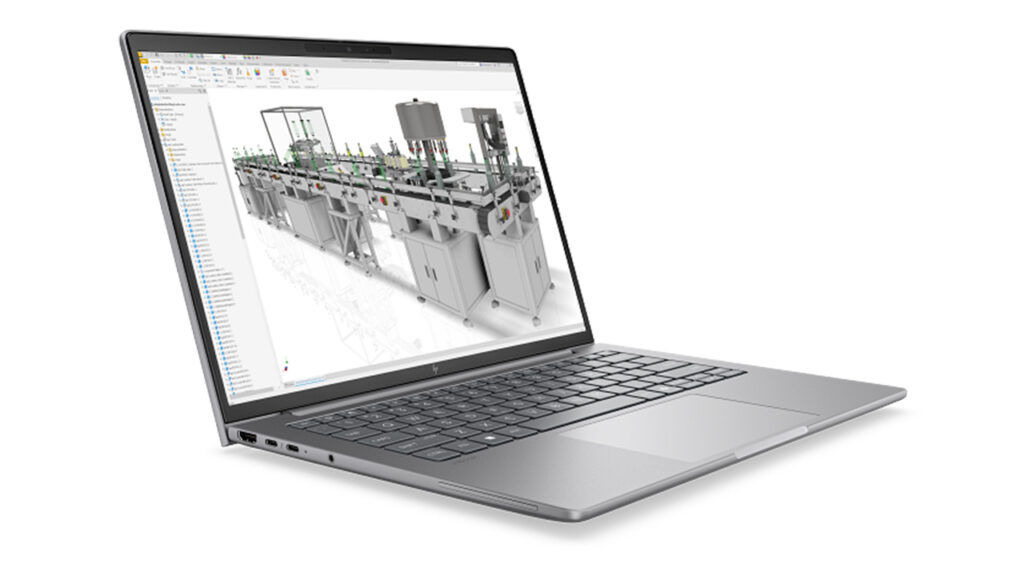
That sustained performance point helps a lot because AI inference, rendering and simulation workloads can run for longer durations than traditional productivity workloads. HP says professionals now expect ISV-certified applications, enterprise-grade security, professional graphics and high memory capacity in mobile form factors because these machines are increasingly being used for mission-critical work.
Platform choice is also becoming more nuanced. With Intel and AMD-based ZBook options in the showcased portfolio, HP says customers typically choose based on workload requirements, application compatibility and how the device fits into the organisation’s existing IT environment. As AI capabilities and NPUs become more important, customers are also evaluating system performance, efficiency, security and the ability to support AI-enabled workflows.
Generative AI is also changing what enterprises expect from workstation hardware. The typical requirements now go beyond CPU and GPU performance in isolation. Pathak says workloads such as local LLMs, AI-assisted design, video generation and large-scale simulation models require higher GPU memory, larger system RAM and faster storage. He also points out that AI workloads tend to run for longer durations compared with traditional compute tasks. That makes sustained thermal performance more important because organisations need consistent output without throttling. Remote access is becoming part of the equation as well, with teams expecting secure access to high-performance workstation environments depending on the workflow and collaboration model.
WXP Pro brings IT into the employee experience story
If Z workstations and ZBooks represent the performance layer, WXP Pro represents the management and experience layer. This is arguably the most important part of the OneHP pitch because it connects the employee experience with IT operations. Pathak says the biggest challenge IT teams face today is “fragmented visibility.” In many cases, IT teams become aware of problems only after employees raise tickets or productivity has already been affected. HP sees the shift moving from reactive troubleshooting to proactive experience management.
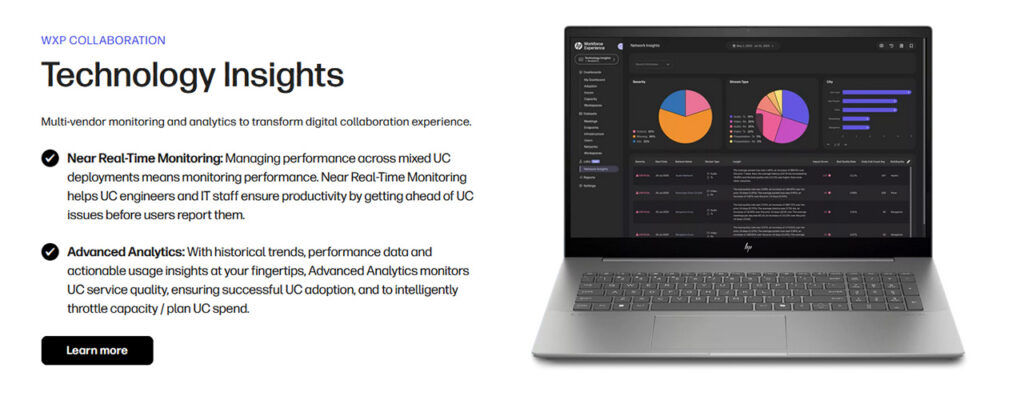
“That’s where solutions like WXP Pro become important,” he says. Enterprises are looking for a unified view across devices, applications, collaboration environments and networks so IT teams can understand what is happening across the digital workplace in near real time and identify issues before they escalate. HP’s use of AI-powered insights is aimed at moving IT teams beyond isolated alerts and manual monitoring. According to Pathak, AI-driven analytics can identify patterns across different layers of the environment, correlate issues more intelligently and help pinpoint the root cause instead of treating individual symptoms separately.
Workflow automation then helps simplify remediation. Rather than relying heavily on manual intervention, IT teams can automate repetitive actions, integrate workflows with existing ITSM platforms and resolve issues faster. Pathak describes the target as reducing “digital friction,” which he defines as the “small but persistent technology issues that interrupt work every day.” That could mean poor meeting quality, application slowdowns, device instability or collaboration disruptions. Individually, these problems may appear minor. At enterprise scale, they affect productivity and employee experience.
Poly tackles the meeting-room problem
The collaboration side of the OneHP ecosystem comes through HP’s Poly portfolio, including the Poly G62 Video Conferencing Solution with A2 Bridge and the Poly Mission Series headset. For many enterprises, hybrid work has matured, but meeting experiences remain inconsistent across rooms, offices and personal setups. Pathak says employees often walk into meeting rooms expecting collaboration to work seamlessly, but are hit by poor audio pickup, uneven room coverage, complicated AV setups and difficult room management. With Poly G62 and A2 Bridge, HP is trying to simplify collaboration infrastructure.
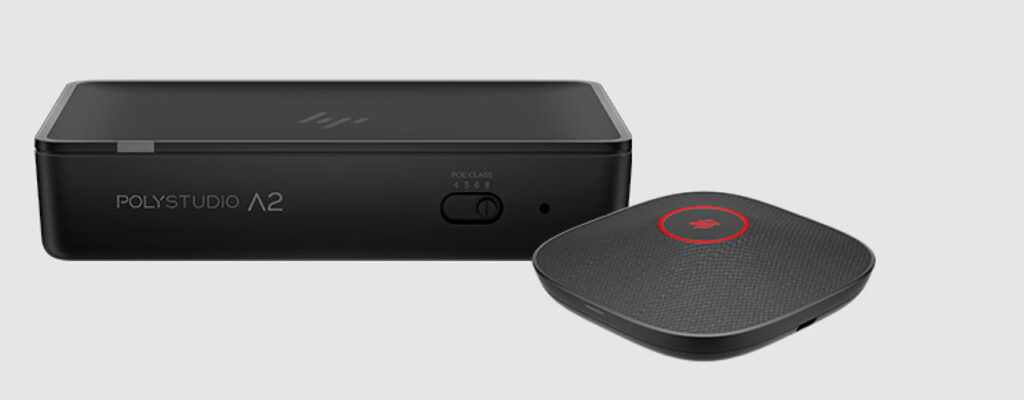
“The idea is to make meeting rooms easier to deploy, easier to manage, and more scalable over time, while also delivering a more reliable and immersive collaboration experience for employees,” he says. The modularity bit is especially relevant for India, where office environments can vary widely. Organisations may have small huddle rooms, branch offices, boardrooms, classrooms, training centres and government deployments, each with different infrastructure and budget requirements.
Pathak says customers want to standardise the collaboration experience without a one-size-fits-all deployment model. A modular approach allows enterprises to invest in phases, adapt rooms based on changing needs and maintain consistency across locations without overinvestment upfront. That same thinking extends to personal audio. The Poly Mission Series headset fits into HP’s broader hybrid work story because professionals now spend a significant part of the workday on calls and virtual meetings. Audio quality, comfort, portability and noise management are no longer accessory-grade considerations.
Pathak says these are no longer “nice-to-have” features because they directly influence productivity, focus and meeting fatigue. The headset, in HP’s framing, becomes part of the enterprise productivity stack rather than a peripheral added at the end of procurement.
A workplace stack, not a product showcase
The strongest takeaway from our conversation with Sanjeev Pathak of HP is that the company wants OneHP to be understood as a workplace architecture. The Z workstations and ZBooks provide compute. Poly provides collaboration. WXP Pro provides visibility and proactive management. Together, HP is trying to create a more consistent workplace experience across locations and roles. However, that does not mean the challenge is simple. Enterprises still have to deal with budgets, procurement silos, legacy infrastructure, security requirements, cloud strategy, software compatibility and employee behaviour. But HP’s argument is that workplace complexity has reached a point where buying isolated products is no longer enough.
For Indian enterprises, that message could resonate strongly. Hybrid work is now a long-term operating model. AI adoption is moving from pilots to practical use cases. IT teams are expected to support more distributed fleets with better visibility. Professionals want performance, mobility and collaboration quality without constantly switching between broken workflows. That is where HP’s OneHP seeks to add value. The products are important, but the bigger pitch is about making work feel less fragmented. In the AI-era enterprise, HP is betting that the winning device strategy will not be about the device alone. It will be about how well every part of the workday connects.


