
Qubo wants to do more than sell security cameras: Here’s what founder Nikhil Rajpal has planned
 Follow Us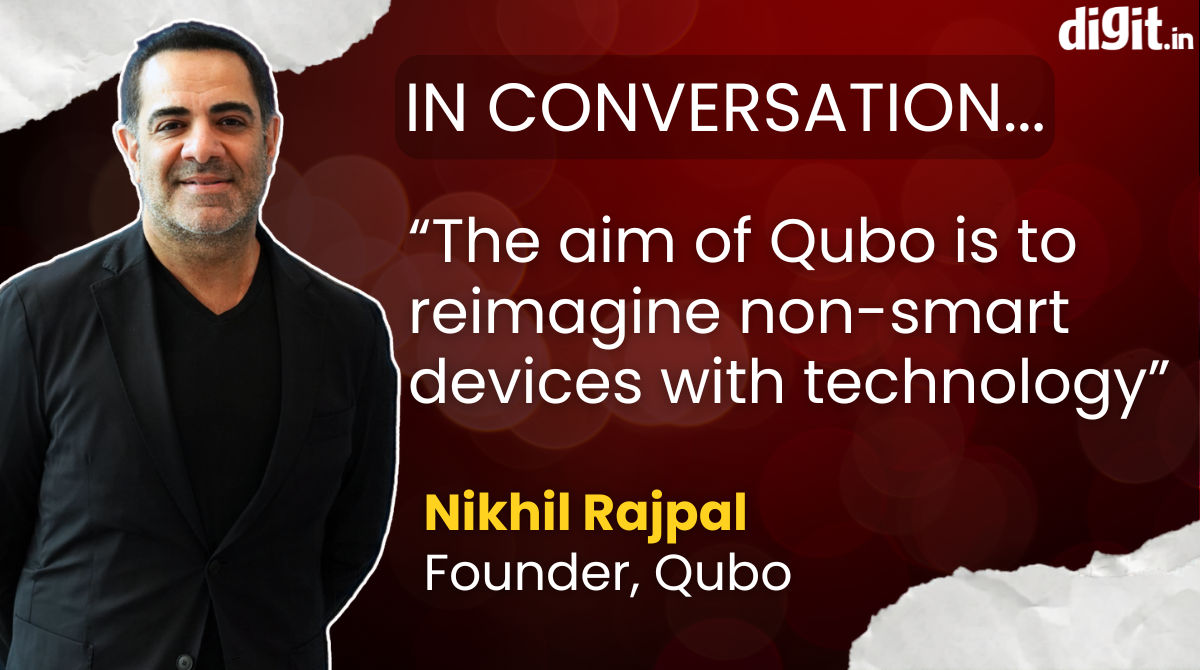

Qubo started with smart security cameras, but the homegrown brand has since expanded into dashcams, smart locks, air purifiers, and other connected devices. The idea, according to founder Nikhil Rajpal, is to use technology to make everyday products more useful. In an interview with Digit, Rajpal discussed how Qubo is approaching AI-powered security, why products designed for Indian homes need to account for different living conditions, and how the company is addressing concerns around data privacy. We also spoke about the challenges of competing with established global brands and Qubo’s plans to expand into international markets. Here are the key excerpts from the conversation.
 Survey
Also read: Qubo Q600: Why you should consider this sub-Rs 15,000 air purifier
Q1. Qubo started out with smart security products, but today, you have a much wider portfolio that includes dashcams, smart locks, and appliances. What drove this expansion, and how do you decide which product categories to enter next?
Nikhil Rajpal: The aim of Qubo is to reimagine non-smart devices with technology, make them better, and change their use cases. When we started, we asked ourselves where we could begin.
Our first big bet was that video would become mainstream, and that video, AI, and connected devices could solve a range of security problems. Naturally, our first major steps were into home security cameras, dashcams, and video doorbells. We are market leaders in all three categories.
We then added other security-related devices, such as smart locks and trackers. Security was our first big bet, and that is where we have established our position.
But why stop there? We are now trying to take the same discipline, product development mindset and expertise that we have built in security and expand into appliances.
Q2. AI is becoming a big part of security cameras and connected devices. Beyond detecting movement or sending alerts, how is Qubo using AI to help people prevent problems rather than simply react to them?
Nikhil Rajpal: When we started Qubo around eight or nine years ago, simply being able to connect a device to Wi-Fi and stream video to an app was a big deal.
Then came features such as distinguishing between people, animals, and general movement, which made alerts more accurate. More recently, we launched a feature called AI Guard. It does not just detect something; it can also act on your behalf.
For example, if an intruder is detected on your balcony at night, the alarm and flashlights can automatically turn on to scare the intruder away. The system can also notify the people you have chosen to receive alerts.
So, it is not just about alerting and recording. It is about active protection.
We are also introducing something new in dashcams. If you have a connected dashcam and, God forbid, you are involved in an accident, the camera can detect the incident and alert the relevant people that an accident has happened.
Q3. Building products for India comes with its own challenges, from different price points to varying internet connectivity and consumer habits. How do you design your products around these realities while keeping the technology reliable and easy to use?
Nikhil Rajpal: I think this is the key reason we built Qubo. We felt that devices designed for Western homes would not necessarily work in India. The homes, family structures, and environments are very different.
Fundamentally, when we build something, we look at the Indian use case. Our homes are often multigenerational, and the same device, for example, may be used by a child, a parent, a grandparent, and domestic help.
Our homes can also be noisier, and we have brick-and-cement construction, where Wi-Fi signals can be weaker than in homes with wooden structures.
All these factors influence our hardware and software choices. They affect decisions such as using larger antennas, bigger speakers, and choosing between AC-powered and battery-powered products.
We build a product around the use case and work backwards to determine what will work best in India.
Q4. As more devices inside our homes collect data and use AI, privacy and security become bigger concerns. How does Qubo ensure that customer data stays safe, and how do you build trust among consumers who may be wary of connected devices?
Nikhil Rajpal: Until last year, there was no standard for this, and all kinds of cameras from our neighbouring country were being sold in India.
This year, the government introduced new STQC standards. We were already using an encrypted video stream, and our data was stored in India on Indian servers.
So, we were already following these practices, but now there are also standards under which we can be certified. In fact, we were the first Wi-Fi camera brand to get certified in India under the new regulations.
We have always had encryption in place, and our servers are in India. Nothing is ever completely safe when hackers are around, but these measures are important.
Q5. Indian consumer technology brands are increasingly looking to compete with established global players. What are the biggest challenges in scaling a homegrown brand like Qubo, and do you see an opportunity to take your products to international markets?
Nikhil Rajpal: I think the problem and the solution are the same. Over time, global brands have built massive scale. As a result, their hardware and components can sometimes cost less to procure.
The answer to that is that India has enough scale for us to build a credible business, comparable to what a smaller country or market in Europe might offer.
But the other answer is that we want to go global. If we can compete with the same players in India, why can’t we compete with them outside India? A few months ago, we launched our dashcams in the Middle East, and hopefully, we will expand into more markets after that.


