
WhatsApp scam alert: Replying No to a message can cost your entire life savings, how to stay safe
 Follow Us
Police warn users about a new WhatsApp banking scam.
Fake messages claim money has been deducted from your bank account.
Avoid replying to unknown messages and check your bank account for suspicious activity.
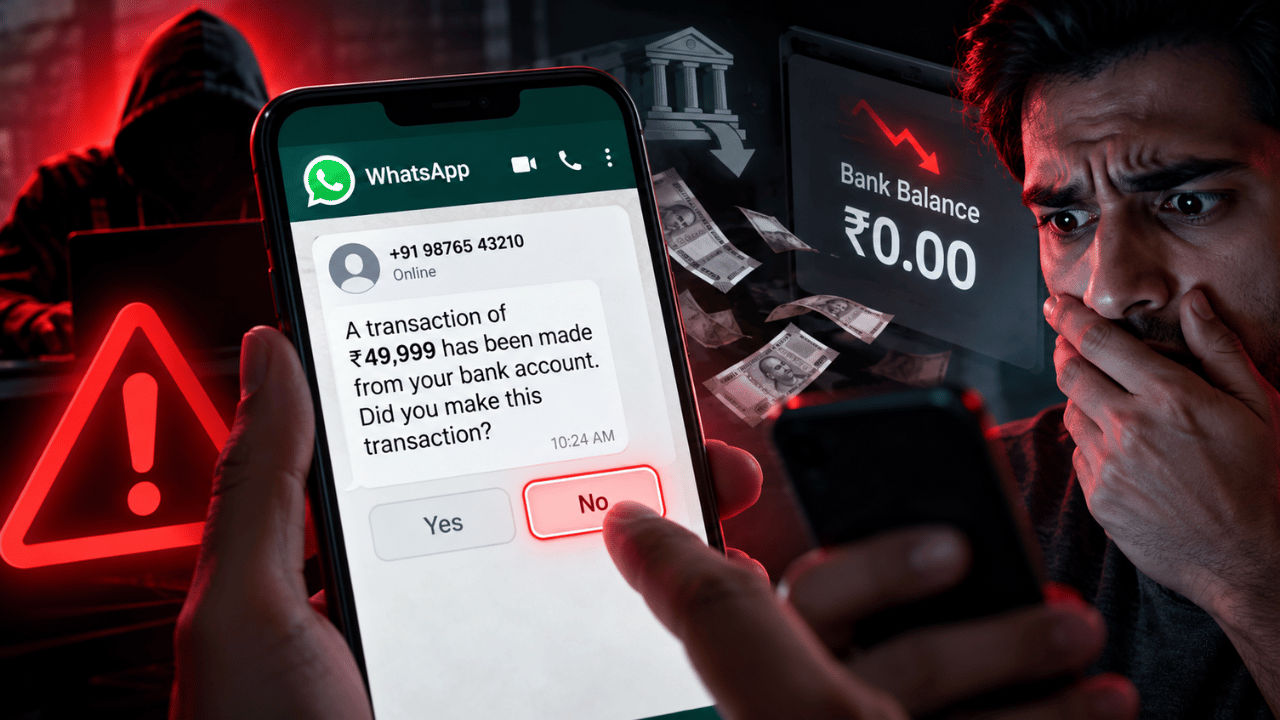

Have you received a WhatsApp message from an unknown number asking you to confirm whether a transaction has taken place from your bank account? The Hyderabad City Police recently warned the citizens not to reply to the message, as it’s a scam, and responding to it can bring your savings at risk. They said that as soon as you reply. No, the message runs a script in the background, and the hackers get access to your device. The authorities also added that a chartered accountant recently lost lakhs of rupees to this scam. Follow along with the article to learn about this new WhatsApp scam and how you can stay safe against it.
 Survey
New WhatsApp scam
The Hyderabad City Police Commissioner, VC Sajjanar, recently warned citizens about a new scam which is taking over WhatsApp. He pointed out that the scammers are sending a message to users via an unknown or international WhatsApp number claiming that a transaction has taken place and money has been deducted from the recipient’s bank account. Towards the end of the message, they ask the recipient to reply ‘NO’ if they did not make the payment.
New WhatsApp scam: How it works
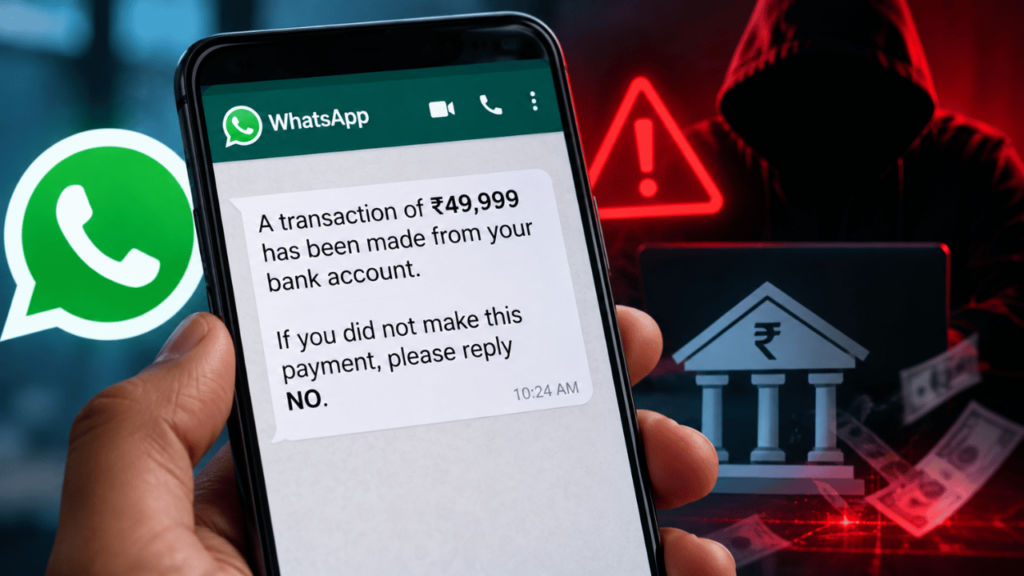
The authorities also clarified how the scam works, as they noted that such messages usually depend on the panic caused by unexpected debit alerts and people responding quickly to such messages without checking whether the message is genuine.
Further explaining how the scam allegedly works, the police said that replying ‘NO’ to the message could trigger what they described as an ‘auto-execution file attack’, in which hidden links or malicious code are purportedly activated without the user clicking on anything. This, they claimed, could allow fraudsters to gain access to the victim’s phone and potentially steal money.
However, it is important to note that replying ‘NO’ alone does not normally give someone control of a phone. The exact technical method behind the reported scam has also not been independently established.
Also read: OpenAI reportedly wants to bring back Sora AI, but not everyone may be able to use it
New WhatsApp scam: How to stay safe
If you’re not sure about how to stay safe against such scams, then let me tell you it’s very easy. First you need to ensure that you don’t respond to such unexpected WhatsApp messages about bank transactions with anything. Not even a simple ‘YES’ or ‘NO’. Furthermore, it’s better if you go ahead and block the sender. You can also go ahead and take screenshots as proof.
Once you do that, then you should go and check your bank account statement for any transactions you did not initiate. You should also check for subscriptions on your credit card. If you suspect a fraud, then contact your bank using the official customer care number listed on your passbook or bank card. You can also visit your nearest branch of the bank. The faster you move, the more chances you have to get your stolen money back.


