
NVIDIA at CES 2026: When AI learned to finally touch physical reality
 Follow Us
NVIDIA signals the end of stateless, one-shot artificial intelligence
Rubin and BlueField reshape AI economics, memory and scale
Physical AI moves from demos to real-world deployment says NVIDIA

For a few years, and definitely since the ChatGPT moment at the end of 2022, the AI world has been largely obsessed with tuning up intelligence. Bigger models with more parameters trying to perform better on industry benchmarks every few months. But at CES 2026, NVIDIA raised the stakes with a whole new argument – that intelligence alone is useless if it can’t reason, remember, and act safely in the real world.
 Survey
And hence, what NVIDIA unveiled in Las Vegas wasn’t just a collection of disconnected launches. To me, it felt like a carefully thought out, deliberately interlocked blueprint of the AI roadmap that shows us what comes after chatbots – a question many have started to wonder about. According to NVIDIA, the next big thing in tech is a world of agentic AI, physical machines, and infrastructure built not just for speed, but better reasoning, with safety built in and deployed at scale.
And at the centre of this shift sits Rubin, NVIDIA’s next big AI chip platform.
Rubin isn’t a chip, it’s a reset says NVIDIA
NVIDIA’s Rubin platform is being pitched as “six chips, one AI supercomputer,” but frankly that undersells what’s happening under the hood. Rubin is NVIDIA openly declaring that the future of AI performance no longer lives inside a single processor.
By co-designing the Vera CPU, Rubin GPU, NVLink 6, ConnectX-9, BlueField-4 and Spectrum-6 Ethernet as one tightly coupled system, NVIDIA claims the Rubin platform delivers up to 10x reduction in inference token cost and 4x reduction in number of GPUs to train MoE models, compared with the NVIDIA Blackwell platform. So for the industry worried with the escalating cost of AI, NVIDIA is presenting more performance at lower costs – at least on paper for now.
Also read: Demis Hassabis says AI-led robot revolution is unfolding right now, here’s why
This matters because the industry has quietly hit a wall. Reasoning models, long-context systems and agentic workflows don’t just want more FLOPS – they want cheaper FLOPS, predictable scaling and infrastructure that doesn’t collapse under its own complexity. Rubin is NVIDIA’s answer to all that and more.
And the industry has noticed. Every major AI lab, hyperscaler and cloud platform worth mentioning – from OpenAI and Anthropic to Microsoft, Google, AWS and CoreWeave – has already lined up behind Rubin for 2026 deployments, according to NVIDIA.
Memory is the new AI bottleneck
If Rubin is about compute economics, BlueField-4 is about something even more fundamental: memory.
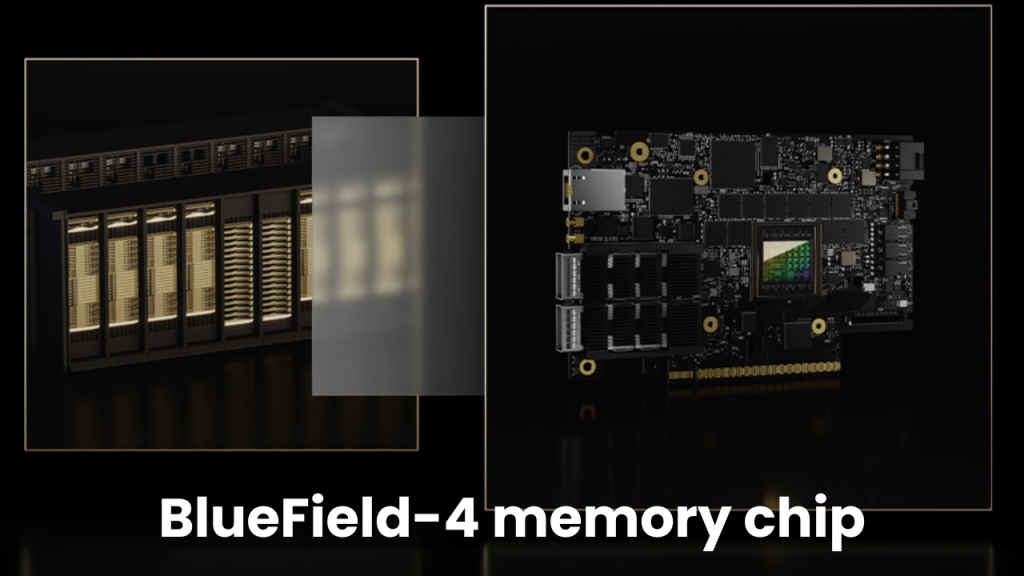
Because here’s the thing, the AI world has operated on the assumption that AI inference (the stage immediately after training an AI on anything) treats every interaction like a fresh start. But agentic AI throws that notion out the window. Because to be actually useful, modern agents need to carry ‘baggage’ – they need to retain context across multiple turns, distinct tools, users, and even massive compute clusters.
As things stand right now, all that context lives in Key-Value (KV) caches, forcing GPUs to hold onto it. And frankly, that is a massive misuse of silicon. GPUs are high-performance engines built for speed, not storage lockers. Using them to park long-term memory isn’t just inefficient; it’s like buying a Ferrari just to use the boot as a filing cabinet.
NVIDIA’s Inference Context Memory Storage Platform, powered by BlueField-4, moves that memory out of GPUs and into a shared, AI-native storage layer. The pitch is simple but game changing – persistent memory for AI agents, shared at rack scale, delivered with up to 5x higher throughput and 5x better power efficiency than traditional storage.
This is NVIDIA quietly redefining storage as part of cognition. Memory is no longer a byproduct of inference – it’s a first-class design constraint. And BlueField-4 is NVIDIA’s solution to this problem before it becomes too big to manage.
Physical AI is no longer a science project
Beyond all the smarter datacenter tech that will power AI factories of tomorrow, NVIDIA is also dragging AI out of the screen and into the physical world.
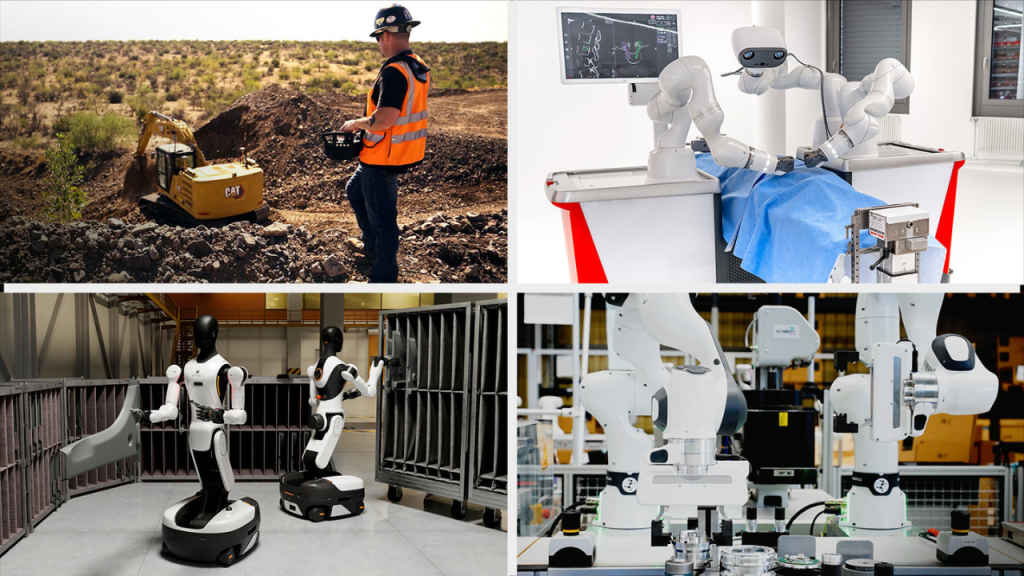
The company’s physical AI announcements – Cosmos world models, GR00T humanoid models, Isaac Lab-Arena and the OSMO orchestration framework – are less about flashy robots and more about reducing friction. Training robots has traditionally been slow and brutally expensive. NVIDIA wants it to look more like modern software development.
Also read: From fields to fridges: Physical AI takes center stage as CES 2026 kicks off
Also read: Robots are the next wave of AI, says Nvidia CEO: Check details
The proof of this begins with partners, as NVIDIA demonstrated at CES 2026. Boston Dynamics, Caterpillar, LG Electronics and NEURA Robotics aren’t experimenting anymore – they’re shipping machines built on NVIDIA’s stack. And by integrating its models directly into Hugging Face’s LeRobot ecosystem, NVIDIA is betting that scale, not secrecy, will ultimately prove decisive in taming future robotics applications.
Autonomous vehicles learn to think aloud
Autonomous driving remains the most unforgiving test of physical AI, and NVIDIA knows it. And its Alpamayo models are trying to attack the industry’s longest-running problem: the “long tail” of rare, ambiguous driving scenarios.
Instead of relying purely on perception, Alpamayo introduces chain-of-thought vision-language-action (VLA) models that explicitly reason about cause and effect – and, crucially, can explain their decisions to users. Paired with open datasets and simulation tools, Alpamayo acts as a teacher model that AV developers can distill into production systems. Because as NVIDIA put it, Uber, JLR and Lucid aren’t chasing novelty here – they’re ultimately chasing safety and trust.
NVIDIA at CES 2026 in a nutshell
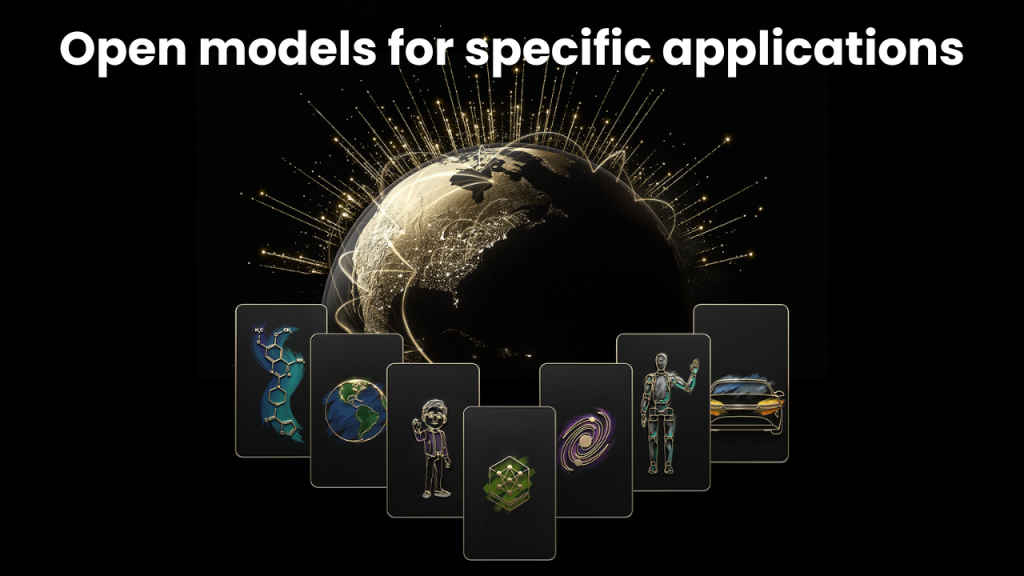
Strip away the product names and CES theatrics, and NVIDIA’s message becomes clear. Rubin makes reasoning affordable. BlueField-4 makes memory scalable. Cosmos and GR00T make machines adaptable. Alpamayo makes autonomy explainable. Spectrum-X and confidential computing make it all deployable in the real world.
“The ChatGPT moment for physical AI is here,” said Jensen Huang. The era of stateless, one-shot AI is over. The next phase of AI doesn’t just answer questions. It remembers what it did yesterday, reasons about what might happen tomorrow, and acts – sometimes in traffic, sometimes in factories, sometimes in hospitals.
Also read: NVIDIA CEO believes Tesla’s Optimus robot will unlock multi-trillion dollar market


