

Mark Zuckerberg’s Meta AI dream team is breaking, with exits from Superintelligence Lab
 Follow Us
Meta's Superintelligence Lab sees major exits despite lucrative hiring spree
Departures highlight internal tensions, compensation gaps, and cultural mismatches
Zuckerberg's AGI push faces early setbacks amid talent retention challenges
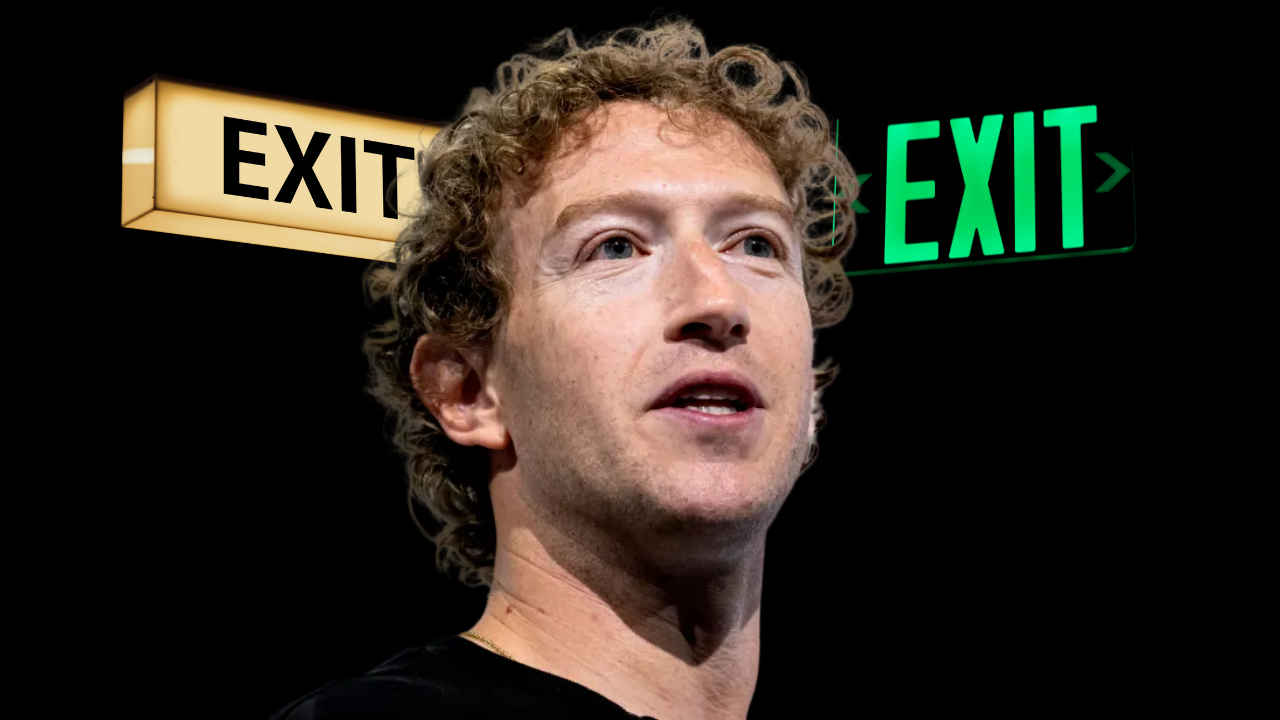

Just months after Mark Zuckerberg unveiled his most audacious moonshot yet, with the creation of a Superintelligence Lab to rival OpenAI and Google’s DeepMind, the experiment is already facing some serious challenges. According to various reports, Meta’s high-profile recruitment spree is being followed by a surprising exodus, with marquee names who were lured in with eye-watering salaries now quietly heading for the exits.
 Survey
The initiative, which had the unmistakable feel of an Avengers assemble moment, promised to bring together the brightest minds in AI and turbocharge Meta’s push toward artificial general intelligence (AGI). Zuckerberg’s pitch to the incoming talent was simple – come build the future of AI at Meta, and don’t worry about the pay. It would be generous. Very generous.
But even in a field known for rapid turnover and high-stakes personnel poker, the speed and scale of the departures from Meta’s reorganised and rebranded AI division have started to raise eyebrows.
Also read: Meta’s AI gamble backfires? Eight key staff exit amid billion-dollar talent war: Report
At least three top researchers – including Rishabh Agarwal, Avi Verma, and Ethan Knight – have walked away in just the first couple of months. Agarwal, who joined Meta in April 2025 with a million-dollar salary, left barely five months later. Verma and Knight, both OpenAI alums, returned to their former employer after what appears to have been a brief (and rather disillusioning?) stint under Zuckerberg’s leadership.
Publicly, the reasons for these exits remain vague. Agarwal cited the pull of “a different kind of risk,” while taking a jab using Zuckerberg’s own words, quoting, “In a world that’s changing so fast, the biggest risk you can take is not taking any risk.” But behind the scenes, reports suggest a more complex picture.
Also read: Meta offered $100 mn signing bonuses to poach OpenAI employees, says Sam Altman
According to Wired, tensions flared over the stark pay disparities between veteran Meta researchers and the newly imported Superintelligence cohort – some of whom received $100 million signing bonuses, and even bigger salaries. While some insiders hoped for an elite dream team being assembled at Meta, what seems to have emerged instead looks like a culture clash – an imbalance of incentives and expectations. It has led to a Superintelligence Lab that may be rich in compute and compensation, but not quite the harmonious cathedral of AGI progress that Zuckerberg had probably envisioned.
And it’s not just the new hires who are leaving. Long-standing team members from Meta’s broader AI efforts are also jumping ship, some heading to OpenAI and Anthropic, others spinning out to startups. In total, up to eight departures have been tallied in recent weeks, as per reports.
Meta, for its part, is trying to spin the story with Silicon Valley-standard stoicism. A spokesperson told Wired, “During an intense recruiting process, some people will decide to stay in their current job rather than starting a new one. That’s normal.”

Also read: Meta reportedly offered over $200 million to poach Apple’s AI engineer
Except, in this case, “normal” includes reports of ten-figure offers being declined, and a lab whose early promise now looks increasingly pretentious.
There’s an irony to all this that’s hard to ignore. In chasing superintelligence with unprecedented velocity, Meta seems to have forgotten the fundamentals of team-building which is all about trust, cohesion, long-term vision. Zuckerberg’s pitch to defectors from OpenAI and DeepMind was essentially a mix of blank checks and brute ambition. But the early departures beg the question, if Meta is trying to sprint its way to AGI without first learning how to walk?

All of this underscores a deeper issue at the cutting edge of AI and big tech. As the race for AGI intensifies, the battle isn’t just about who has the most GPUs or the biggest LLMs. It all boils down to who can keep the smartest people in the room. And if Meta can’t retain its talent even with billion-dollar carrots dangling in the air, it may need to take a long, hard look at the culture it’s building around its AI dreams.
After all, you can hire the Avengers to help build the future of AI. But you still need a story worth staying for and bringing that future to life.
Also read: Meta and Mark Zuckerberg bet big on AI Superintelligence: Here’s how


