
Israel-Iran conflict: How AI’s guiding military war on ground
 Follow Us
Israel used AI to analyze intelligence and coordinate smuggled drones for strikes
Commercial AI models from US firms processed intelligence for precise target identification
Legacy of Stuxnet informs AI-driven cyber-physical operations in modern warfare

It was sometime between dusk and the dead of night on June 13 when Israeli jets and drones slipped through Iranian airspace. They were largely unseen, whisper quiet but unmistakably precise. Not just any dipstick measure, it was the first glimpse of a new template for conflict, where AI isn’t just crunching data and presenting analysis, but making battlefield calls in real time.
 Survey
Three recent, verified instances from the ongoing Israel-Iran conflict offer an insight into what AI-powered warfare looks like right now in circa 2025.
AI-enabled real-time flight paths
As the hour of Israel’s offensive on Iran drew closer on the night of June 13, Mossad apparently didn’t just use human agents to set the stage. According to The Washington Post, the Israeli strike involved smuggled kamikaze drones that blinded radar systems moments before stealth jets released precision-guided munitions on military infrastructure.
Also read: Israel-Iran Conflict: Who’s winning the cyber war
AI’s role in the offensive was to crunch data and carry out the best course of action. Israeli agencies ran massive data fusion ops, feeding real-time satellite imagery, signals intercepts, and human intelligence into proprietary analytics platforms. The software plotted ideal flight paths for drones and timed their impact down to milliseconds, according to reports.

The operation had an espionage-meets-algorithm angle, where lines between spycraft and skynet were blurred. The mission marked a strategic shift – from mission planning informed by AI to one directed by it. And that nuance is everything.
AI tools for recommended targets
In a more controversial domain, Israel is reportedly leveraging US-based AI models – developed by the likes of Microsoft and OpenAI – for real-time battlefield decision support. Reporting by AP News suggests these models are used to process intercepted comms, satellite feeds, and recon data to generate kill recommendations.
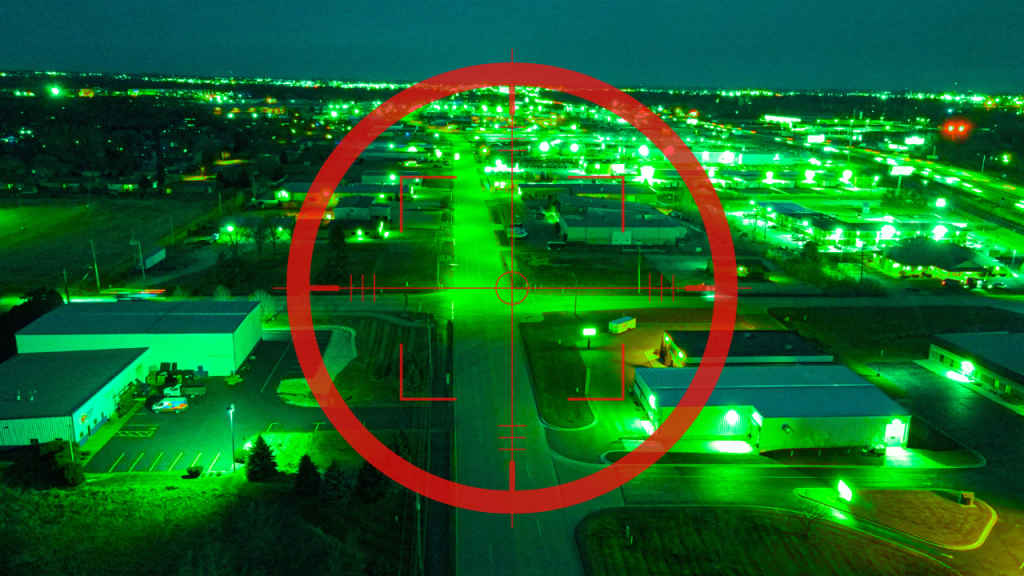
Human commanders still pull the trigger, but the AI shortlists who’s in the crosshairs. Non-military, civilian-origin AI systems are now helping filter who or what gets targeted in live military combat. Let that sink in for a moment. That’s where we’re at in the middle of 2025. Doesn’t it feel like we’ve crossed a line, where consumer-grade AI, meant for writing emails or parsing Excel files, is helping to choose wartime targets?
AI warfare has echoes of Stuxnet
To understand this new AI-military nexus, we need to look back to a worm called Stuxnet – which famously disrupted Iranian nuclear centrifuges using self-replicating malware.
While Stuxnet wasn’t AI, it definitely pioneered the idea of autonomous digital sabotage. And modern AI cyber tools are increasingly modeled on its logic of stealthy, self-correcting code that adapts to changing systems. According to Wired, today’s AI-enhanced cyber operations – ranging from infrastructure targeting to misinformation campaigns – trace their lineage to that original zero-day worm.
Role of AI in modern warfare
Use of advanced AI tools in modern warfare isn’t the stuff of science fiction anymore, but a field-tested, operationally deployed reality. AI isn’t replacing soldiers – but it’s reshaping what soldiers see, know, and do. It’s trimming the gap between ‘observe’ and ‘act’, where the human grip on combat decisions is loosening just a bit more.
In this volatile stretch between Tel Aviv and Tehran, the ongoing Israel-Iran conflict is showing us how the future of warfare is already here – and it’s terrifyingly smart.
Also read: Iran restricts internet access amid surge in suspected Israeli cyberattacks


