
 E-Magazine
Beyond design: Intel needs India more than ever, Gokul Subramaniam explains why
Intel India shaped all three flagship 18A chips, including Wildcat Lake
Agentic AI shifts orchestration back to CPUs, says Gokul Subramaniam
India aims to compress decades of chipmaking progress into 5-10 years
It’s fair to say, Intel's 2026 has been a year of two stories. For the quarter ending Sep 2026, revenue jumped 21% to over $16 billion thanks to a 78% growth in datacentre and AI demand. But client revenue – made up of laptops, PCs, and other consumer-focused silicon – shrank 5% and fell short of analysts expectations.
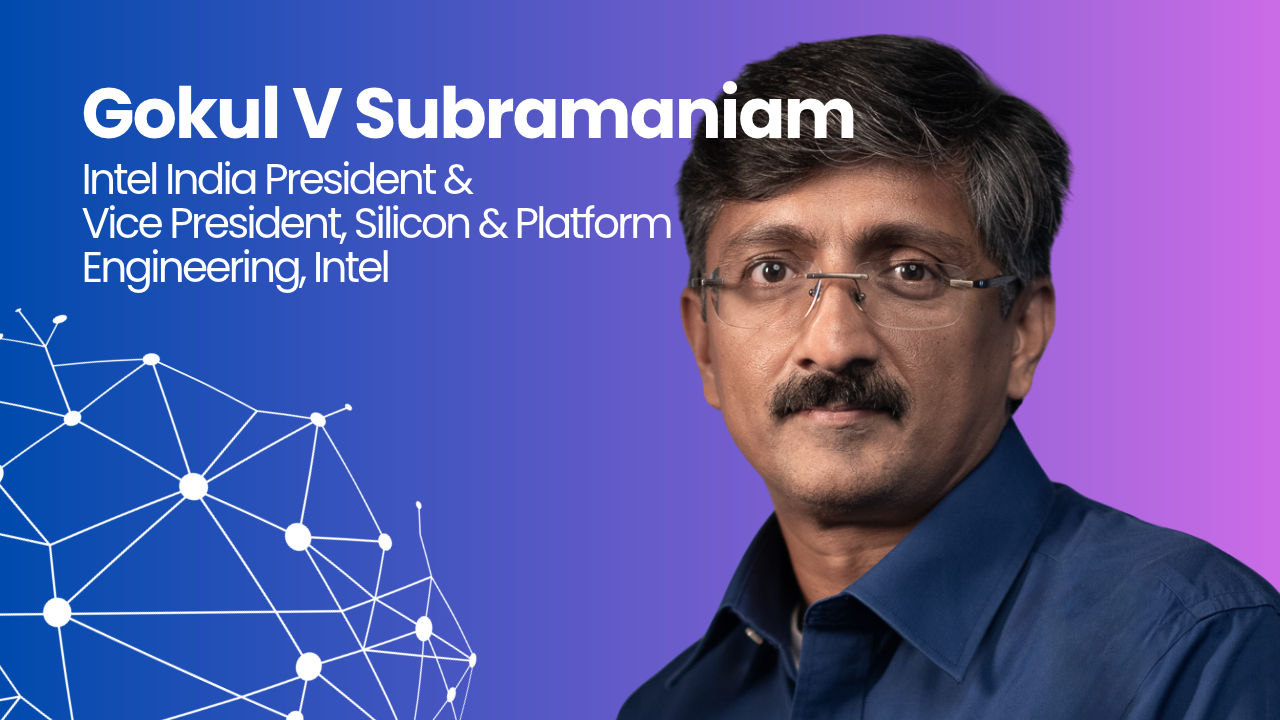
If 2025 was largely forgettable, Intel’s 2026 can be dubbed encouraging at best. And beneath all the churn, there’s a foundational constant – Intel India’s invaluable role in the company’s rebound story. Gokul V. Subramaniam, President of Intel India and Vice President, Client Computing Group, spoke with me about some of the key developments. For example, just how much of Intel's 18A-era silicon is engineered out of India. Will that prove enough against rivals trying to overtake and extend their lead, I wonder.
India's fingerprints on Intel 18A
All of Intel's flagship 18A-generation chips launched thus far have significant design contributions from Intel’s India team. "So if you recall, we had three big products that were launched, Clearwater Forest, Panther Lake and Wildcat Lake. All of these had quite a significant India presence from the design perspective," Gokul tells me, over a video call.
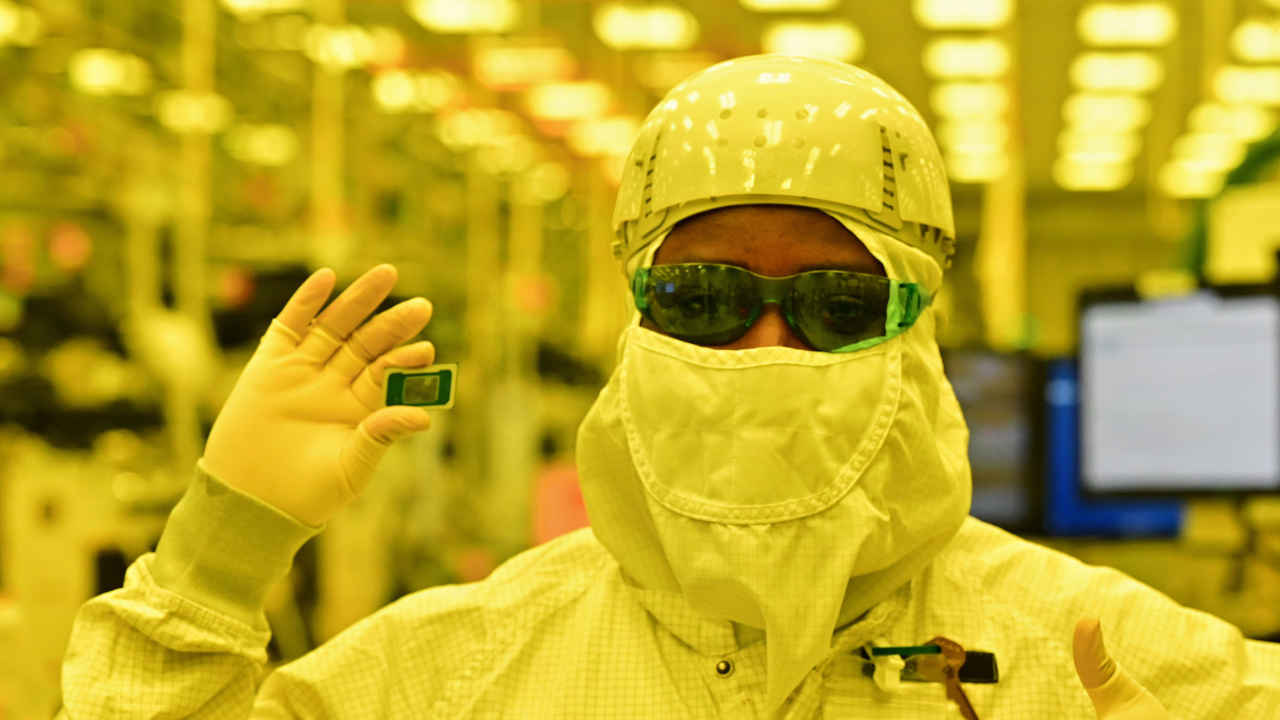
Wildcat Lake, Intel's latest mainstream laptop chip, was largely driven out of India, according to Gokul Subramaniam. Panther Lake (Core Ultra Series 3) and Clearwater Forest (E-core exclusive datacentre chip) also involved Intel’s India team doing the heavy lifting, with their scope going well beyond CPU cores. "So product wise, these were significant contributions from Intel India. And it spanned across IP, CPU design, GPUs, the overall SoC, firmware and software, also platform design, which is basically all the reference designs, including how you put them in a board for a datacentre or for a laptop, or an agent PC and things like that," confirmed Gokul.
That breadth of capability and scope of expertise is exactly why India has come through Intel's restructuring as an invaluable design site, with work spanning across almost every product in every segment of Intel’s business.
While it's great that India is occupying an important place in Intel’s scheme of things, being indispensable inside Intel does not guarantee that Intel wins, especially when competition is relentless.
Intel’s competition, memory crunch and affordability
Even though Intel’s last quarter was encouraging, competition has gained on its leadership setbacks and restructuring of 2025. According to Mercury Research, AMD's share of x86 client CPUs reached 30.3% in April–June 2026, up from 21.1% two years ago. ARM-based share of chips also grew to an estimated 15.3% of client CPUs.
Gokul Subramaniam's answer to Intel’s competition question is the belief in their own roadmap. "We have a pretty strong roadmap in the next two, three years that actually is looking at not only AI PCs, but agentic compute, as well as edge inferencing, and getting into areas like physical AI and robotics." Asked if he was worried, his response wasn’t direct. "I mean, if you're in business, you better be worried all the time. If you're not worried, if you're not paranoid, then you're not going to win," said Gokul Subramaniam.
The bigger near-term threat may not be AMD or an ARM rival at all. On the Q3 earning call, Intel CEO Lip-Bu Tan and CFO Dave Zinsner suggested that memory supply constraints will remain a challenge all of 2027, and demand for PCs in the industry is expected to shrink by 10% next year. “In the next few months or quarters, everything will be very skewed because of the memory pricing. Globally, any consumer device that needs a memory has skyrocketed in terms of price," emphasised Gokul.
Despite the challenges, Subramaniam expects every PC and laptop to continue to gain AI capability in the foreseeable future. I asked him when a mid-priced laptop will run meaningful local AI, Gokul didn’t offer a timeline as much as a direction that’s open to interpretation. "Affordable is a very relative statement. Affordable for a high performance computer can be different from an affordability for a first time buyer for an entry laptop. That broad spectrum will have its way of making sure that it meets the demand of what the end user price point is for the kind of user experience that they can get there," explained Gokul.
Agentic AI will make the CPU more important
One of the several reasons for Subramaniam's confidence in Intel’s roadmap is that agentic AI tips the CPU’s relevance back towards Intel's core strength. While training rightly favoured GPU-like parallel processing architectures, but agents are different according to Gokul. "As you come to agentic, it isn’t only pre-fill and decode, but you also take what is generated into running tool chains, execution tests. So there is a lot of CPU-GPU-CPU kind of orchestration that happens. And a lot of the orchestration happens out of the CPU," he highlighted.
"We've seen that shift quite a bit because it's no longer a single short chat interaction. A lot of it is very iterative or orchestrated, wherein you ask something, you kick off, you generate some code or some tool calls that executes and then that gives you results and you validate the result."
That same logic has shaped Crescent Island, Intel's new inference GPU, which uses LPDDR5X instead of HBM. "So our belief is we continue to focus on heterogeneous compute, put the right products out there with the right architectures, both from SoC as well as the platform side with the memory. So we pick the choices of which memory and what we put in based on the needs of where that product fits into the market," mentioned Gokul.
On sovereign AI and India semicon skilling
With respect to India-specific AI, Intel’s Gokul Subramaniam highlighted the many homegrown sovereign model vendors Intel works with, which includes building for Indic languages as well as engineering and maths.
Education is key in all of this, according to Gokul. "A classic usage model is you have so much content out there that's on English, education content, that it opens up for somebody to actually listen or watch that content in one of the Indic languages, both translated and transcripted. And that's the power of such capabilities running on an AIPC."
On-device AI is where the technical optimisation matters increasingly. "The challenge for us is actually where we are really finding the value. The models that can really fit and run on an AIPC locally without having to go to the cloud are very advantageous from data security, latency, network connection perspective," underscored Gokul.
When I asked him how American silicon fits inside India's sovereignty goals, Gokul argued that sovereignty isn’t a one size fits all, that it comes in layers. "Depending on which vertical you're going into, let's say, very close to defence and other geopolitical or resilient aspects, there may be a different level of sovereignty expected. For some others, there may be another level of sovereignty in terms of where in the stack you want to have options. I think there's a space for all of these models," responded Gokul Subramaniam, while recognising that at the end India would like its chips designed, fabbed and hosted in India by Indian companies. "That's the dream as a nation India wants to get to, and I think we're all playing a part in it."
In terms of playing their part, Intel says it has enabled more than 1,000 AI labs across India, with its AI PC Experience Development Centres at IISc Bengaluru, IIT Hyderabad and IIT Bombay supporting research on population-scale applications. At SEMICON India 2026 it launched Introduction to Semiconductors, a self-paced microlearning course built with the India Semiconductor Mission and MeitY.
Subramaniam's advice to students – or anyone who’s serious about joining India’s burgeoning semicon ecosystem – is refreshingly old-fashioned. "From the semiconductor industry perspective, the fundamentals are super critical for a graduating student. Fundamental concepts on electrical, computer architecture, computer science. So don't compromise on learning the fundamentals." This means building, even if projects fail, and learning AI the practical way. "AI is here to stay, and AI has become the medium of education for engineering," suggested Gokul Subramaniam.
Overall, Subramaniam’s optimistic about India's semiconductor push and the Indian government's staged approach. "I think they've put a roadmap, they're very realistic, and they're very exhaustive in how they are viewing this journey. There cannot be a better moment to be in the semiconductor space than it is now in India," he concluded.
He is quick to remind that India is attempting to do in 5-10 years what other countries in other parts of the world took two to three decades to achieve. “If it were easy, we would have done it already. This is a marathon, so there’s going to be challenges, endurance, capability, skill, resiliency, all of that needs to play a part in it."
India is clearly central to how Intel designs chips, from laptops to datacentres. Whether Intel can turn that engineering excellence into more upcoming wins in AI, both in the cloud and AI PCs before its rivals and the memory cycle has a definitive say through 2027 and beyond remains to be seen.

Jayesh Shinde Executive Editor at Digit. Technology journalist since Jan 2008, with stints at Indiatimes.com and PCWorld.in. Enthusiastic dad, reluctant traveler, weekend gamer, LOTR nerd, pseudo bon vivant.
View full profile