
Computex 2026: Intel announces Xeon 6+ processors, says AI will make CPUs important again
 Follow Us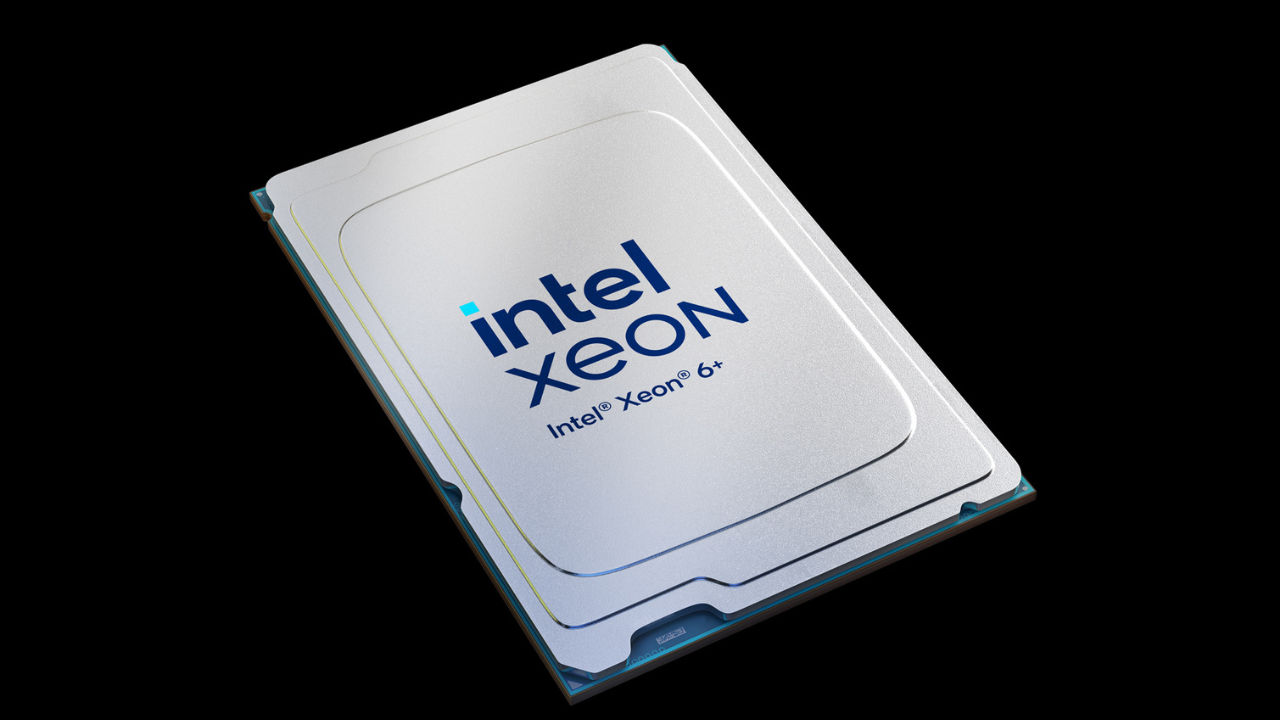

It’s that time of the year again. Computex 2026 is happening in Taipei, Taiwan and almost every other brand is once again talking about AI. We got AI-powered laptops, home appliances, PC chips, and much more. Now when we say AI, chances are you automatically thought of a GPU. But Intel has a different take. The brand believes that AI will put the spotlight firmly on CPUs.
 Survey
In a press release, Intel said, “With the emergence of agentic AI, the growing demand for AI inference is changing the balance of power in the data center, returning the CPU to a position of prominence.”
Which, in simpler words, means that the next phase of AI may rely heavily on CPUs once again. And the reason behind this could be agentic AI. But before we delve deep into this, let us take a moment and talk about Agentic AI and what it really is.
Also read: ROG turns 20: Asus unveils Strix Scar 18, Xbox Ally X20 bundle and more at Computex 2026
What is agentic AI?
Agentic AI is simply an AI tool that can do tasks on its own instead of just replying to your questions. For instance, in the case of ChatGPT, you ask it something and it gives you an answer. That’s it. But, agentic AI goes a step further. In this case, instead of waiting for commands one by one, it can plan actions, make decisions, and complete multi-step tasks automatically.
For example, if you ask a normal AI assistant about some cheap flights to Tokyo, it will give you some links and call it a day. But an agentic AI assistant will search flights, compare prices, check your calendar, book the tickets, reserve a hotel, and remind you before the trip.
And it will do all of that with minimal input from you.
Agentic AI systems need to constantly coordinate tasks, manage memory, handle workflows, and communicate with other software. And according to companies like Intel, CPUs become more important for managing all that behind the scenes.
Why Intel thinks CPUs matter again
Intel CEO Lip-Bu Tan, during his keynote, said that with the rise of ‘inference, agentic, and physical AI, Intel is poised to bring the world new innovations from the chip to systems level that promise to transform industry and society for the better’. The Intel CEO also added that they are proud to join all their partners in building ‘great products that will delight customers and bring the power of AI to more people’.
Now for the last few years, GPUs have dominated almost every AI conversation. Whether it is ChatGPT, image generators, or advanced enterprise AI systems, GPUs are usually the hardware doing the heavy lifting. But Intel believes the industry is slowly moving into a different phase now.
The company says AI is shifting from simply training models to actually deploying and running them at scale. This process is called inference. In simple words, training is when you teach an AI model. Inference is when people actually start using it in the real world.
And according to Intel, inference workloads are growing very quickly because of agentic AI systems.
Think about it this way. If millions of people start using AI agents that continuously perform tasks, coordinate apps, process workflows, and manage requests in real time, data centres will suddenly have to deal with a lot more orchestration and communication between systems.
That is where CPUs come in.
Intel argues that CPUs are extremely important for handling things like scheduling, memory allocation, task coordination, concurrency, and moving data between components. GPUs are still incredibly important for AI processing itself, but CPUs become the “manager” that keeps the whole system running smoothly.
Interestingly, Intel even referenced analyst Ben Bajarin during its announcement. According to him, AI infrastructure could slowly move from a one-CPU-to-four-GPU setup toward something much closer to one CPU per GPU in the future.
Now no, this does not mean GPUs are suddenly becoming irrelevant. NVIDIA is still dominating the AI space right now. But Intel clearly believes CPUs are about to become much more important than people think.
Intel’s Xeon 6+ processors
To support this AI push, Intel announced its new Xeon 6+ processors at Computex 2026.
These are next-generation server CPUs built using Intel’s 18A process technology, which is a major step for the company itself. Intel says the chips are specifically designed for cloud-native AI workloads, networking, and large-scale inference systems.
But what the company repeatedly highlighted was efficiency and density.
According to Intel, a single liquid-cooled rack powered by Xeon 6+ processors can deliver up to 36,864 cores inside 32U of compute space. Intel says this allows extremely high “agent density” for AI infrastructure while operating around 100-kilowatt rack power.
Now admittedly, most consumers will never directly interact with hardware like this. But these systems quietly power a huge chunk of the internet. Everything from AI chatbots and cloud apps to streaming services and enterprise platforms relies heavily on data centre infrastructure.
And power efficiency is becoming a massive issue in this space.
Modern AI data centres consume enormous amounts of electricity. As AI workloads continue growing, companies are desperately trying to find ways to deliver more performance without massively increasing energy consumption. Intel appears to be positioning Xeon 6+ as a solution for exactly that problem.
Also read: Computex 2026: Asus explains why ROG Zephyrus Duo got a full second screen


