
 E-Magazine
SpaceX Starship Flight 15: From historic rocket catch to NASA’s Moon mission plans, full story in 5 points
SpaceX Starship completes its 15th test flight successfully.
SpaceX plans to make its rocket faster and cheaper to reuse.
NASA plans to use Starship for future Moon missions.
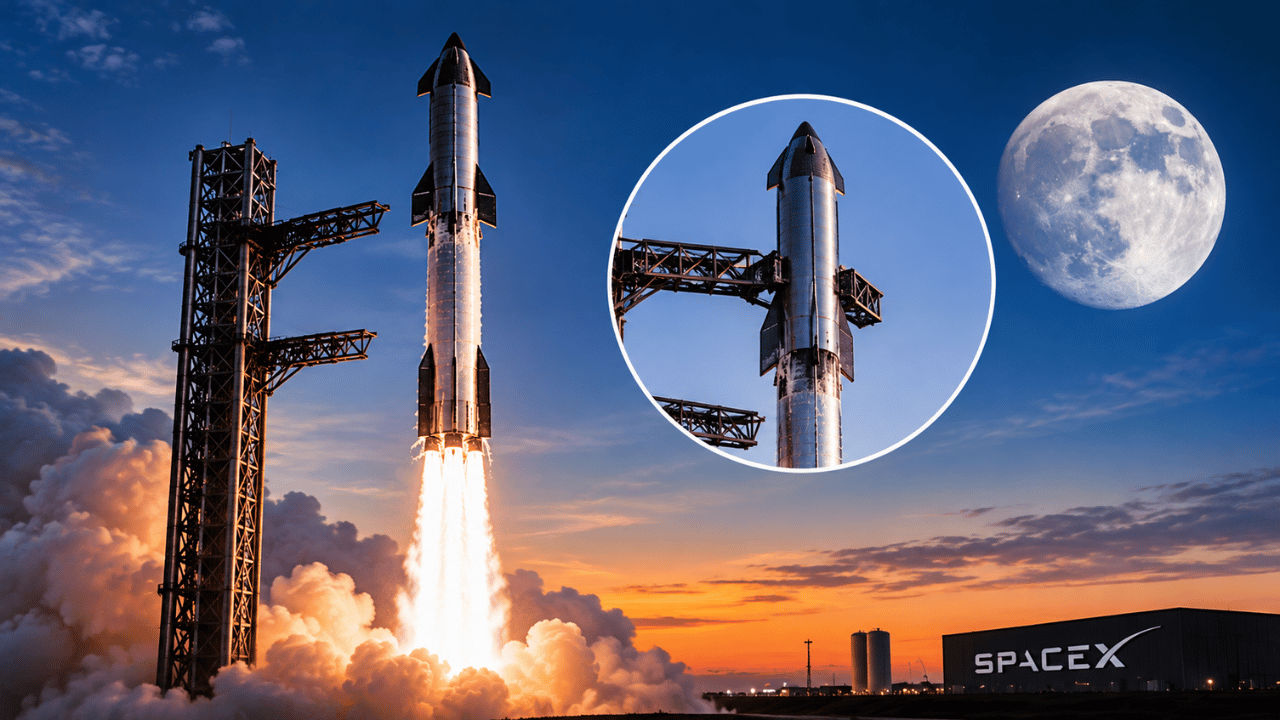
Elon Musk-led SpaceX has built the biggest rocket known as Starship. The rocket has recently completed its historic 15th test flight (Flight 15). During the test the upper-stage spacecraft was caught after returning from orbit by the mechanical arms known as chopsticks of the Mechazilla Launch Tower in Starbase, Texas. The rocket is closely watched by NASA because it plays a crucial role in the agency’s Artemis programme, which aims to return astronauts to the Moon. Not only that, but NASA also plans to use the spacecraft for future crewed lunar missions. Here is everything you need to know about SpaceX Starship in five simple points.
1. SpaceX Starship: Everything you should know
Starship is a giant rocket developed by Elon Musk’s space exploration company, SpaceX. The rocket is built in two parts. The Super Heavy component at the bottom is intended to supply the thrust required to raise the rocket off the ground. The upper portion, referred to as the Starship, transports passengers or goods into space.
Both parts are designed to return to Earth and be reused for future flights. This could make space travel much cheaper compared to today’s rockets, which are mostly designed for single use.
2. Starship reaches orbit
Starship reached orbit for the first time on Flight 14, which launched on September 28. Flight 15 followed in November, with the upper stage circling Earth 14 times over about 22 hours before returning to Starbase. On Flight 15, the Super Heavy booster abandoned its planned tower catch and splashed down in the Gulf of Mexico instead.
3. SpaceX Starship: What’s the next step?
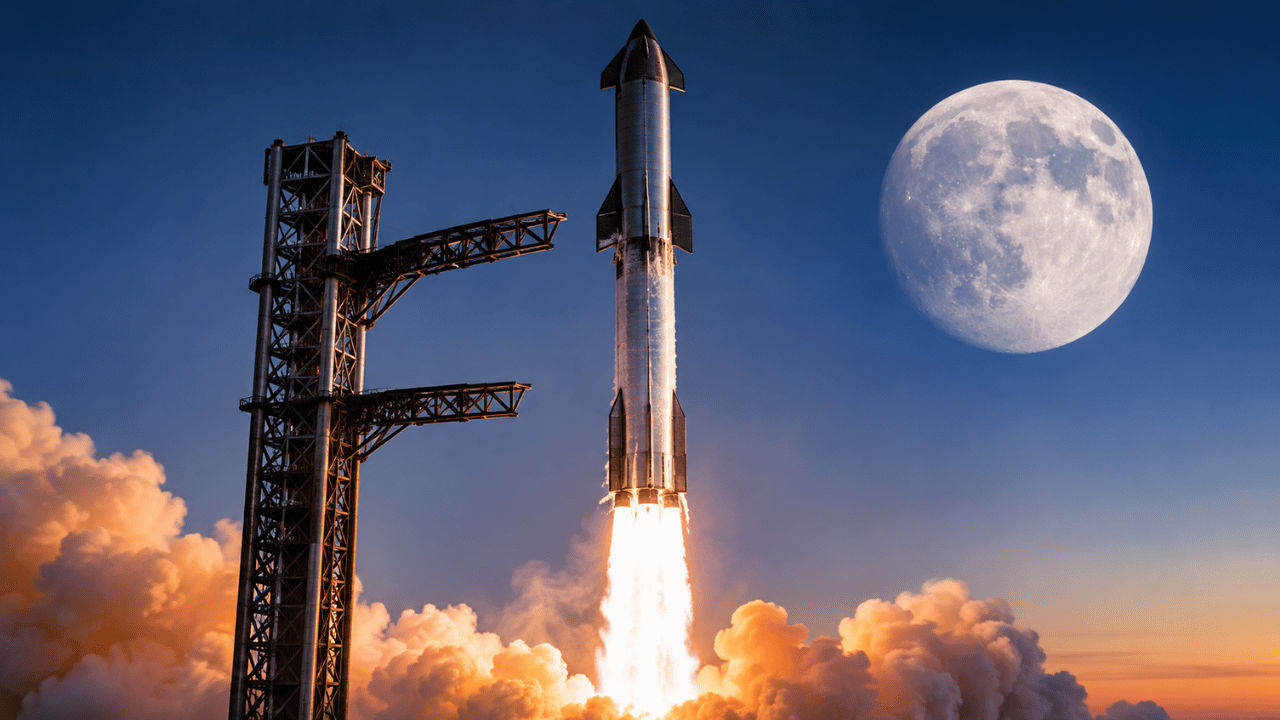
SpaceX is now working towards its first-ever double catch of Starship. This means the company wants to bring both the Super Heavy booster and the Starship spacecraft safely back to the launch site after a flight.
If SpaceX becomes successful in this, then both parts could be caught and recovered without needing a long recovery process. As a result of that, SpaceX will be able to reuse them much faster. Not only that, but they will also save money and time, which will allow them to schedule future launches more frequently.
4. Starship matters beyond the Moon
Starship is not just a vehicle designed to travel to the Moon. It also performs other crucial tasks. For example, it has launched 26 of the most sophisticated Starlink satellites into orbit. These satellites aid in giving homes and people all over the world access to the internet.
Elon Musk has previously stated that he has even bigger plans for Starship, as he wants it to carry humans to Mars one day. However, before reaching Mars, the first major goal is to take people back to the Moon and help make future Moon missions possible.
5. SpaceX and NASA team up for Artemis
NASA is spending billions of dollars on SpaceX and Jeff Bezos’ company, Blue Origin, to develop spacecraft that can take astronauts to the Moon. After successfully completing the Artemis II mission around the Moon in April, NASA is now preparing for its next missions.
They have previously confirmed that Artemis III is planned for as early as next summer. However, the main challenge will be to test how NASA’s Orion spacecraft connects with the Moon landers developed by SpaceX and Blue Origin.
For the unaware, the Artemis IV mission could take two astronauts to the Moon’s surface as early as 2028. NASA have clearly stated that they will use whichever company’s lander is ready first and meets its safety requirements. If the mission is successful, then it will be the first time humans have landed on the Moon since NASA’s Apollo 17 mission in 1972.

Bhaskar Sharma Bhaskar is a Senior Copy Editor at Digit India who keeps a close watch on everything shaping the world of technology from smartphones and home appliances to AI, government tech initiatives, digital safety, and the latest industry developments. Whether it's breaking news, in-depth features, hands-on reviews, practical how-to guides, or exclusive scoops, he translates complex tech into stories that are easy to understand and worth reading. His work has been featured in iGeeksBlog, GuidingTech, and other leading publications. Before joining Digit India, he served as an assistant editor at TechBloat. A B.Tech graduate and full-time tech journalist, he is driven by just one goal, which is to help readers stay informed, stay secure, and stay ahead in an ever-changing digital world.
View full profile