
India’s real chip opportunity is supply chain, says Lam Research’s Rangesh Raghavan
 Follow Us
India's real chip opportunity lies in building supply chain ecosystems
Equipment sales and component manufacturing offer massive growth for India
Strong technical talent positions India for long-term semiconductor industry success
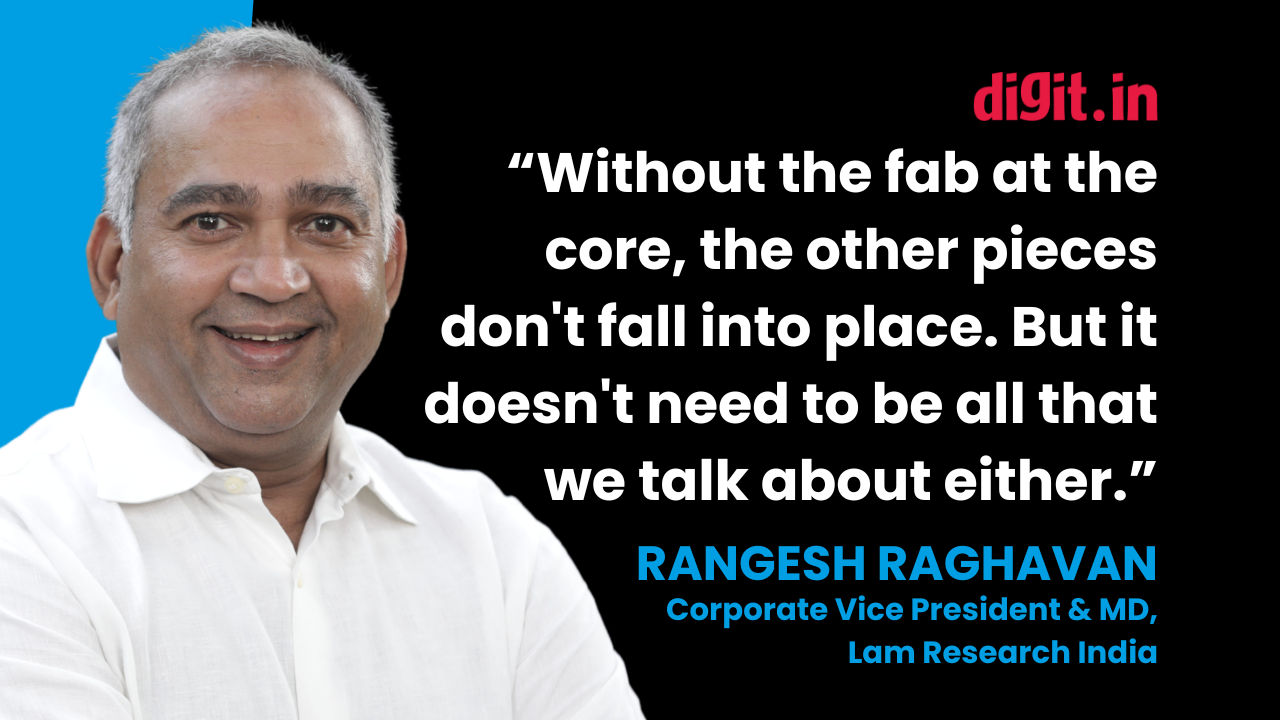

“I donated all my hair to this industry for 33 years,” Rangesh Raghavan jokes near the end of our hour-long chat, reflecting on a career that has spanned nearly the entire modern history of semiconductors.
 Survey
But this isn’t really a story about one industry veteran. It’s a story about how India fits into a global industry that took decades to build, and where the opportunities may be larger than many people realize.
India’s semiconductor story is often told through the lens of fabs, investments and technology nodes. But from Raghavan’s perspective, a much larger opportunity may lie beyond this.
Our discussion repeatedly returned to the same theme: while fabs matter, the bigger opportunity may be in the ecosystem that grows around them: from supply chains and services to engineering talent and innovation.
As one of the world’s leading semiconductor equipment companies, Lam has spent decades helping build chip manufacturing ecosystems globally. That industry vantage point offers a unique way of looking at India’s semiconductor ambitions.
Raghavan has a clear sense of which efforts can have the greatest impact. He believes the country’s semiconductor efforts are beginning to broaden in encouraging ways. Building fabs is important, he says, but long-term success will depend on how effectively India develops capabilities across the value chain that surrounds them.
Also read: Digit Magazine’s March 2026 cover story on India’s semiconductor ecosystem voices
When I asked him why India can’t just make its own DDR6 six months from now, Raghavan responded drawing on three decades of industry experience. “Semiconductor manufacturing is one of the most capital-intensive and technologically complex industries in the world, requiring deep expertise, and ecosystem maturity. While India’s manufacturing ambitions are in the right direction, we must not look at success as achieving scale and competitiveness in the short term.
He offers another pragmatic perspective, “Significant opportunities exist across multiple parts of the value chain where India can build on existing strengths in engineering strengths, talent, and growing domestic demand. “We shouldn’t get caught up in this idea that we’re behind,” he says.
His point seems to not be about lowering ambition, but more about building elements that can create a more resilient and competitive ecosystem that generates long-term economic impact for the country. It is about identifying areas where India can create meaningful and sustainable value while continuing to strengthen its manufacturing ecosystem.
Focus beyond the fab, there’s more to do
If there’s one idea Raghavan wants readers to take away, it’s that India’s semiconductor success should not be measured solely by the number of fabs the country builds.
Raghavan believes that while fabs are a critical part of India’s semiconductor journey, they are one part of a much larger ecosystem. “Without the fab at the core, the other pieces don’t fall into place,” he rightly says. But “it doesn’t need to be all that we talk about.”
What should we talk about then, I ask him? “The global wafer fab equipment market, to begin with,” says Raghavan.
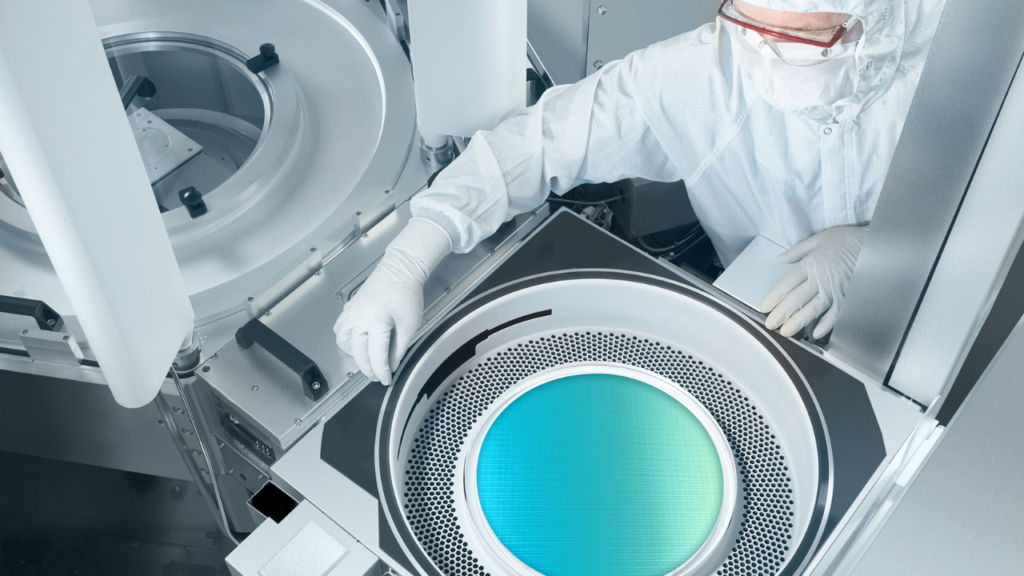
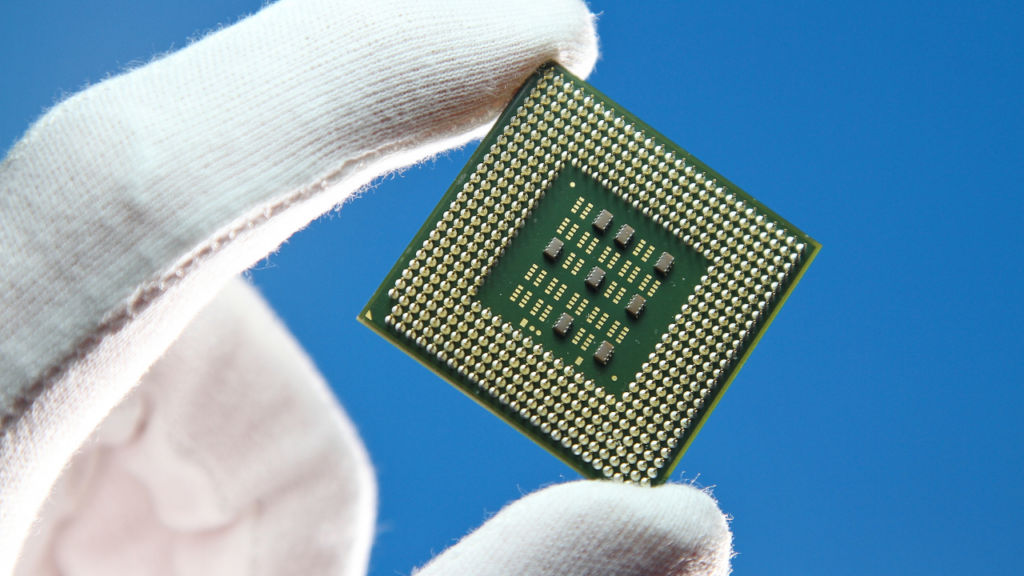
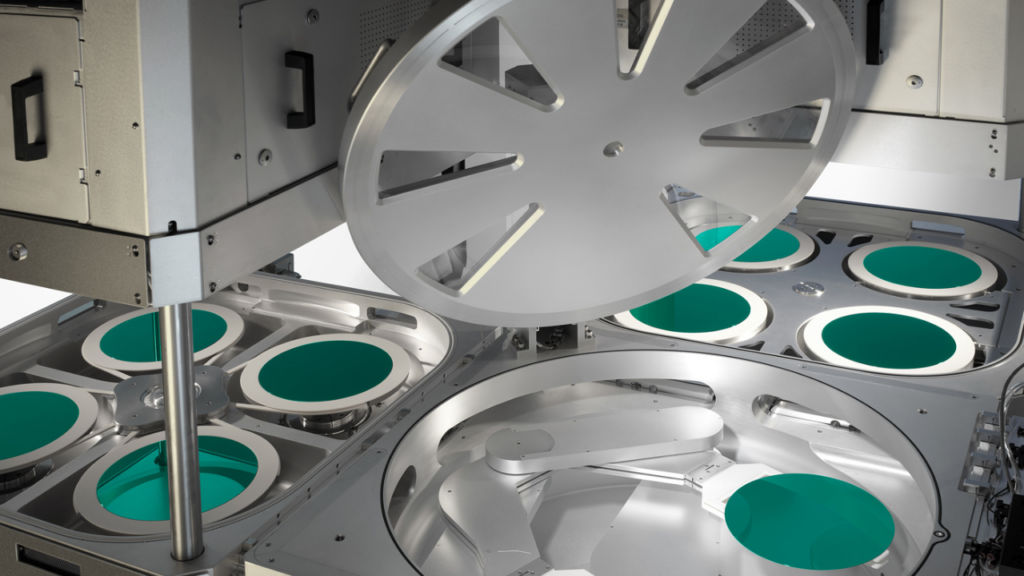
He’s right. The global semiconductor manufacturing equipment sales growth is expected to continue according to SEMI, and their forecasts from December 2025 show projections of $145 billion in 2026 and $156 billion in 2027, with growth driven primarily by investments related to AI, particularly in leading-edge logic, memory, and the adoption of advanced packaging technologies. A portion of that value comes from highly specialized semiconductor technologies, but a significant part also comes from precision manufacturing, assemblies, machining, cables, electronics, components and services that support advanced equipment.
According to Raghavan, India already has a headstart here since many of these capabilities already exist within India’s industrial base. The same manufacturers supplying components to aerospace, automotive, healthcare and industrial sectors often possess capabilities that can be adapted for semiconductor applications, he says. The opportunity lies in helping more Indian companies qualify for this highly demanding global supply chain. That is already beginning to happen.
As part of its supplier-development efforts, Lam Research has been working with Indian manufacturers to qualify precision components and assemblies for use in semiconductor equipment. The company sees significant potential for the country to expand its participation in this segment as capabilities continue to mature.
Also read: Not just design: Marvell’s Navin Bishnoi on next chapter of Indian semicon and AI datacentre story
The case for supply-chain development is not just economic, but also workforce-related, says Raghavan. While fabs create highly skilled jobs and serve as the foundation, the extended supply chain and the wider ecosystem often generate employment at much larger scale across manufacturing, services and engineering. For instance, a growing semiconductor supply chain requires machine shops, material specialists, equipment support providers, logistics partners, electronics manufacturers and several other specialised businesses.
Raghavan gives an example of equipment servicing, something essential to keeping fabs productive. “When India’s fabs arrive, you’ll need people with such skills,” he says. For these ancillary jobs, the fab plays a pivotal role, acting as the anchor customer – the “proof point” as Raghavan says – that makes many of these essential secondary businesses viable.
Countries such as Singapore, Malaysia and the Philippines have built meaningful industries around these capabilities. India has the potential to develop similar strengths as domestic manufacturing ecosystem scales.
The machine nobody knows India already builds
India’s chip story is usually presented as a design story. Although a well-deserved reputation, with more than 20% of the world’s semiconductor design talent estimated to in India, this is just a part of the whole. Less visible is another story, the role India already plays in semiconductor equipment development.
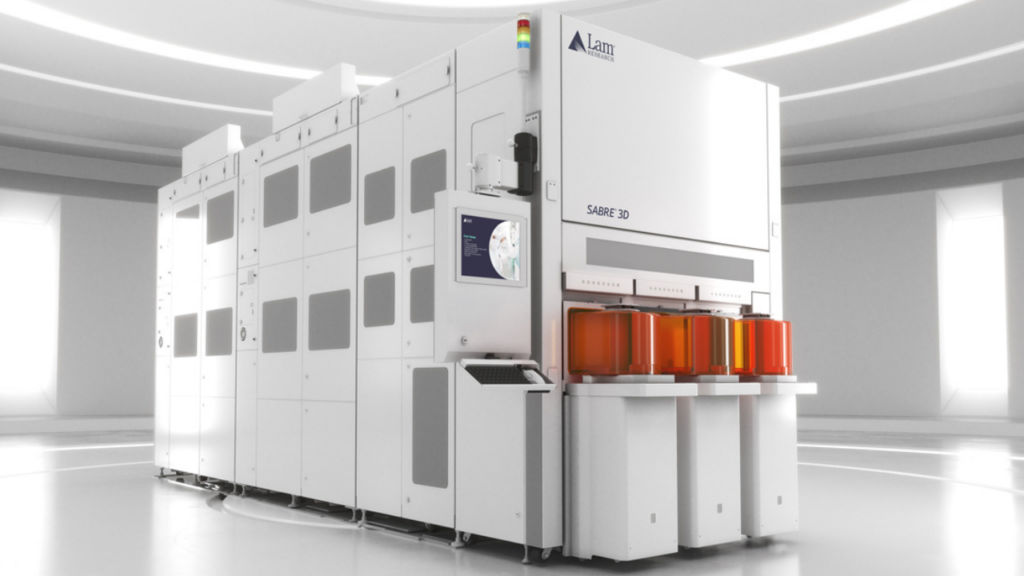
“From a Lam perspective, the Bengaluru centre is an integral part of the company’s global R&D network. And this isn’t a recent phenomenon”, Raghavan points out. Lam has been building engineering capabilities in Bengaluru for 25 years, long before semiconductors became a mainstream conversation in India. Engineers at the Lam Research’s India center contribute to the development of technologies used in advanced fabs around the world, including equipment supporting leading-edge nodes.
That’s truly incredible, if you ask me. While Lam India’s story may represent a quieter chapter of India’s semiconductor story, it shows India isn’t waiting at the door of the advanced-equipment world. It demonstrates how advanced technology development can be built and scaled up in India over time.
Press him on what India still needs to strengthen, and he quickly steers the conversation toward systems engineering.
“India has tremendous technical talent. As technologies become increasingly interdisciplinary, the non-negotiable skill for an engineer to develop is systems thinking,” he says. Raghavan believes that the industry increasingly needs engineers who can connect different disciplines and integrate complex systems, a capability that is becoming critical as semiconductor technologies become more sophisticated.
Also read: NanoStack explained: Did IBM really build a 0.7nm chip?
He backs up his point with an example that all Indians will immediately understand. “Think about Chandrayaan. People working across disciplines to deliver an amazing outcome – that’s systems engineering”.
That need is also shaping Lam’s workforce development efforts in India. Lam Research has expanded its engagement with academia, semiconductor learning initiatives, technical skilling programs, etc. The company also runs systems engineering competitions that have attracted participation from thousands of students across hundreds of institutions across India. Initiatives such as Semiverse reflect Lam Research’s commitment to talent development, providing engineering students in our country with industry-relevant semiconductor learning opportunity, truly democratizing learning access. Because India needs to build talent fast, and for the semiconductor industry to scale sustainably, talent must come from a wide, diverse base of universities and technical institutions, and not just premier institutes.
A dream for 2030, minus the sloganeering
Asked what 2030 should look like, Raghavan returns to what his career taught him: products beat parts. “Over the long term, the greatest value comes from building products, technologies, and intellectual property that reach global markets,” he says.
By 2030, he hopes to see competitive manufacturing, stronger supply chains, globally relevant technology products and a growing base of semiconductor-focused businesses serving international markets. As he summarizes, the semiconductor opportunity is not limited to making chips. It is about building the ecosystem that enables an entire industry to thrive.
That ecosystem is taking shape. Many of its foundations, from investments to policy support to supplier development to workforce initiatives are in place and emerging. For Rangesh Raghavan, that is reason for optimism.
Not because he thinks the journey is an easy one, but because India already possesses the one ingredient every successful semiconductor ecosystem ultimately depends upon: talent. The rest, as Raghavan puts it, is engineering.
Also read: Micron’s chip assembly plant: 3 Key features, why it matters


