
How Gabit aims to kill health anxiety with better data trendlines
 Follow Us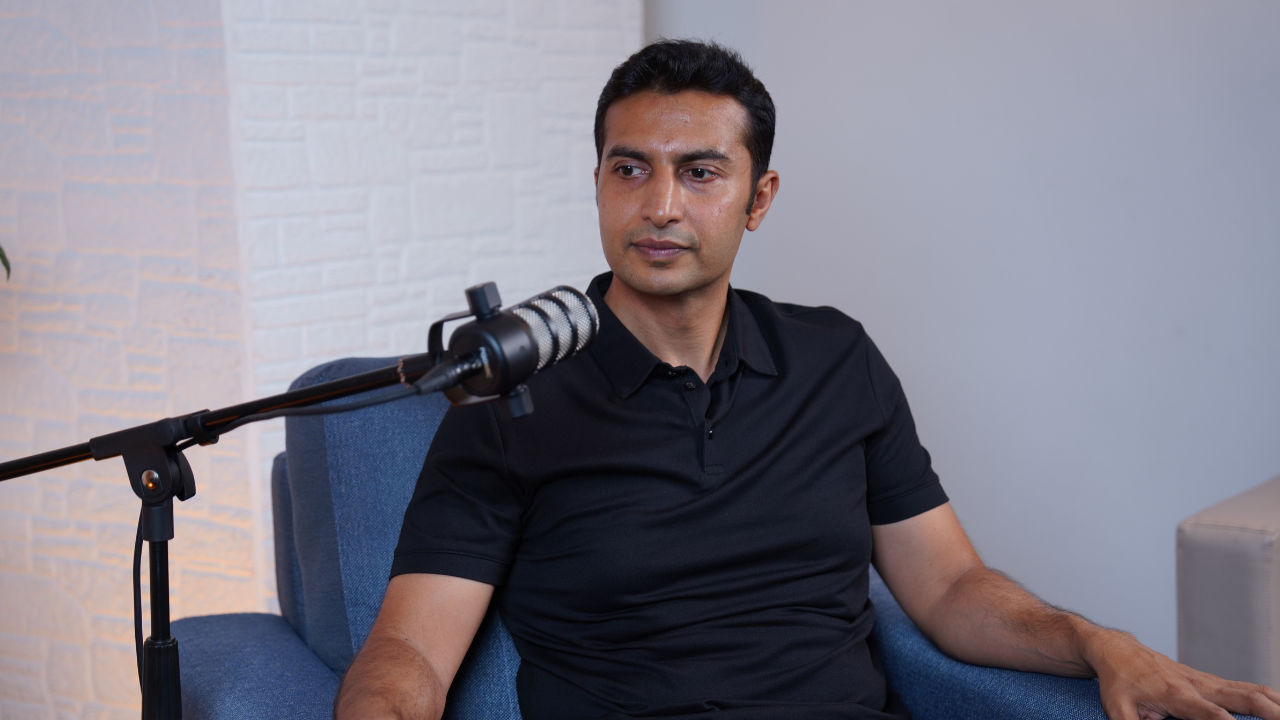

The urban Indian has been only taught one way of living — through grind and that includes late nights, cross-country flights and endless streams of caffeine. Health was always an afterthought. A luxury deferred until retirement or a medical emergency demanded it. But over the last few years, a quiet revolution has taken root across the country’s metropolitan hubs.
 Survey
Walk into any corporate office or neighborhood park today and the conversations have radically shifted. People are proactively discussing active course, circadian rhythms, running clubs and active lifestyle. Yet, as India becomes hyper-conscious of its fitness, a paradox has emerged. The tools meant to help us navigate this lifestyle have often made it more complex.
For years, tracking health meant strapping bulky bands to wrists, navigating labyrinthine mobile apps and trying to make sense of disparate metrics that refused to speak to one another. This is where smart rings, a category I was initially apprehensive about, is making a huge wave. And, joining the revolution is the Indian startup Gabit.
As a co-founder of Zomato, Gaurav Gupta spent years fueling India’s late-night food cravings and navigating the high-stress, low-sleep landscape of a tech unicorn. Today, he is on a diametrically opposite mission: teaching Indians how to build sustainable, long-term health habits. Gabit is a homegrown health tech ecosystem centered around a sleek, data-rich smart ring.
From Zomato to “Good Habits”
Gupta’s pivot to health tech came during the forced isolation of the COVID-19 pandemic. The unfortunate turn of events forced a reset button on him.
“During COVID, for the first time in life, travel stopped for me,” Gupta recalls. “I fell into a good rhythm of just working out regularly, eating better food, and sleeping at home — not on flights as much. My health dramatically improved.”
The results were stark: Gupta lost 15 kilograms of weight and his metabolic age plummeted by 14 years. The transformation felt magical, sparking a realisation that his next professional chapter needed to focus on an area of even greater human impact than food delivery. Following Zomato’s blockbuster IPO, he stepped away to immerse himself in the science of wellness.
His research led to the realisation that any health objective whether managing diabetes, combating obesity or reversing hypertension rests on four fundamental pillars: fitness, nutrition, sleep and stress.
“The beautiful part is they’re all interconnected. They feed off each other. You sleep well, you do fitness better. You do fitness better, you eat better,” Gupta explained.
However, building good habits is inherently painful because the biological reward system is delayed. Bad habits offer an instant dopamine kick, while positive lifestyle choices take weeks or months to manifest visible results. To bridge that gap, continuous feedback is essential. “You can’t improve something that you can’t measure,” Gupta says.
Thus, the concept of Gabit — a portmanteau of “good habit” — was born, built entirely on the thesis that frictionless tracking is the ultimate catalyst for behavioral change.
Debunking the weekend sleep myth
As Gabit accumulated data over its first two years in the market, Gupta’s team began uncovering fascinating, counter-intuitive insights into the true state of Indian health. The most glaring revelation centered around sleep. In urban India, sleep deprivation has long been wore as a badge of honor. When asked about their rest, most professionals claim they sleep “fine,” pointing to a standard six or six-and-a-half hours.
But Gupta stresses that absolute numbers tell only half the story. The real blind spot lies in sleep architecture: the quality and duration of deep sleep, light sleep, and REM (Rapid Eye Movement) stages. While deep sleep governs physical recovery, REM sleep regulates emotional balance and mental acuity.
Furthermore, Gabit’s user data shattered a foundational myth of corporate life: the weekend catch-up sleep.
“We would assume that people work through the weekdays and basically cover up on their sleep on weekends,” Gupta says. “But on average, Gabit users sleep less on weekends than they do on weekdays” The culprit? Late-night socialising, disrupted routines and heavy meals consumed close to bedtime.
The case for the ring
Beyond sleep, the data highlighted another massive lifestyle blind spot: the illusion of the morning workout. Many urban Indians believe that spending an hour at the gym clears them of health liabilities for the rest of the day. In reality, the remainder of their day is spent sitting statically at desk jobs.
“One of the biggest factors that impact your health or longevity is not just how much you work out in the morning, but the number of active hours you’ve had in a day,” Gupta points out. To combat this sedentary stagnation, he advocates for short, frequent bursts of movement, walking for three to four minutes every half hour.
Within his own company, Gupta practices what he preaches: “When I have to talk to my team in the middle of the day, I don’t send them a Slack message. I just walk to them.”
While India is an incredibly price-sensitive, value-seeking market dominated by feature-heavy smartwatches, Gupta argues that rings hold distinct scientific and practical advantages for health tracking. First, roughly 90% of people find it uncomfortable to sleep wearing a bulky watch or fitness band, immediately creating a data vacuum during their most critical recovery hours.
Second, the physiology of the finger offers far cleaner data collection. On a watch, sensors throw light through the top of the wrist, struggling against the structural noise of dense bones and tendons. In a ring, the blood vessels are closer to the skin’s surface, resulting in vastly superior biological accuracy.
Combined with a form factor that requires charging only once every ten days and works discreetly in the background without bombardment of notifications, the smart ring acts as a seamless extension of the body.
Aggregating data to kill health anxiety
One of the persistent criticisms of the wearable tech boom is the rise of “health anxiety”: users becoming obsessively stressed by minor fluctuations in their daily data. Gupta’s antidote to this anxiety is structural education and a shift in user perspective.
“Please focus on the trend, not the absolute number,” Gupta urges. “It doesn’t matter if you did 10,050 steps or 11,000 steps. The question is, did you do more today than yesterday and are you progressing over time?” Once a problem is identified, he advises users to immediately detach from the worry of the metric and pivot entirely toward actionable solutions.
To facilitate this action-oriented lifestyle, Gabit has integrated a conversational AI companion named PEP (inspired by “pep talks”) that translates complex raw data into empathetic, hyper-personalised advice. The app has also tackled the notoriously tedious task of nutritional tracking by building an expansive, voice-activated Indian food database. Instead of typing out individual ingredients, users can simply speak to the app saying, for example, “three scrambled eggs for breakfast, one salad for dinner” and the system automatically calculates macros, caloric deficits, and nutritional grading.
This accessibility has allowed the technology to transcend typical young, tech-savvy demographics. Gupta shares the story of his own mother, who had minimal tech involvement beyond basic smartphone usage.
After slipping on the Gabit ring, she transformed into a power user. “Today, she doesn’t want a bad sleep score in the morning. She sleeps on time and makes my dad sleep on time; they don’t watch TV anymore in the night,” Gupta smiles. “When people look at their own data, they start making that change in themselves.”


