Google AI expert predicts 2026 will mainstream robots beyond research labs
Tech leaders align on 2026 as embodied AI tipping point
Falling compute costs will push robots into factories, warehouses, homes
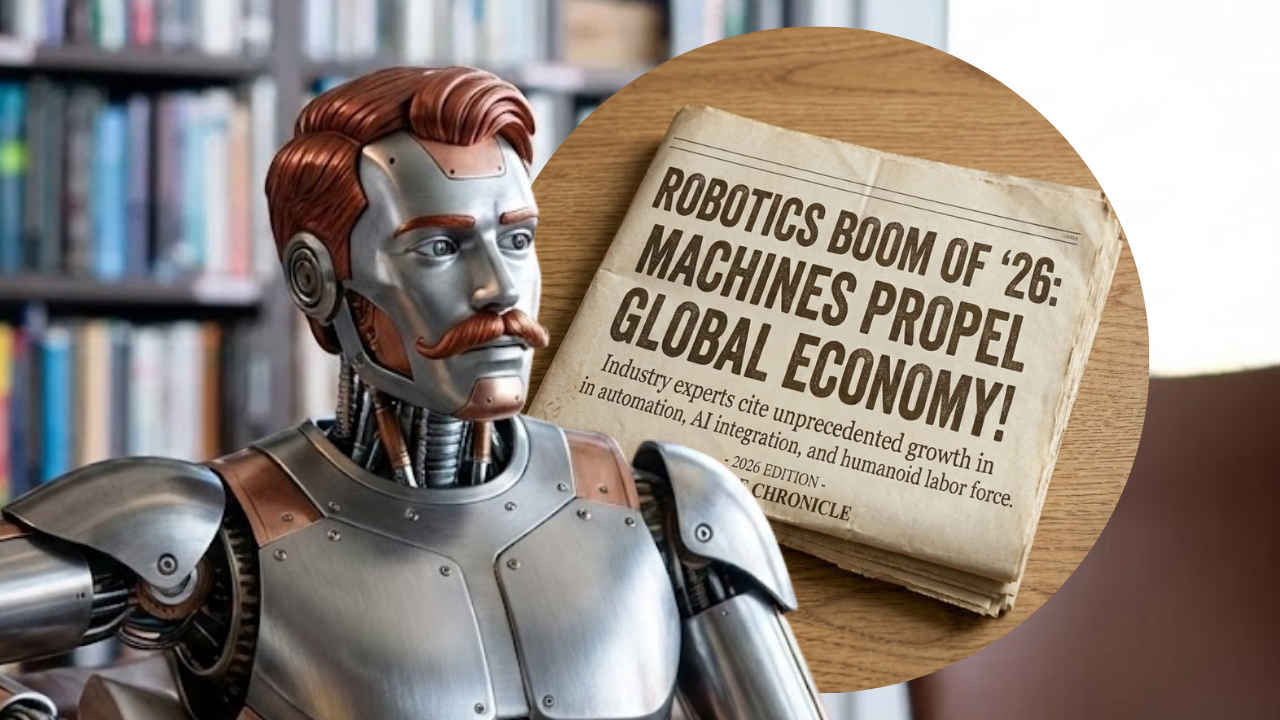
When Logan Kilpatrick says 2026 will be a “huge year for embodied AI,” it doesn’t sound wildly over-optimistic of a guy who doesn’t know what he’s talking about. To me it looks like a weather report on the evening news, where the meteorologist is giving us a hint as to how imminent robots are.
 Survey
Kilpatrick, who runs Google AI Studio, made the comment quietly on X, but it echoed loudly across an industry already vibrating with anticipation. His framing was blunt and refreshingly unromantic, when he said we are about to see “a lot more robots in the real world.” Not demos, not research labs, but on real floors, doing real work, where robots will have real consequences


The timing matters. Google has spent the past year laying the groundwork with Gemini Robotics 1.5 and Gemini Robotics-ER 1.5 – models designed not just to reason, but to act amid the chaos of the physical world. Add to that December’s launch of Gemini 3 Flash, and the jigsaw puzzle starts to fall into place; about the possibility of how AI will finally step out of our screens in a disruptive way.
Kilpatrick isn’t alone on this ridge, scanning the horizon. Some big name tech titans have been talking about how 2026 will be a big year for robots.
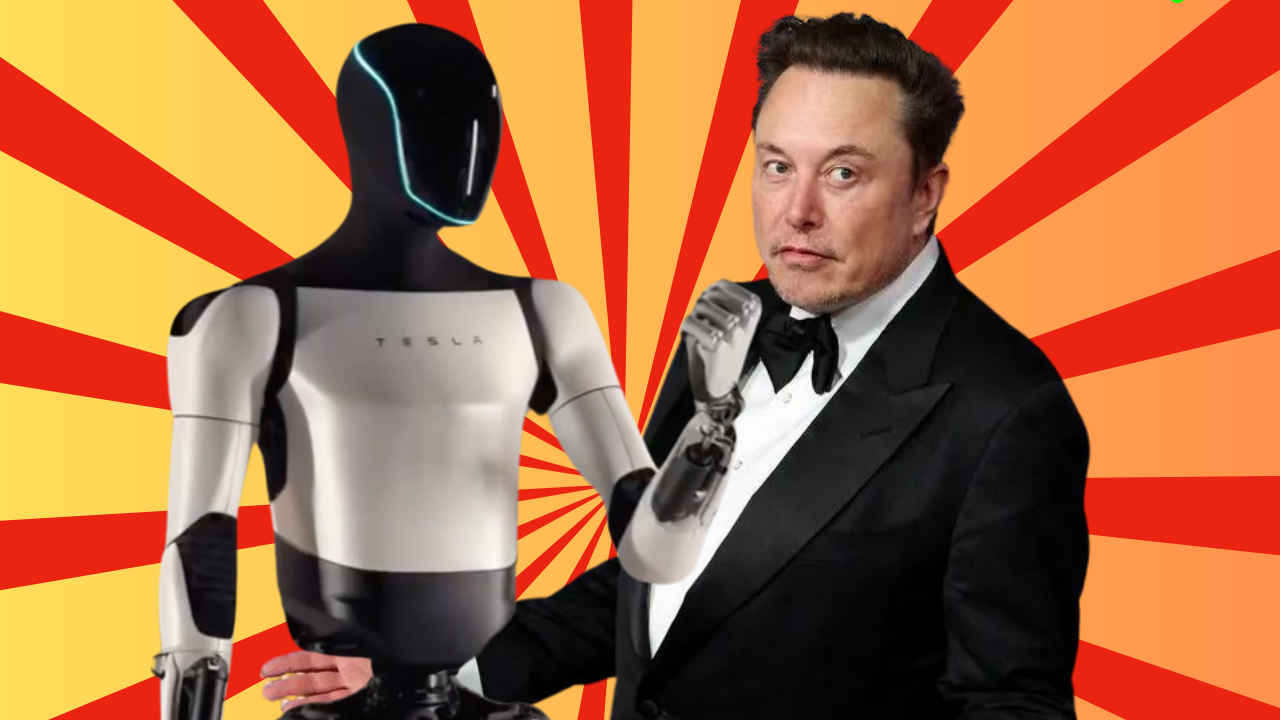
Never one to understate the future, Elon Musk has tied 2026 directly to Tesla’s humanoid robot ambitions. He predicts an Optimus V3 prototype in early 2026 and production scaling to a million units annually by year’s end. In Musk’s telling, humanoid robots don’t just automate tasks – they rewrite economics, potentially unlocking a $25 trillion market and ushering in self-reinforcing supply chains where robots help build… more robots. Only Musk could’ve articulated that!
Then there’s Jensen Huang, who has been calmly, relentlessly calling the 2020s “the robot decade.” NVIDIA’s Jetson Thor platform is already being positioned as the nervous system for humanoids, warehouses, and AI-run factories. Huang’s vision is less sci-fi spectacle and more industrial disruption – where every company running plants populated by AI-powered machines, quietly goes on compounding their productivity gains.
Sam Altman slots neatly into this timeline, too. He’s suggested 2026 as the year AI agents begin delivering genuinely novel insights – followed shortly by robots entering the physical world at scale. His longer arc is almost recursive like Musk, where robots are building data centers, fabs, and infrastructure that accelerate the next wave of AI progress.
Robots are incoming say industry watchdogs
Major research houses are seeing the same curve. A 2024 McKinsey report estimated the humanoid robotics market could reach hundreds of billions of dollars within two decades, driven by breakthroughs in perception, dexterity, and learning from real-world data. Goldman Sachs, meanwhile, has highlighted labour shortages, aging populations, and warehouse automation as accelerants that pull robotics adoption.
This is why 2026 keeps surfacing as a waypoint. Not because robots suddenly become magical, but because enough constraints finally loosen at once – things like compute costs drop, where models get faster and more embodied, sensors get cheaper. Economic pressure does the rest.
We’ve been promised robot revolutions before. This time feels different – not louder, just heavier. Less spectacle, more gravity.
Also read: Beyond ChatGPT: ‘Godmother of AI’s bold bet on spatial intelligence with World Labs
 Follow Us
Jayesh Shinde
Executive Editor at Digit. Technology journalist since Jan 2008, with stints at Indiatimes.com and PCWorld.in. Enthusiastic dad, reluctant traveler, weekend gamer, LOTR nerd, pseudo bon vivant. View Full Profile


