
xAI is building AI models for gaming and robotics: Here’s what we know
 Follow Us
xAI builds world models merging gaming, robotics, and real-world simulation
Elon Musk’s xAI hires Nvidia talent to develop physics-aware AI
Next-gen AI models could revolutionize video games and autonomous robots


Elon Musk’s artificial intelligence startup, xAI, is moving beyond large language models and into a new frontier of machine intelligence – one that doesn’t just talk about the world but understands it. The company is now building “world models”, a next-generation class of AI systems that can learn the physics of reality, simulate dynamic environments, and even design interactive 3D spaces for gaming and robotics.
 Survey
Also read: OpenAI vs. Elon Musk: Lawsuit escalates with claims of intimidation against AI safety advocates
A new kind of intelligence
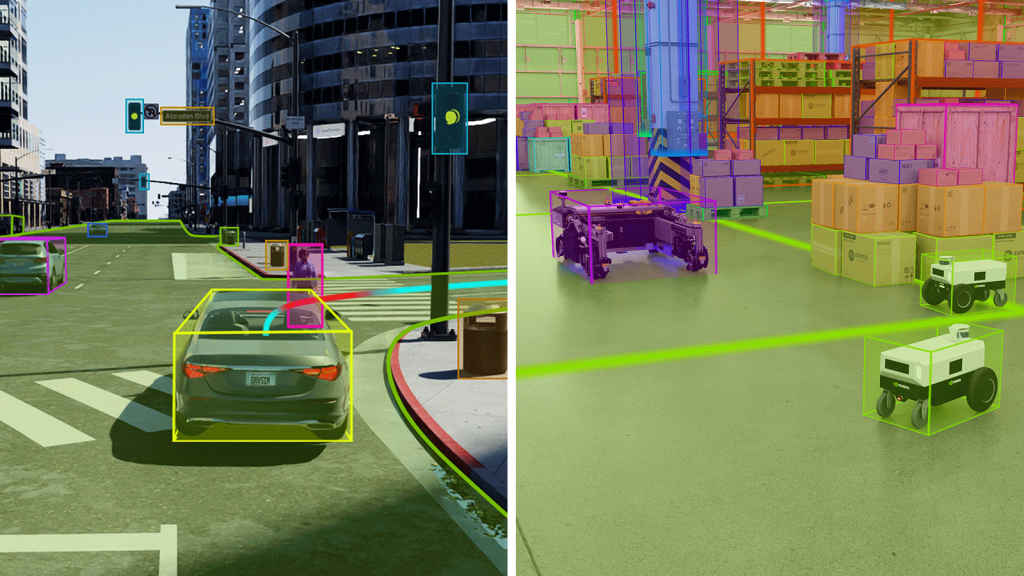
Unlike the text-based large language models that underpin systems such as ChatGPT or xAI’s own Grok, world models are trained on videos, physical simulations, and data from robots. Their goal is to build a causal understanding of how the world works, how objects move, how light behaves, how a hand might grasp a cup or a car might skid on ice.
In short, these models aim to give AI a form of spatial and physical common sense. They could allow digital agents to navigate real or virtual environments with the same kind of intuitive logic that humans take for granted.
The gaming connection
Musk has said that xAI plans to release a “great AI-generated game” by the end of 2026, a statement that, like many of his pronouncements, straddles the line between ambition and provocation.
According to reporting by the Financial Times, xAI has hired several former Nvidia specialists, including Zeeshan Patel and Ethan He, to work on this initiative. Nvidia, whose Omniverse platform already powers high-fidelity 3D simulations, has described the market potential for world models as “almost as large as the global economy itself.”
Also read: Inside Intel’s reboot: Sachin Katti’s blueprint for an open, heterogeneous AI future
For xAI, video games are not just entertainment, they’re testbeds for world models. Games provide complex but controlled virtual environments where AI can safely learn cause and effect, decision-making, and spatial reasoning. If successful, these models could later be extended to robotics, enabling autonomous systems that interact intelligently with the physical world.
Beyond text and images
Earlier this week, xAI launched a new image and video generation model, touting “massive upgrades” and free access. But the company’s job postings suggest an even broader vision.
Its so-called “omni team” is hiring researchers across image, video, and audio generation to create “magical AI experiences beyond text.” Salaries for these roles reportedly range from $180,000 to $440,000, with one listing for a “video games tutor” – a human who will train Grok to produce video games and help users explore AI-assisted design.
That last detail hints at a future where game development could become an interactive collaboration between human designers and generative AI systems capable of shaping worlds in real time.
Why world models matter
The concept of a world model isn’t new, researchers like David Ha and Jürgen Schmidhuber have been exploring it for years. But the surge in compute power, coupled with breakthroughs in multi-modal learning, has made it newly viable at scale.
World models go beyond frame-by-frame video prediction (as seen in OpenAI’s Sora) by understanding rather than merely imitating motion. Instead of stitching images together, they model the laws of physics, allowing for consistent and reactive environments that can be navigated, altered, and reasoned about dynamically.
That makes them valuable not only for games and robots, but also for digital twins, simulation-based training, and next-generation AI assistants that can reason about the physical world, from traffic patterns to manufacturing processes.
Not everyone’s convinced
Not all voices in the gaming industry are enthusiastic. Michael Douse, head of publishing at Baldur’s Gate 3 studio Larian, wrote this week that AI won’t fix what he calls the industry’s “big problem” – a lack of leadership and creative vision. “We don’t need more mathematically produced gameplay loops,” he said, “but more worlds that people actually want to engage with.”
That skepticism underscores a deeper question: will AI-generated worlds feel as rich and meaningful as those built by human hands?
For now, xAI’s ambitions are clear – to give AI the power to understand and shape the worlds we live and play in. Whether those worlds will feel alive is another challenge entirely.
Also read: Study finds hacking most LLMs is remarkably easy: It just takes malicious documents


