
Gemini Nano Banana viral trends: Fun AI edits, serious privacy questions
 Follow Us

In September 2025, a new AI-powered photo editing tool swept across social media, turning selfies into Bollywood-style portraits and pets into plush toys. Known as “Nano Banana” – the playful nickname for Google’s Gemini 2.5 Flash Image model – this feature within the Gemini app has captivated millions, driving over 500 million image generations and 10 million new downloads in weeks. Its ability to blend user-uploaded photos with imaginative prompts has made it a viral sensation, outranking competitors like ChatGPT in app stores. Yet, beneath the creative frenzy, experts are raising urgent concerns about privacy violations and the looming threat of deepfakes, casting a shadow over this digital playground.
 Survey
An explosion of viral trends
Nano Banana redefines photo editing by combining advanced AI with simple text prompts, transforming images in seconds. Available via the Gemini app or web interface, it excels at preserving subject likeness while applying fantastical edits, earning a 170 Elo score lead over rivals in image editing benchmarks. Its accessibility has fueled its meteoric rise, making Gemini the top free app in markets like India and the U.S.
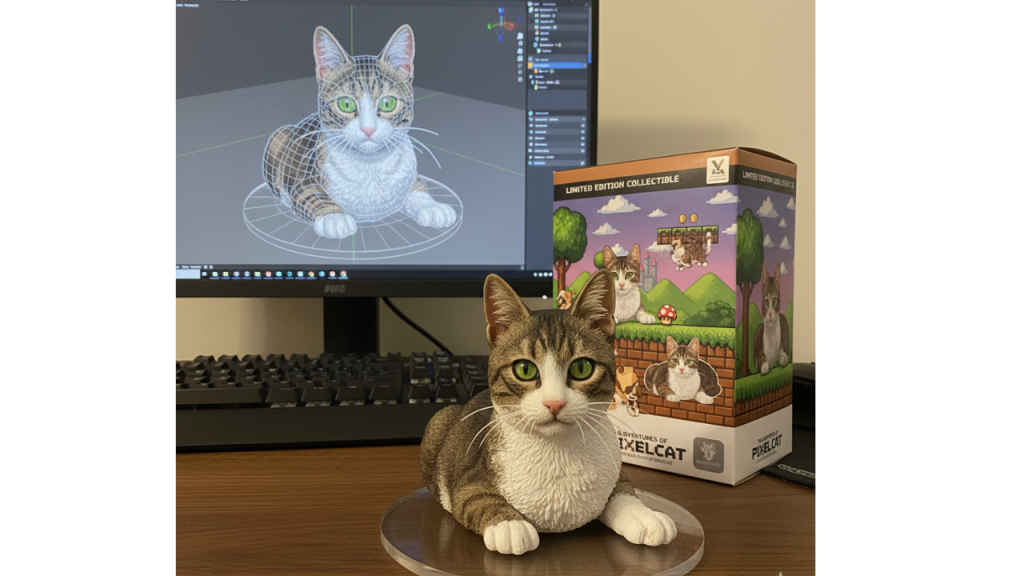
The tool has birthed a slew of viral trends, each dominating platforms like Instagram, TikTok, and X:
- The Saree Trend: A cultural hit in India, this transforms selfies into vintage Bollywood portraits with intricate sarees and cinematic lighting. Prompts like “Edit my photo into a 1950s Bollywood star in a red saree” produce stunning, shareable results.
- 3D Figurines: Globally beloved, this trend turns portraits or pet photos into collectible-style miniatures, as if displayed on a virtual shelf. Prompts like “Create a hyper-realistic 3D figurine of me as a designer toy in a display case” have sparked millions of posts.
- Celebrity Selfies: Users blend into star-studded scenes or morph into celebrity lookalikes with prompts like “Turn this selfie into a polaroid with me and a Hollywood star on a red carpet,” creating dream-like hybrids.
- Polaroids: For retro vibes, this trend converts photos into faded polaroid-style shots. Prompts like “Make this a vintage polaroid from the 1980s, with handwritten notes” are a hit for aesthetic feeds.
- Pet Transformations: Animal lovers turn pets into plush toys or fantasy creatures with prompts like “Make my dog a plush toy in a storybook world,” driving engagement with adorable results.
These trends showcase Nano Banana’s creative power, with everyone praising its speed and ability to blend multiple images seamlessly, rendering traditional editing tools obsolete.
Privacy, data and deepfake risks
While Nano Banana delights, it raises serious privacy concerns. The tool relies on user-uploaded images, and Google’s terms permit these to be used for training future AI models, potentially without explicit consent. This means personal photos could linger in datasets, raising fears of unintended exposure. Child safety advocates have labeled kid-friendly versions “high risk” for data leaks, urging caution with sensitive uploads.
Also read: Google Gemini overtakes ChatGPT on App Stores, becomes top AI app amid Nano Banana trend
The deeper worry is deepfakes, AI-generated media that convincingly alters reality. Nano Banana’s ability to produce hyper-realistic edits makes it a potential tool for creating deceptive content. Malicious actors could use it to craft fraudulent images or videos, blending faces into compromising scenarios for harassment, blackmail, or misinformation. In India, where the saree trend thrives, experts highlight risks of identity fraud, as AI edits can sometimes be reverse-engineered to reconstruct original photos. One study noted that realistic deepfakes can evade detection 70% of the time with current tools, amplifying the threat.
Google has implemented safeguards, including visible watermarks and SynthID, an invisible marker to flag AI-generated content. However, these measures fall short. Watermarks can be cropped or edited out, and SynthID detection isn’t widely accessible to the public. As deepfake technology advances, the potential for misuse grows, with experts warning that tools like Nano Banana could fuel scams or propaganda if not tightly regulated.
Deepfakes in the Spotlight: A Growing Threat
Deepfakes, once a niche concern, are now a mainstream issue, and Nano Banana’s capabilities thrust it into this debate. The tool’s strength, blending images with uncanny realism, makes it a double-edged sword. For instance, a user could upload a selfie and prompt, “Place me in a fake news broadcast,” creating a convincing but false image that could spread rapidly online. Such scenarios threaten reputations, elections, and trust in media. In 2025, deepfake-related incidents have already surged, with one report estimating a 20% rise in AI-generated fraud cases globally.
The saree and celebrity selfie trends, while fun, illustrate the risk: a photo morphed into a convincing but fabricated scene could be weaponized. Privacy advocates stress that users, especially minors, are vulnerable if images are misused. The lack of robust, universal deepfake detection tools exacerbates the problem, leaving individuals and platforms struggling to keep up.
Balancing Creativity and Caution
Gemini Nano Banana has unleashed a creative revolution, turning everyday photos into art that captivates millions. Its viral trends – sarees, figurines, polaroids, and more – reflect AI’s power to democratize imagination. Yet, the risks of privacy breaches and deepfakes loom large. Experts urge users to avoid sharing sensitive photos, scrutinize outputs for anomalies, and demand stronger safeguards from tech giants like Google.
As Nano Banana continues to dominate feeds, it’s a reminder that AI’s magic comes with responsibility. For now, we can revel in the fun, but with eyes wide open to the dangers lurking beneath the surface.
Also read: Inside Google’s Nano Banana: Gemini’s new AI image editor


