NVIDIA CEO Jensen Huang says higher AI token usage boosts productivity
Engineers will evolve into orchestrators of hundreds of AI agents at work
AI removes limits of complexity, time, and workforce size
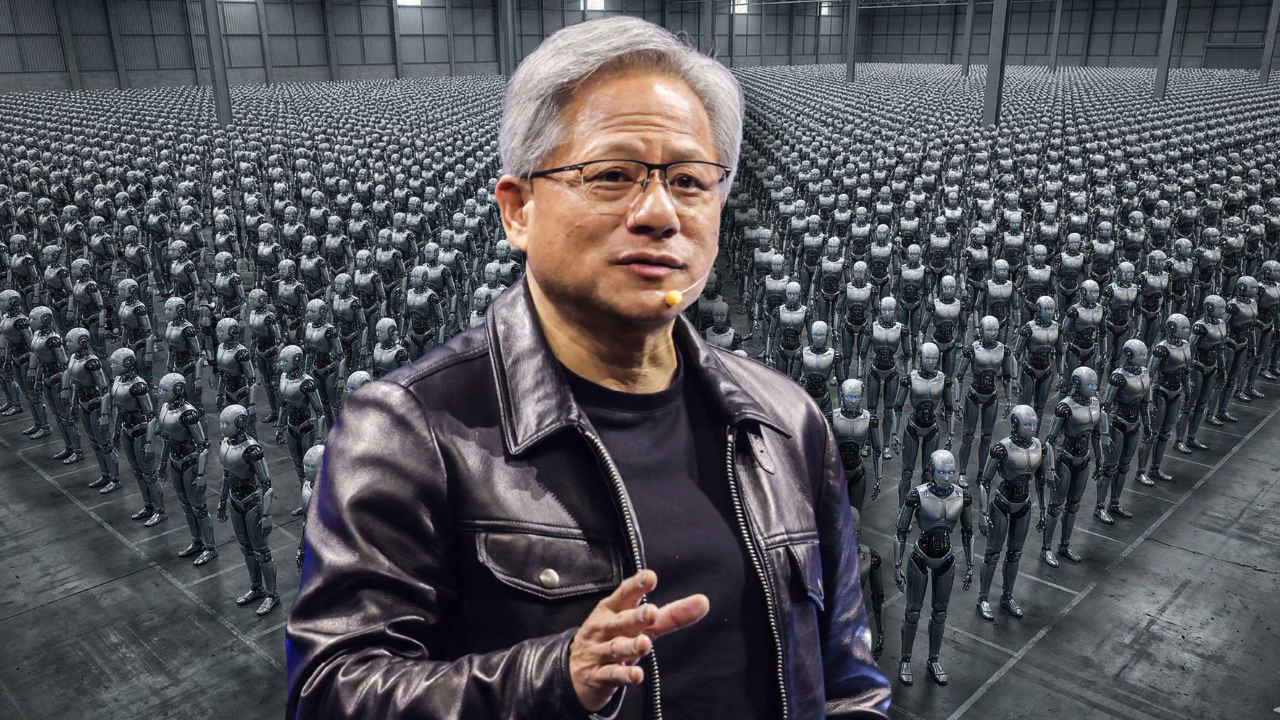
There are many ways to measure the productivity of an engineer that earns $500,000 or ₹2.3 crore per year. NVIDIA’s Jensen Huang, in his inimitable style and theatrical bluntness, has proposed a new one – token burn.
 Survey
“That $500,000 engineer at the end of the year, I’m going to ask him, how much did you spend in tokens?” The NVIDIA CEO was quoted while speaking on the All-In Pod on the final day of GTC 2026. “If that $500,000 engineer did not consume at least $250,000 worth of tokens, I am going to be deeply alarmed,” emphasised Jensen Huang.
If you think about the implication of what Huang is suggesting, it effectively inverts decades of enterprise thinking. Efficiency, in the classical sense, is all but dead in the age of AI. Under-utilisation of resources – not excess – is the bigger sin, according to NVIDIA CEO Jensen Huang.

Tokens are not a cost centre, they need to be looked at as capability. “This is no different than one of our chip designers who says I’m just going to use paper and pencil,” Huang said, with a deliberate example. You see, just as CAD tools became non-negotiable for chip design, AI agents are becoming the baseline tools for doing increasingly more knowledge work.
Huang’s comments aren’t hot gas, there’s data to back him up. A 2025 study by KPMG estimated that GenAI could add $2.84 trillion in GDP to the US by 2030 and $11.04 trillion to global GDP by 2050, with software engineering among the highest-impact domains. Meanwhile, GitHub’s Copilot research found developers completing tasks up to 55% faster, with a majority reporting reduced cognitive load.
However, Huang isn’t just hinting about faster code, but a fundamental rewrite of what work truly means in the age of AI agents. “Things that are too hard, take too long, need a lot of people, those ideas are all gone,” Huang points out. AI collapses human effort barriers in the same way machinery once did for physical labour.
Also read: ‘Are you insane?’ Huang hits out at claims some Nvidia managers want reduced AI use
“Every engineer is going to have a hundred agents,” Huang predicted. The lone genius coder is being replaced by something closer to a conductor of a software-driven orchestra, which changes the job description entirely.
“In the past, we code. In the future, we’re going to write ideas, architectures, specifications… define what good looks like.” This is less about typing syntax and more about shaping intent. Less mechanical keyboard tapping, more emphasis on thinking and automating.
All of what Huang said brings us to an uncomfortable implication. If your value as a knowledge worker was linked to output volume, AI is already eating your lunch. But if your value is defined by taste, judgement, and creativity, your stock just went up. Huang isn’t asking you to spend more on tokens as much as he’s asking you to spend on possibility.
Also read: GTC 2026: Jensen Huang’s AI future goes beyond just chat
 Follow Us
Jayesh Shinde
Executive Editor at Digit. Technology journalist since Jan 2008, with stints at Indiatimes.com and PCWorld.in. Enthusiastic dad, reluctant traveler, weekend gamer, LOTR nerd, pseudo bon vivant. View Full Profile


