

Elon Musk says xAI is fastest in the world, because of NVIDIA: Here’s why
 Follow Us
Elon Musk reveals xAI’s supercomputer Colossus 2 with 550K NVIDIA GB200/GB300 GPUs
xAI claims world’s fastest AI model training using NVIDIA’s latest Blackwell GPU architecture
Musk credits NVIDIA for xAI’s unmatched training speed and AI infrastructure dominance
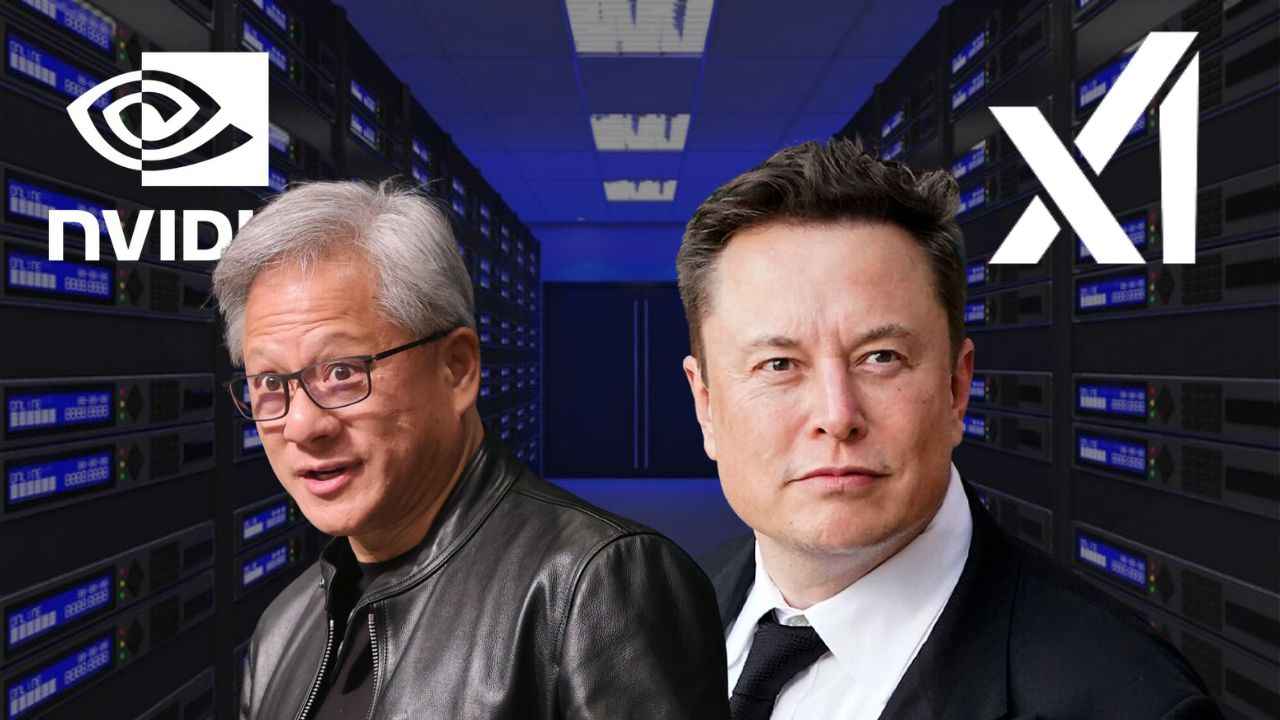

In a bold claim made in an X post, Elon Musk declared that his AI startup xAI is now “unmatched in speed,” and credits NVIDIA for powering that edge. The announcement came via Musk’s X post, where he offered a sneak peek into “Colossus 2,” xAI’s next-generation training cluster expected to host more than 550,000 of NVIDIA’s newest AI chips: the GB200s and GB300s. It’s a staggering hardware ramp-up that not only solidifies xAI’s ambitions to lead the AI arms race but also signals a deeper reliance on NVIDIA’s GPU supremacy.
 Survey
Also read: Elon Musk’s xAI blames code error for Grok’s offensive outputs: All details in 5 points
Musk’s words weren’t just bravado. Backing him up is NVIDIA CEO Jensen Huang himself, who reportedly praised xAI as the fastest AI infrastructure in the world, faster than anything OpenAI, Google DeepMind, or Meta has deployed to date.
Colossus 1: The starting line
xAI’s current supercomputing engine, known as Colossus 1, is already up and running, powered by 230,000 GPUs, including 30,000 of NVIDIA’s GB200s. This cluster is dedicated solely to training xAI’s Grok models, while inference (or model deployment) is handled by cloud providers.
In AI terms, these are monster numbers. For comparison, OpenAI’s GPT-4 training reportedly involved somewhere between 10,000 to 25,000 A100 chips. That puts Colossus 1 comfortably ahead of most existing private clusters. But Colossus 1 is just the beginning.
Colossus 2: A training behemoth
Musk says Colossus 2 will dwarf its predecessor. Over 550,000 GB200 and GB300 chips are being phased into deployment, with the first batch coming online in the “next few weeks.” While that number may sound implausible, the current GPU supply chain bottleneck seems to be bending under Musk’s weight, thanks to early NVIDIA partnerships and a colossal infrastructure build-out.
It’s not just about volume. The GB200 and GB300 are part of NVIDIA’s Blackwell platform, which offers staggering improvements over the previous Hopper generation (H100 and H200). Built specifically for trillion-parameter models and massive AI workloads, these chips use advanced packaging, memory stacking, and interconnects to enable extreme-speed training runs with high efficiency.
Also read: Elon Musk vs Trump: Impact on Tesla, SpaceX, and Musk’s tech empire
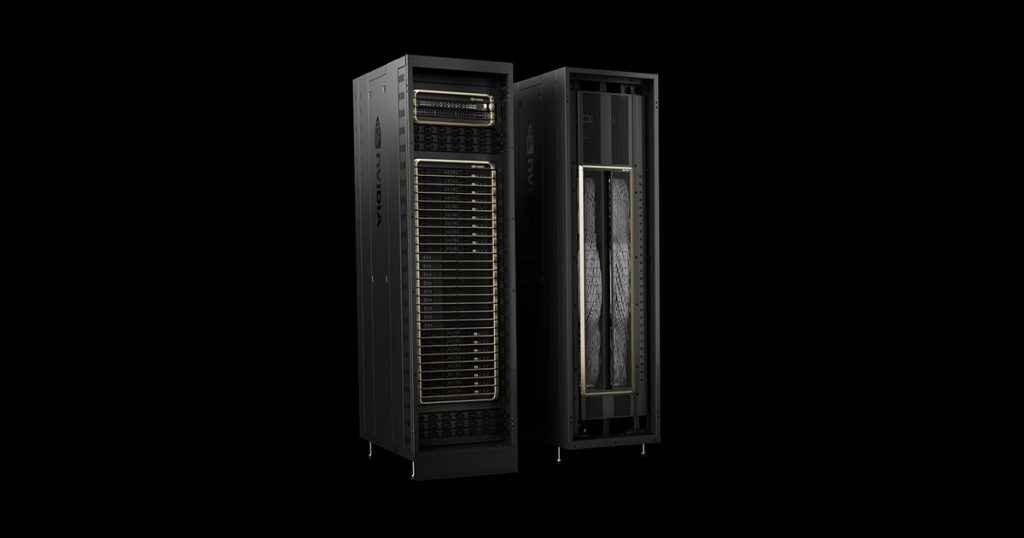
According to NVIDIA, the GB200 superchip architecture allows for 30x faster inference and 25x less energy per token compared to H100-class setups. That means models like Grok can be trained and iterated faster, cheaper, and at greater scale.
Why speed matters in AI
The AI arms race is no longer just about having the smartest model, it’s about building, fine-tuning, and shipping it before anyone else. That demands more than just smart engineers; it requires raw, relentless compute. In that respect, xAI’s Colossus 2 could be the secret weapon Musk needs to surpass rivals like OpenAI and Anthropic.
By bringing training in-house at scale, xAI isn’t just saving on cloud bills. It’s securing strategic independence. This gives the company the agility to retrain, iterate, and deploy new models like Grok 3, 4, and beyond possibly within days rather than months. And when Musk says “fastest,” he means both in terms of training velocity and time-to-market. The speed advantage is compounded by Grok’s real-time X integration, which already gives it access to one of the world’s largest live content graphs.
None of this would be possible without NVIDIA. The chipmaker has become the linchpin of the generative AI economy. From OpenAI to Meta, nearly every frontier model is trained on NVIDIA’s silicon. But xAI may be one of the few companies getting early and massive allocations of Blackwell-class chips. Musk and Huang have a long-standing relationship. Tesla’s early adoption of NVIDIA GPUs for Autopilot and Dojo likely helped lay the groundwork for xAI’s preferential access. The result is a vertically-integrated AI company that controls both the training infrastructure and the end product interface, a rarity in today’s fragmented AI ecosystem.
Elon Musk’s boast that xAI is “unmatched in speed” may sound typical of his showman persona. But for once, the numbers and the silicon seem to back it up. With Colossus 2’s first phase launching imminently, and NVIDIA’s GB200/GB300 chips humming inside, xAI could be well on its way to leading not just in model development, but in the very hardware dynamics that drive the AI revolution.
Also read: Grok 4 by xAI: The evolution of Elon Musk’s AI dream


