
Digit Research: Vivo, Oppo lead camera smartphone preference over Apple and Samsung
 Follow Us
Vivo and Oppo are top choices for cameras among smartphone buyers.
Close to 67% of users prefer smartphones over DSLR cameras.
Almost 50% of users use ultrawide, telephoto, and portrait modes daily.
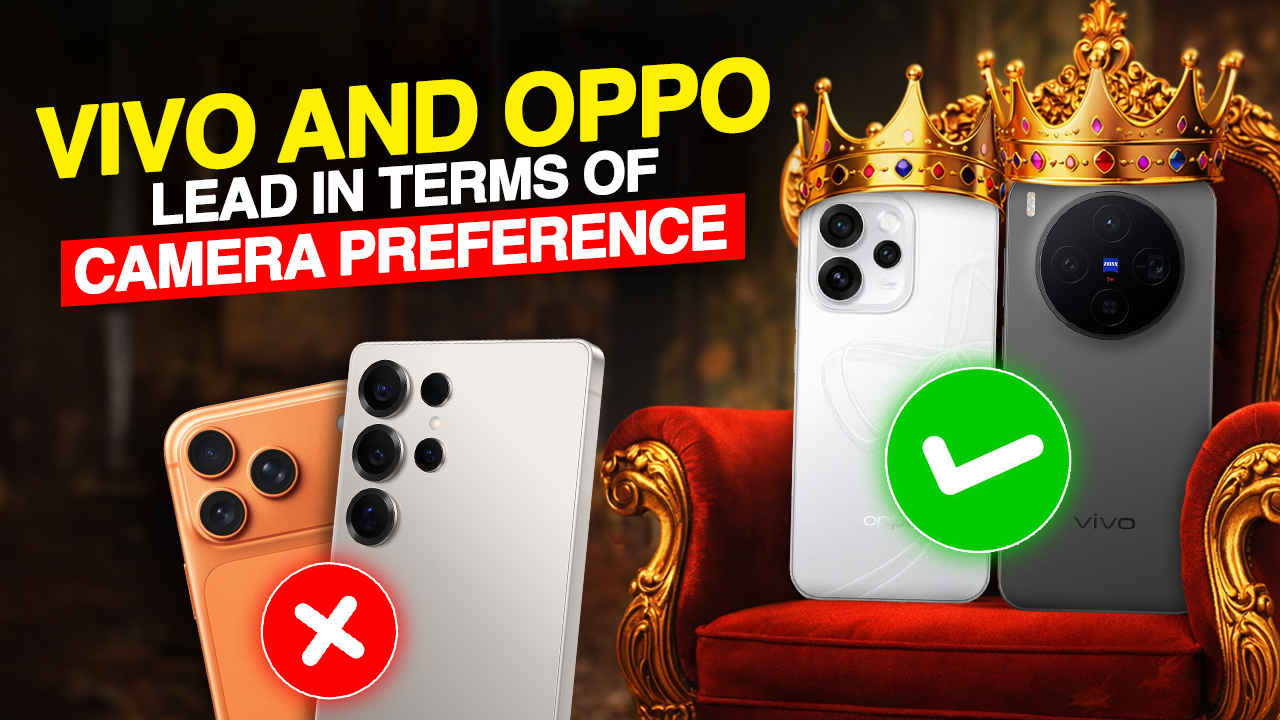

While Apple and Samsung have historically been the preferred choices for camera smartphones, there seems to be a shift in consumer mindset. More and more smartphone users now prefer Vivo and Oppo. As per a recent survey conducted by Digit, more than 26 per cent of participants opted for Vivo as the first brand they think of when it comes to cameras. Oppo was closely followed by nearly 25 per cent of the votes.
 Survey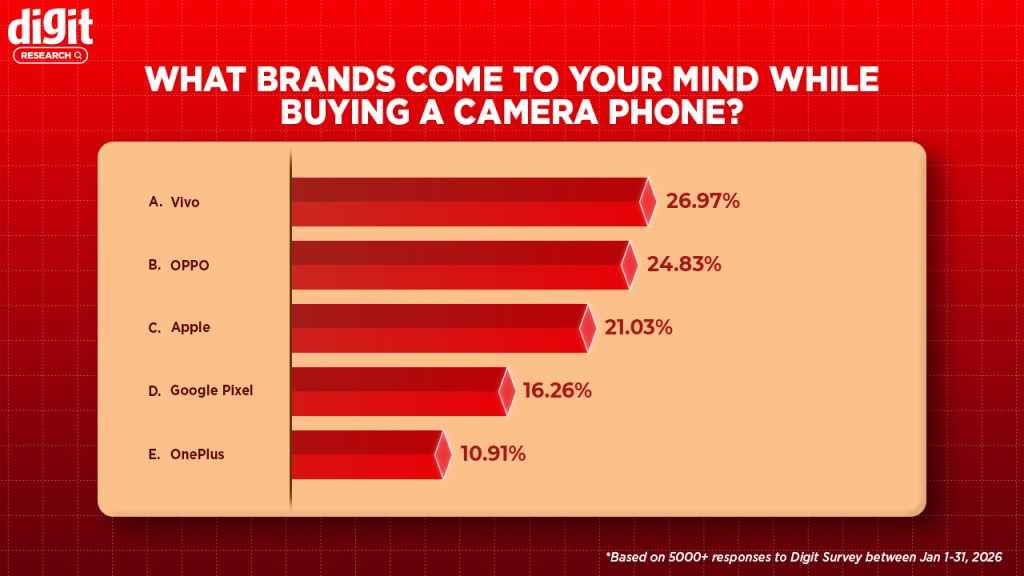
With these two brands securing close to 50 per cent of the consumer mindset, Apple followed in the third spot with about 21 per cent of the votes. Google Pixel and OnePlus completed the top 5 list, leaving out major players like Samsung and Xiaomi.
Both Vivo and Oppo have done interesting collaborations on the camera front. Vivo’s partnership with Zeiss has resulted in major camera improvements, with its X series, in particular, gaining popularity among phone users. Oppo has also introduced many phone-first experiences as part of its collaboration with Hasselblad.
The Google Pixel sat just below Apple, placing it as a strong alternative. It suggests that there is somewhat of a ‘brand loyalty’, and many prefer the software-based optimisations made by Google.
Also Read: Three in four Indians don’t want deepfake images on social media
Smartphones are replacing the DSLR for most users
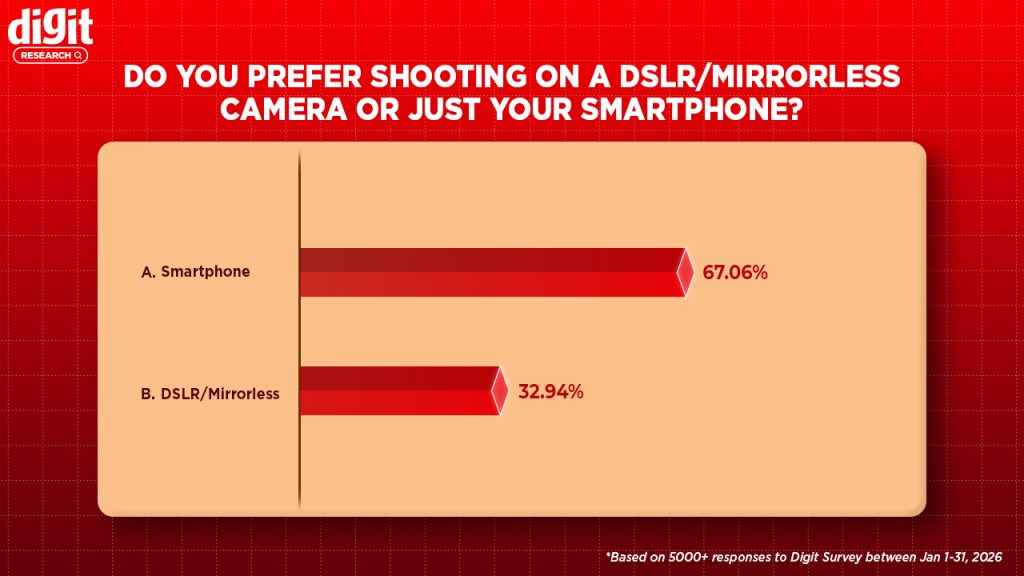
There is also a clear shift from DSLR or professional cameras to smartphones, at least for most casual users. As many as 67 per cent of participants said that they would prefer a smartphone camera over a DSLR. The growing popularity is because of the ease of use, cost-efficiency and growing content creation patterns.
With the growth of social media, no one wants to be stuck in between transferring files. Given that the outputs of smartphones have been good enough for some time now, it looks like many would prefer just using a smartphone instead.
That does not mean people aren’t using a DSLR/mirrorless camera system anymore. The remaining 33% of users picking up that option signifies that there are some ‘enthusiasts’ who would want more control over their imaging. It suggests that there is still a market for such cameras, though it may be growing smaller day by day.
Multiple lenses are no longer a ‘gimmick’
Since 2020, there has been a brief period of time in the smartphone market where makers have actively started putting out multiple camera sensors in a single device. We went from having a single camera lens to having three or even four lenses at a particular time.
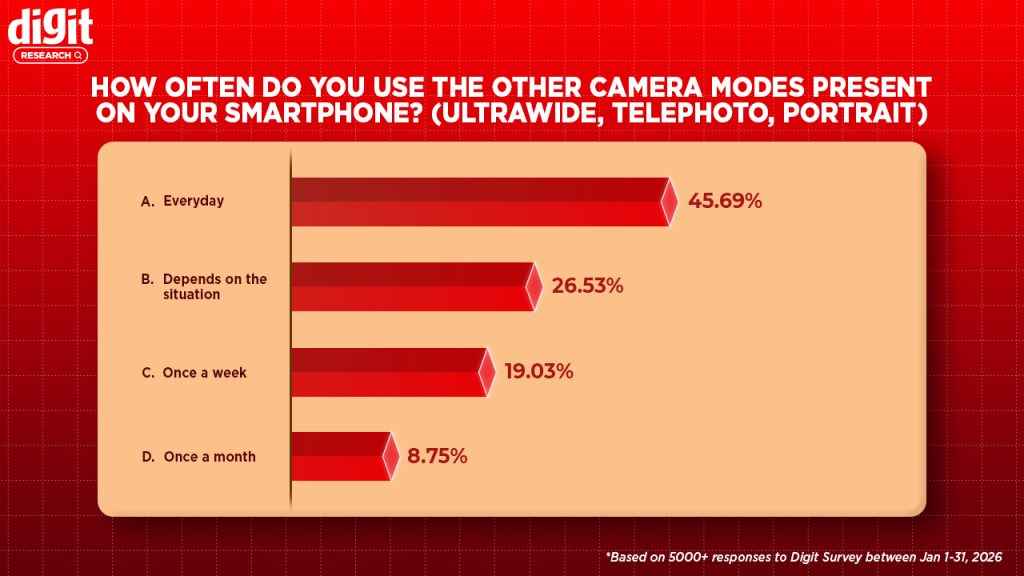
Most users actually find these additional sensors useful. More than 45 per cent of participants said that they use these additional modes/sensors almost every single day, suggesting that people are not limiting their experiences to just the main camera. While less than 9 per cent of participants said that they use these features only once a month.
It’s clear that users are no longer just clicking pictures; they would like to have a certain amount of optical flexibility, which helps them in composing their shots better.
Just like in the camera market, where having multiple lens options in your bag is common, the same can be said for smartphones. Users want multiple lenses inside their pockets, and this high engagement with different modes suggests that a multi-camera system is now a baseline requirement for a smartphone in 2026.
Megapixel count still dominates smartphone buying decisions
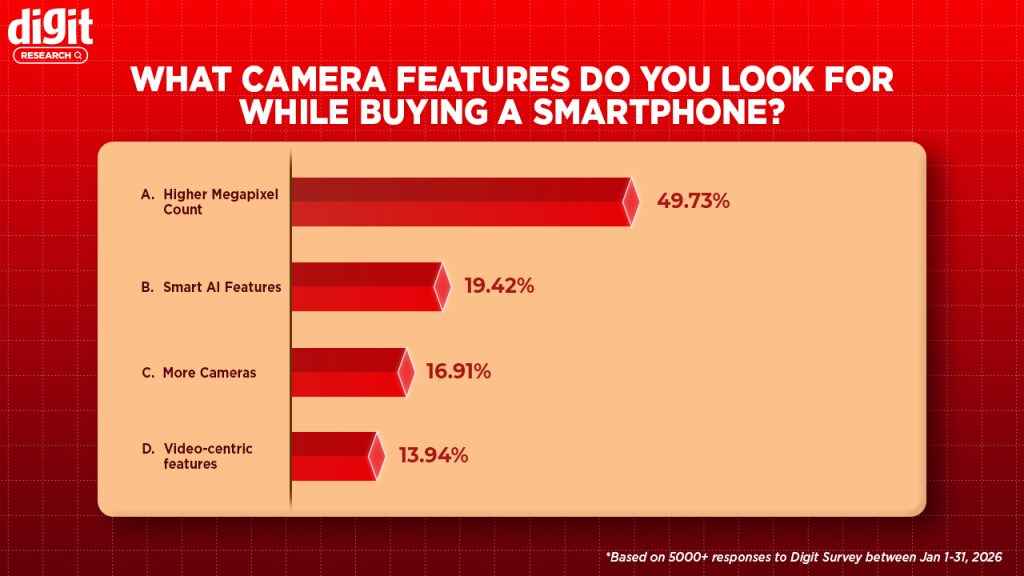
As enthusiasts, you and I know what makes a good smartphone camera. Though what about the masses? What exactly do they look for when buying a phone for the camera performance?
Despite the reality that sensor size and software optimisation are the key factors for good image quality, there is still a megapixel myth surrounding users. Since an overwhelming number of voters chose higher megapixel counts as their primary consideration when buying a phone.
This clearly shows that megapixels outweigh other options on the table. For the makers, the message is clear: marketing their device with a higher megapixel count, like ‘100MP’ or ‘200MP’, will be more effective at giving better sales numbers, rather than explaining the more technical terms to the consumer.
Smartphone users want to go ‘pro’
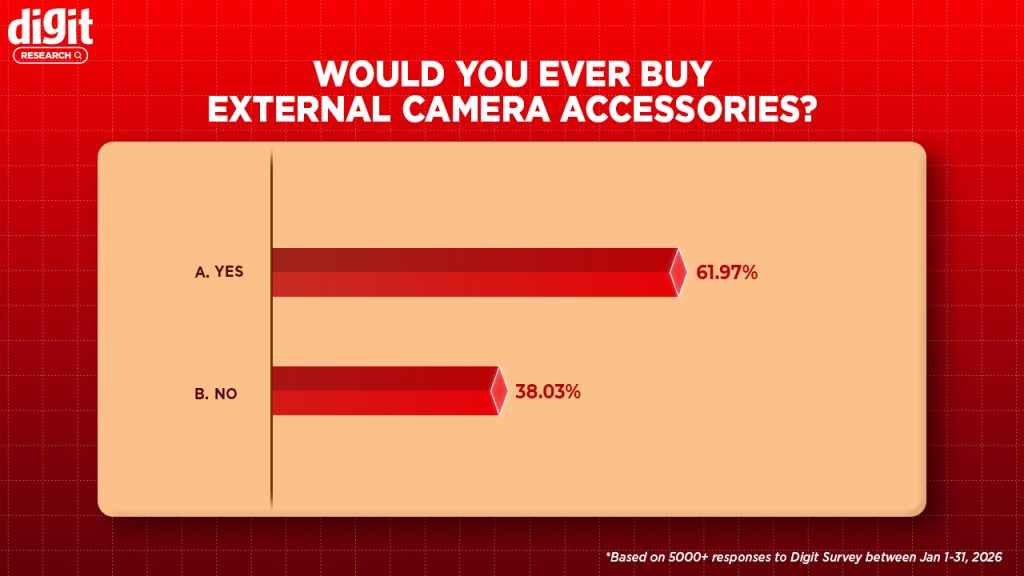
2025 saw a rise in terms of external smartphone camera accessories. While tripods, gimbals, and other camera accessories are already popular in the market, makers like OPPO and Vivo did something completely different. Both brands released smartphones that can support external telephoto lenses, helping give better outputs.
Upon their arrival, there was a lot of debate among tech spaces, asking a big question: would the masses actually buy an external accessory for their smartphones? That was exactly what we asked as our last question for this survey.
And, perhaps the most surprising finding is that more users want to enhance their smartphone imaging experience through external accessories. Over 62% of the voters expressed that they would be happy to invest in external camera accessories.
Over 5000 Digit readers participated in this survey between Jan 1 and Jan 31, 2026.
Also Read: One in two people ask AI chatbots, Google for health advice in India


