
Claude Managed Agents explained: Everything developers need to know
 Follow Us

If you’ve ever spent three months building agent infrastructure only to watch it crumble the moment a model gets updated, Anthropic has some news for you. They have launched Claude Managed Agents as a public beta on the Claude Platform in an attempt to stop reinventing the wheel. The new suite of composable APIs lets developers build and deploy cloud-hosted agents at scale without first having to become experts in sandboxing, state management, credential handling, and all the other unglamorous plumbing that typically stands between a prototype and a production system.
 Survey
Also read: Anthropic adds Managed Agents to Claude for faster AI deployment: All details
Anthropic handles the infrastructure, and you handle the product. Define your agent’s tasks, tools, and guardrails, and a built-in orchestration harness takes care of when to call tools, how to manage context, and how to recover gracefully when things go sideways.
What’s in the box
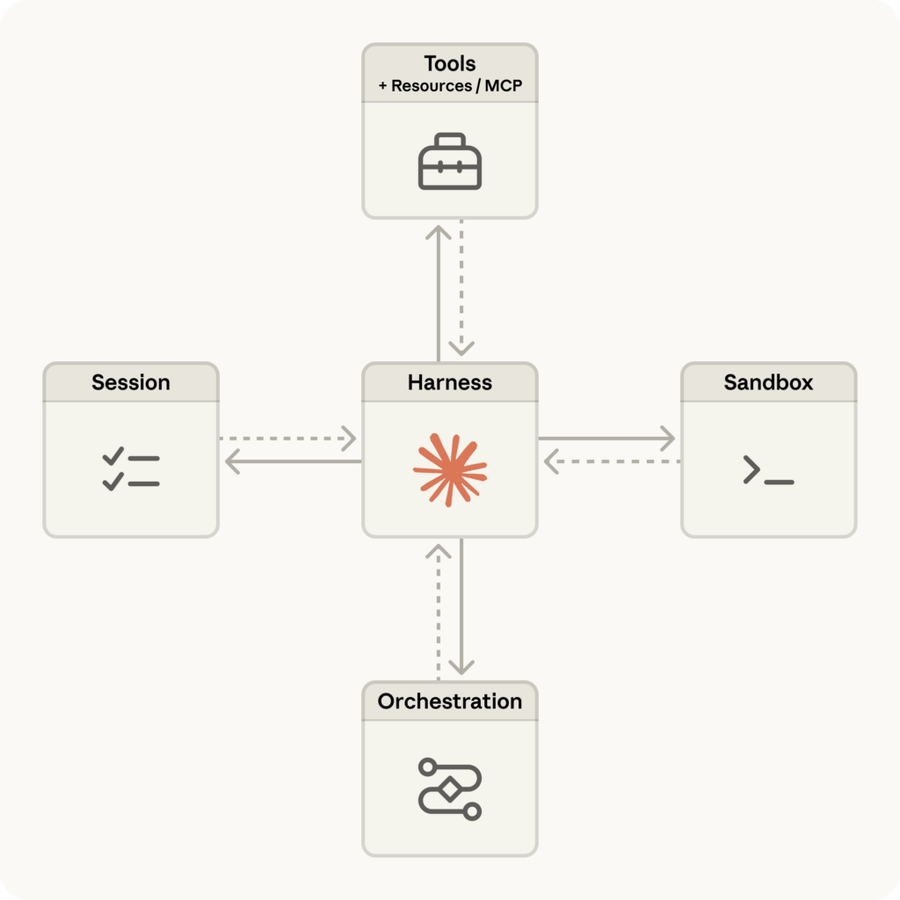
The offering covers four main areas. First, production-grade agents with secure sandboxing and authentication handled out of the box. Second, long-running sessions that can operate autonomously for hours and stay intact even if a connection drops. Third, multi-agent coordination which is available in research preview, which lets agents spin up and direct other agents to tackle complex work in parallel. And fourth, a governance layer with scoped permissions, identity management, and full execution tracing baked in, so you always know what your agents are doing and why.
Also read: Claude Code’s thinking depth dropped 67%: Here’s what Anthropic actually changed and how to fix it
The performance numbers are notable too. In internal testing around structured file generation, Managed Agents improved task success rates by up to 10 points over standard prompting loops, with the largest gains on the most difficult problems.
Early adopters are already shipping. Sentry integrated it to take their Seer debugging agent a step further, users can now go from a flagged bug straight to a Claude-powered agent that writes the fix and opens the PR. Asana used it to build AI Teammates that work alongside humans inside live projects. Rakuten deployed specialist agents across engineering, sales, marketing, and finance, each within a week. The common thread in all the testimonials is time: what used to take months is now taking days.
Pricing runs on consumption. Standard Claude Platform token rates apply, with an additional $0.08 per session-hour of active runtime, which should feel reasonable for anything running meaningful workloads.
For developers who want to get started, the Claude Console has an agent quickstart, and the full documentation is at platform.claude.com. Claude Code users can also kick things off by asking Claude to “start onboarding for managed agents in Claude API” directly in the terminal. The infrastructure problem was never the interesting part anyway.
Also read: Claude Mythos Preview: Everything to know about world’s most dangerous AI model


