

Budget 2026: India eyes deep space with four new telescope hubs
 Follow Us
Budget 2026 funds four massive telescopes to boost Indian astronomy
India expands deep space research with four new telescope facilities
New telescope projects in Budget 2026 propel India’s galactic exploration
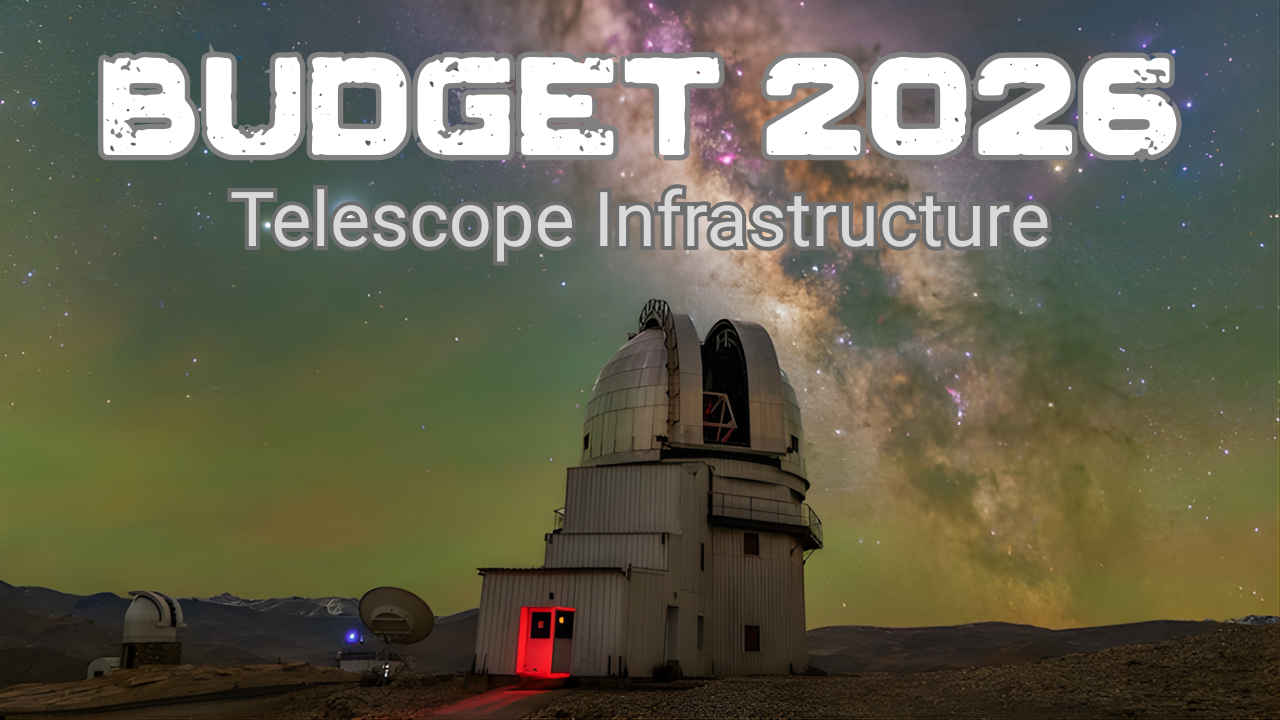

The Union Budget 2026–27 has introduced a landmark era for Indian astrophysics, signaling a shift from routine satellite missions to “discovery-class” science. Finance Minister Nirmala Sitharaman’s announcement to fund and upgrade four mega-telescope facilities marks a strategic leap toward observational sovereignty. Spearheaded by the Indian Institute of Astrophysics (IIA), these projects – located primarily in the high-altitude desert of Ladakh – are designed to transform India into a global hub for deep-space research. By establishing indigenous world-class infrastructure, the government is reducing the dependence of Indian researchers on international observatories, where observation time is often heavily contested.
 Survey
Also read: RAM prices are sky high because of AI slop videos, and I can’t take it anymore
National Large Solar Telescope (NLST)
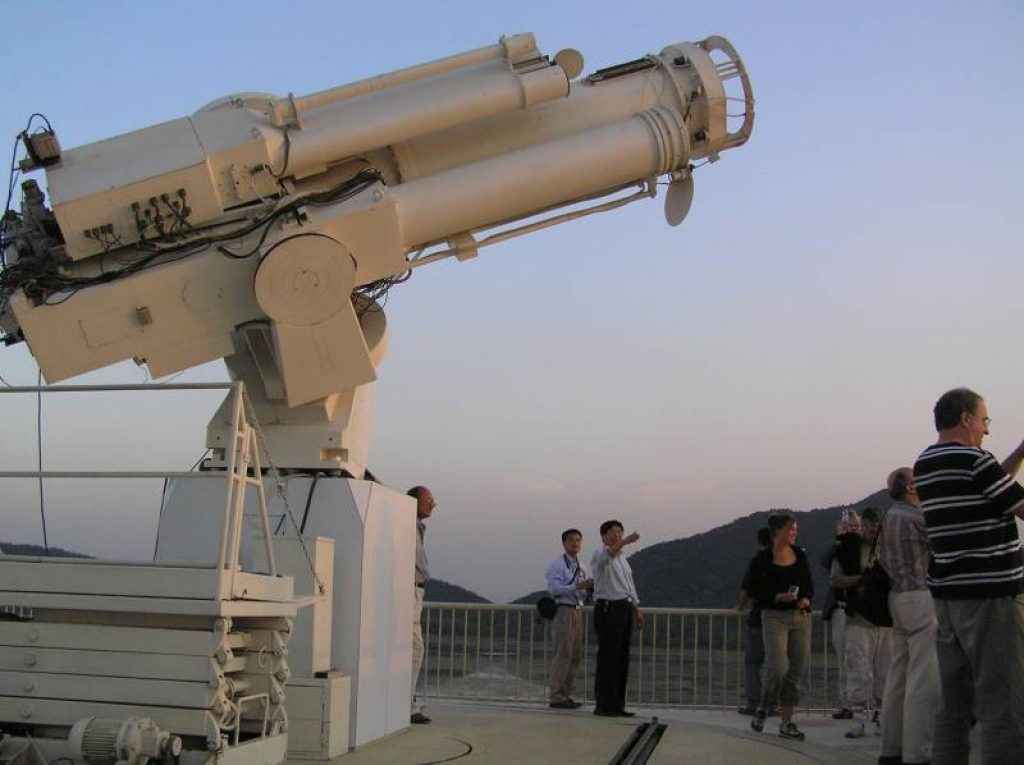
The National Large Solar Telescope is set to become one of the world’s most powerful tools for solar observation. Located in Merak, near the Pangong Tso Lake in Ladakh, this 2-meter class Gregorian multi-purpose telescope is engineered to study the Sun’s magnetic fields and atmospheric processes with unprecedented clarity. The site’s high transparency and laminar winds provide the “outstanding seeing” required for high-resolution imaging. With a spatial resolution of approximately 50 kilometers, the NLST will allow scientists to observe the minute triggers of solar flares and coronal mass ejections. This data is vital not just for academic curiosity, but for predicting space weather events that can cripple global satellite communications and power grids.
National Large Optical-Infrared Telescope (NLOT)
Perhaps the most ambitious project in the budget is the National Large Optical-Infrared Telescope. Planned for the Indian Astronomical Observatory in Hanle, Ladakh, the NLOT will be a 10–12 meter class facility, dwarfing any existing optical telescope currently on Indian soil. To manage the immense scale of the primary mirror, the design utilizes segmented mirror technology, a complex engineering feat that aligns multiple smaller mirrors to act as a single massive light-collecting surface. This facility will peer into the deep infrared, allowing astronomers to cut through cosmic dust to witness the birth of stars, the evolution of the earliest galaxies, and the chemical signatures of distant exoplanets.
Also read: India Semicon Mission 2.0: Key reactions from tech on Budget 2026
Himalayan Chandra Telescope (HCT) Upgrade
Recognizing the importance of maintaining existing assets, the budget also allocates significant resources to modernize the Himalayan Chandra Telescope at Hanle. Operational since 2001, the 2-meter HCT has been a workhorse for Indian astronomy, but the new funding will facilitate a major overhaul of its sensors and backend instrumentation. By improving its sensitivity, the upgraded HCT will remain competitive in the fast-paced field of “transient astronomy.” This involves the rapid detection and monitoring of fleeting cosmic phenomena, such as the sudden appearance of supernovae or the high-energy bursts of gamma rays, providing critical data points for the global scientific community.
COSMOS-2 Planetarium
Beyond pure research, the government is investing in scientific outreach through the COSMOS-2 Planetarium in Amaravati, Andhra Pradesh. This facility is envisioned as a “Cosmology Education and Research Training Centre” rather than a traditional theater. It will feature a state-of-the-art 8K LED dome, a technology that offers significantly higher contrast and brightness than standard projection. Most importantly, COSMOS-2 will be digitally linked to the telescopes in Ladakh, streaming live celestial data directly to the public. This real-time window into the universe is intended to foster a new generation of scientists, turning complex astrophysical data into an immersive educational experience.
This combined investment of over ₹500 crore specifically for space science represents a clear vision: to ensure that as India reaches for the stars, it does so with its own eyes and its own technology.
Also read: Budget 2026: Top 5 announcements made for tech, AI and more


