
Battery life to demand: Humanoid robots industry faces key challenges
 Follow Us
Humanoid robots face hurdles with battery life, safety, and industrial demand
Scaling humanoid robots requires solving reliability and charging infrastructure issues
Investors bet big on humanoids, but power, cost, and adoption remain uncertain
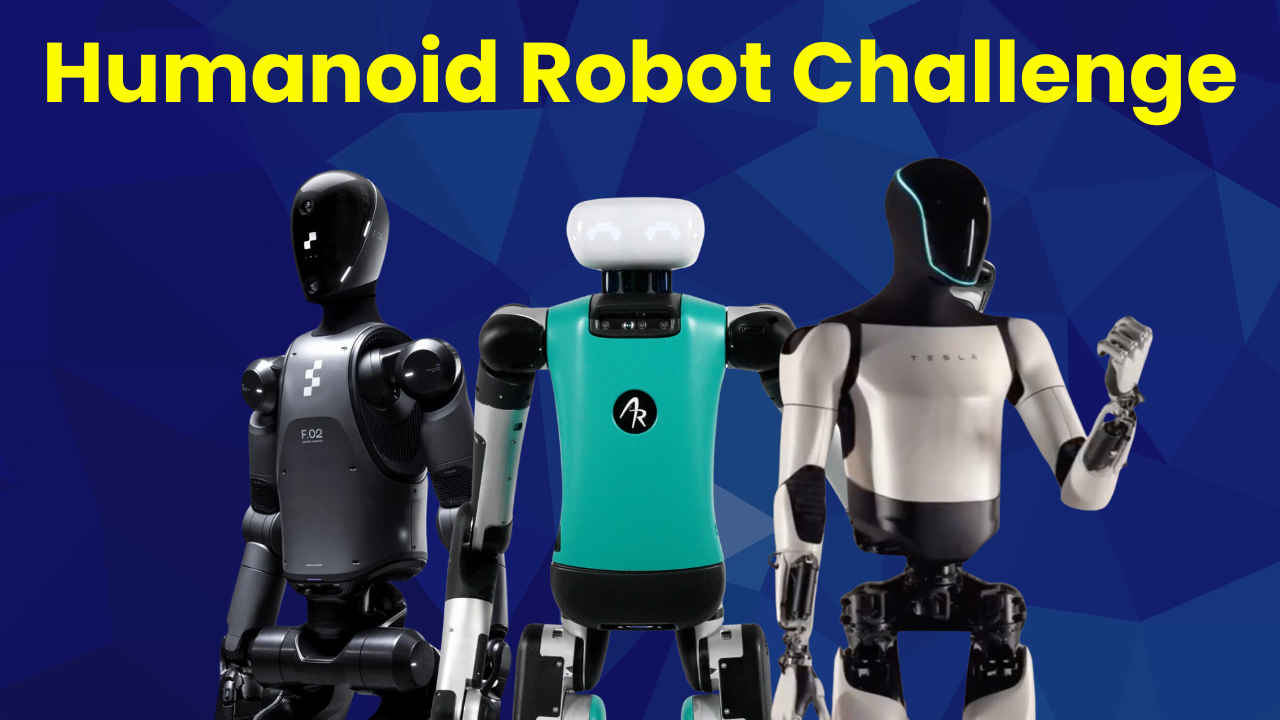

Over the past few years, emerging firms in robotics have made bold bets that humanoid robots will reshape manufacturing, logistics, and even everyday life. Backed by eye-popping valuations and massive investment rounds, companies such as Agility Robotics, Tesla, and Figure are laying out plans to deliver tens of thousands, even hundreds of thousands, of humanoid robots. But recent reporting shows that the road from demos to mass deployment runs straight into some severe practical hurdles.
 Survey
Here are the core challenges the industry must clear and why battery life, reliability, safety, and demand sit at the heart of what will make or break humanoid robots.
Also read: Unitree R1: The $5,900 humanoid robot that may change everything
Scaling expectations vs reality
Manufacturers are making serious projections, Agility Robotics hopes to ship “hundreds” of its Digit robots in 2025 with a factory capable of over 10,000 units a year. Tesla is targeting 5,000 Optimus units in 2025, escalating to 50,000 in 2026. Analysts are just as ambitious; Bank of America forecasts ~18,000 humanoid units shipped in 2025; Morgan Stanley sees more than 1 billion units by 2050, in a market worth some US$5 trillion.
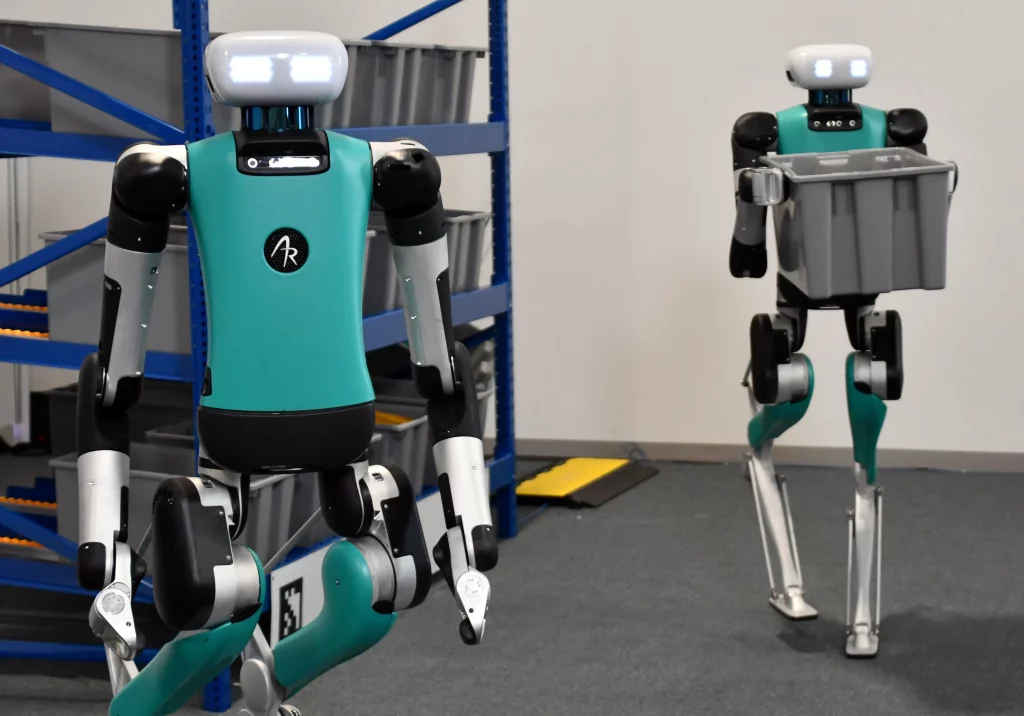
But those numbers are almost entirely hypothetical. So far, most deployments are small trial projects under controlled conditions. Multipurpose, general-purpose humanoids that can safely and reliably operate in messy, unpredictable settings are still under development.
Battery life: more than just a number
Among the various engineering challenges, battery life is one of the most concrete and the easiest to quantify, but also one of the hardest to engineer for real-world use. A robot that must spend much of its time charging is no better than a very expensive prop.
Also read: From AI agents to humanoid robots: Top AI trends for 2025
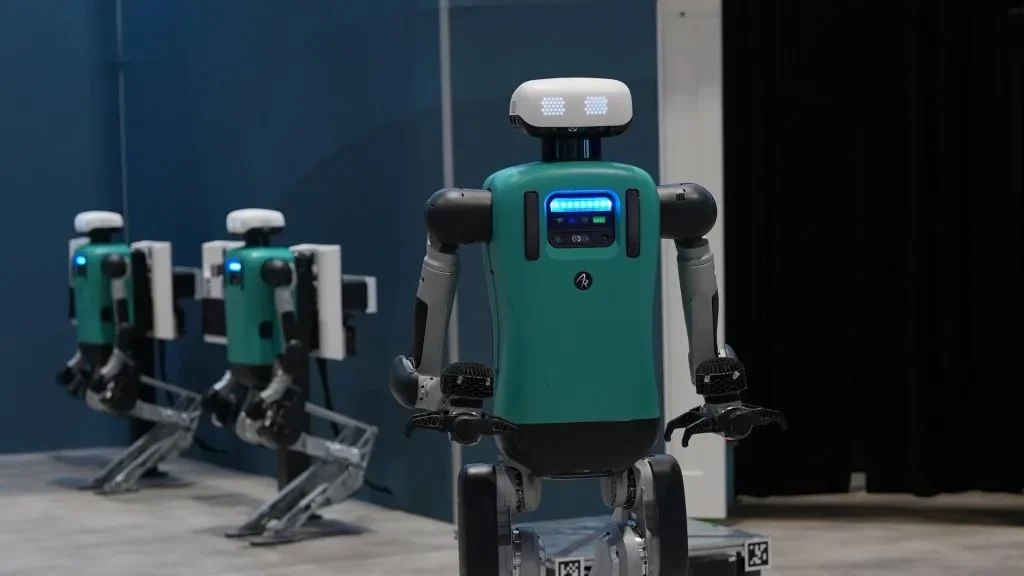
For example, Agility’s next-generation Digit robot carries a battery in a backpack. It can run for 90 minutes, but needs ~9 minutes to recharge. Of that 90 minutes, roughly 30 are active operation, and the rest is reserve to handle pauses, unexpected events, or to avoid risking a robot running dead mid-task. In many industrial environments, such pauses are the norm rather than the exception.
Scaling up to several hundred or thousand robots magnifies any inefficiency. A fleet composed of large, heavy units (100 kg+ each) that needs frequent charging becomes a logistical headache. Who handles downtime, how many backup units are needed, what does infrastructure look like for power and charging, and how much cost is added by the need for extra batteries or maintenance? These are not small considerations.
Reliability, safety, demand: interlocking constraints
Industrial users often demand “a couple more 9s” of uptime. For example, 99.99% reliability is what many expect when robot downtime could halt production lines, costing “tens of thousands of dollars per minute.” However, most humanoids today only demonstrate such reliability in narrow, well-controlled settings not while performing multiple diverse tasks.
Humanoids must adhere to existing safety regulations for machinery. But legged, dynamically balancing robots pose unique risks. Cutting power (e.g. in response to a safety event) might make a robot fall, which could injure people or damage equipment. ISO standards are being developed, especially for dynamically balancing legged robots.
Demand. Perhaps the greatest soft risk is that the demand projections assume multipurpose robots doing many jobs, safely, reliably, at scale. But so far no one has yet shown a use-case that requires “several thousand robots per facility.” Many firms instead hope to deploy hundreds of robots doing many different tasks (10+ jobs each) rather than thousands of identical units.
Unless such use-cases are proven, cost per robot, battery/maintenance infrastructure, and safety assurances may keep adoption slow and prices high.
Progress made and what remains
Battery technology is steadily improving with higher energy density, faster charging. But trade-offs persist between weight, form factor, runtime, and safety. Slimmer robots must compromise somewhere either reducing payload, sacrificing reserve time, or accepting bigger batteries (and thus more weight).
Regulatory bodies and standardisation are finally catching up. Development of ISO safety standards for dynamic balance robots is underway, with leading firms collaborating. Pilot projects are being used to test reliability and safety in limited settings. But for many, what works in a controlled environment does not translate directly to the chaos of real industrial or service contexts.
The bottom line
Humanoid robots hold enormous promise as they could extend or replace human labour in many hazardous, repetitive, or physically demanding settings; they could reshape logistics, warehouses, perhaps even home assistance. But turning that promise into reality will require more than advances in AI or impressive demos.
Battery life must support not just movement, but long duty cycles without frequent outages. Reliability must approach industrial-grade uptime. Safety must be certified in real operational environments. And until there are demonstrated markets large enough to justify the cost and risk, scaling will remain aspirational.
Also read: Watch OpenAI humanoid robot doing things that you have only seen in movies


