
Arattai vs WhatsApp: Major differences, feature comparison and everything else you should know
 Follow Us
Arattai vs WhatsApp: Privacy, features, business tools, India focus
WhatsApp global dominance vs Arattai’s India-first design and growth
Arattai is the number one position in the App Store’s Social Networking category

In India’s dynamic digital landscape of 2025, two messaging apps stand out for their unique strengths: Arattai, a homegrown creation from Zoho Corporation, and WhatsApp, the global titan owned by Meta. With Arattai topping India’s App Store and WhatsApp connecting over 3 billion users worldwide, including 500 million in India, both apps offer compelling ways to stay in touch. Rather than pitting them against each other, this feature story explores their features side by side – messaging, privacy, calling, and more – to help users understand what each brings to the table and which might best suit their needs.
 Survey
Also read: WhatsApp alternative Arattai is number 1 on App Store: What is it and how it works
The Apps: Arattai and WhatsApp
Arattai, launched in January 2021 by Zoho Corporation, is a Made-in-India messaging and VoIP app named after the Tamil word for “casual chat.” Designed with India’s “Atmanirbhar Bharat” (self-reliant India) initiative in mind, it prioritizes accessibility, regional relevance, and digital sovereignty. Backed by endorsements from Indian leaders like Union Education Minister Dharmendra Pradhan and IT Minister Ashwini Vaishnaw, Arattai is tailored for users on low-end devices and slower networks, with a focus on local languages and India-based data storage.
WhatsApp, acquired by Meta in 2014, is a global leader in instant messaging, known for its reliability, end-to-end encryption, and vast feature set. A staple for personal and business communication, it’s deeply embedded in India’s digital culture, serving urban professionals and rural communities alike with its universal appeal.
Feature Comparison: Arattai and WhatsApp
Messaging and language support
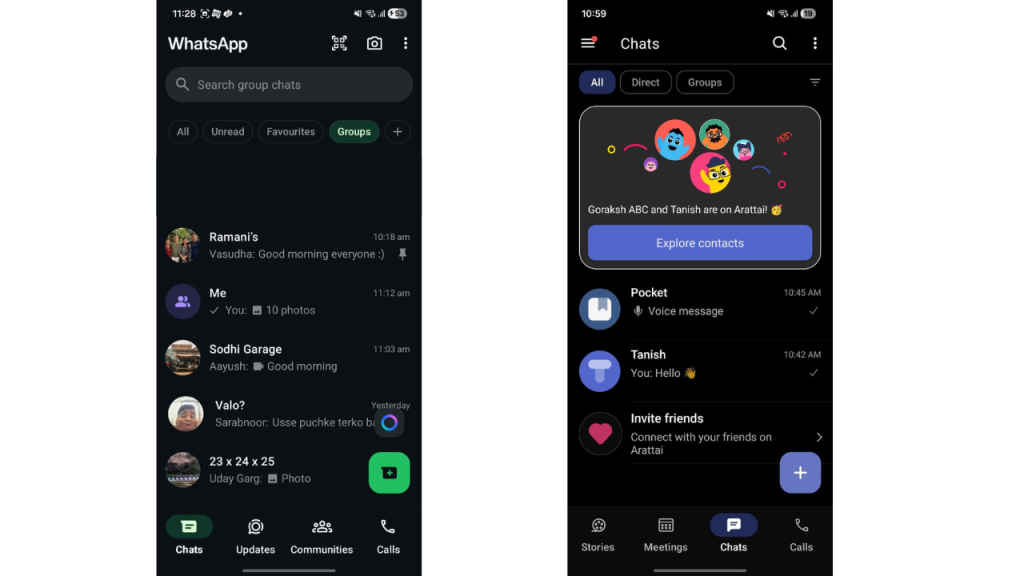
Arattai is designed with India’s linguistic diversity in mind, offering text and voice messaging with strong support for regional languages like Tamil, Telugu, and others. Its lightweight design, requiring minimal storage and data, ensures smooth performance on low-end smartphones and 2G/3G networks, making it ideal for rural users or those with budget devices.
WhatsApp delivers a polished messaging experience, supporting text and voice messages across a wide range of global languages, including major Indian ones. Features like read receipts and typing indicators enhance usability, though its focus is more universal than region-specific.
Privacy and security
Privacy is a key consideration. WhatsApp provides end-to-end encryption for all communications – texts, calls, and media – ensuring no third party, including Meta, can access user data. This makes it a trusted choice for security-conscious users, though its Meta ownership raises concerns about data sharing within its ad-driven ecosystem.
Arattai offers end-to-end encryption for voice and video calls but not for text messages, which may concern privacy-focused users. However, its India-based servers align with digital sovereignty goals, and Zoho’s no-data-monetization policy ensures user data isn’t used for ads.
Voice and video calling
Arattai provides high-definition voice and video calls, optimized for low-bandwidth networks, making it reliable in areas with weak connectivity. Its conference call feature supports group interactions, and call encryption adds a layer of security.
WhatsApp also offers high-quality voice and video calls, with group calls supporting up to eight participants. Its global infrastructure ensures consistent performance, even for international calls, backed by end-to-end encryption.
Group chats and channels
Arattai supports group chats with up to 1,000 members, fostering community engagement, particularly for local creators and businesses. Its broadcast channels enable one-way communication for announcements or content sharing.
Also read: What is Zoho: Indian alternative to Google Docs, Sheets, and more
WhatsApp allows slightly larger groups (1,024 members) with advanced management tools like admin controls and pinned messages. Its channels are widely used by businesses and communities, thanks to its massive user base.
File sharing and stories
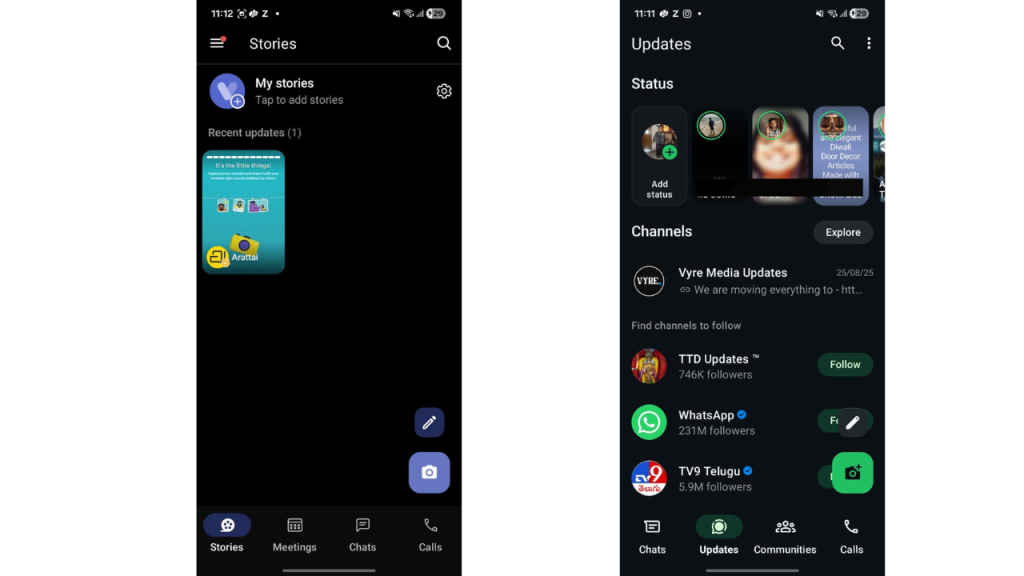
Arattai supports file sharing up to 1 GB, including photos, videos, and documents, with a stories feature for temporary updates. Its media sharing performs well even on slower networks.
WhatsApp allows file sharing up to 2 GB and features a highly polished status function, widely adopted for sharing updates. Its media compression and sharing capabilities are seamless and user-friendly.
Productivity and Self-Storage
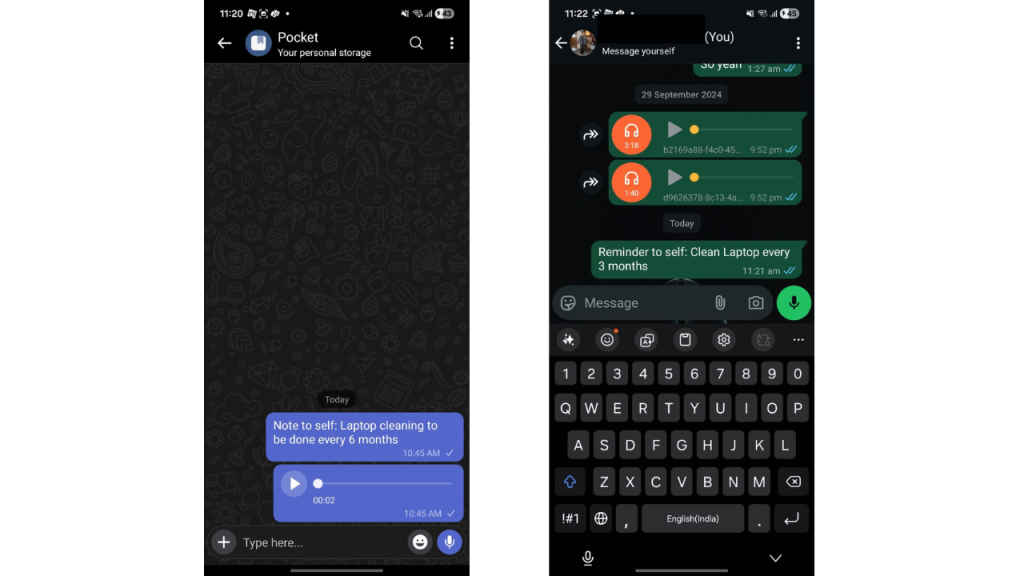
Arattai’s “Pocket” feature is a standout productivity tool, offering a dedicated self-chat space where users can store photos, videos, notes, reminders, and other files. This provides a convenient way to organize personal content, such as to-do lists or saved media, without cluttering other chats. Unlike WhatsApp’s earlier workaround where users created a group, added a contact, then removed them to create a solo chat, Arattai’s Pocket is a purpose-built feature for self-storage and organization.
WhatsApp introduced its own “Chat with Yourself” feature a few years ago, allowing users to send messages, media, notes, and reminders to themselves in a dedicated chat. This features mirror each other in functionality, offering a streamlined way to save links, photos, or tasks, with the added benefit of end-to-end encryption for all content. Its integration into WhatsApp’s polished interface makes it highly intuitive.
Business tools
Arattai’s business features are straightforward, focusing on channels and content-sharing, suitable for small-scale engagement or local creators. There is also a dedicated section for meetings where you can schedule meetings and invite colleagues similar to Microsoft Teams.
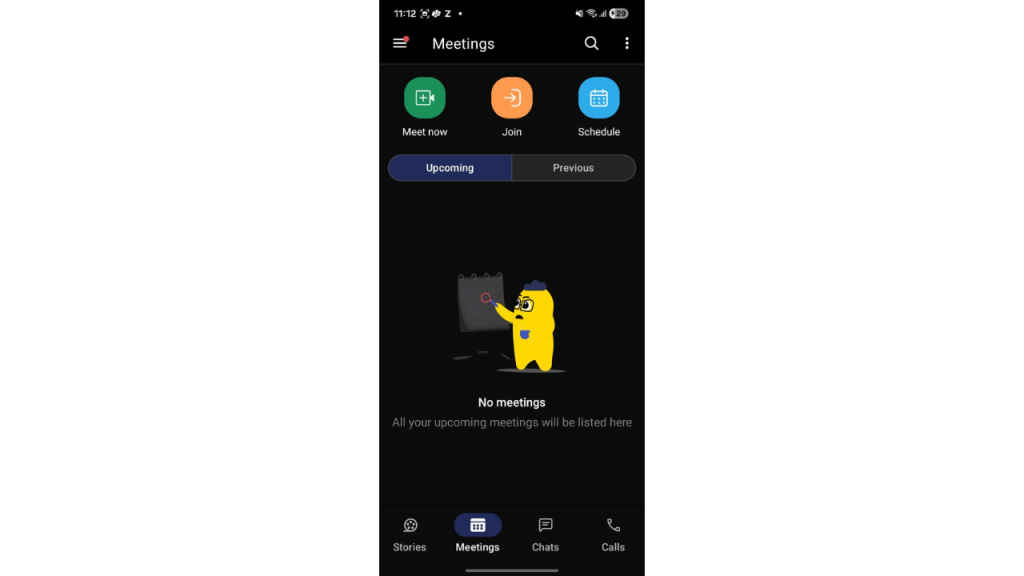
WhatsApp’s dedicated Business platform is robust, offering payments, catalogs, and integrations with Meta’s ecosystem, making it a good choice for businesses of all sizes. One place where it is lacking is that there is no options to set or take meetings which Arrattai has integrated.
Accessibility and performance
Arattai’s lightweight design is a major strength, requiring minimal resources and performing well on low-end devices and slow networks, a boon for rural or resource-constrained users.
WhatsApp, while compatible across devices, is heavier due to its feature-rich nature, which can strain older devices or slower connections.
Ads and user experience
Arattai is completely ad-free, aligning with Zoho’s user-first philosophy and offering a clean, distraction-free experience.
WhatsApp, tied to Meta’s ecosystem, may integrate with its ad network, potentially introducing targeted ads or data-driven features, which some users find intrusive.
Who wins?
Rather than crowning a single winner, the choice between Arattai and WhatsApp hinges on user priorities:
- Privacy and Security: WhatsApp’s end-to-end encryption across all communications makes it ideal for users prioritizing security. Arattai’s India-based servers and no-data-monetization policy appeal to those valuing local data control, despite its text encryption gap.
- Regional Accessibility: Arattai is a standout for users in rural India or with low-end devices, thanks to its lightweight design and regional language support. WhatsApp, while versatile, is better suited for users with modern devices and faster networks.
- Business and Global Use: WhatsApp’s robust Business platform, with payments, catalogs, and Meta integrations, is ideal for businesses of all sizes seeking scalability and global reach. However, it lacks meeting scheduling options. Arattai’s simpler business features, like channels and content-sharing, cater to local creators and small-scale engagement, with its dedicated meeting scheduling section (similar to Microsoft Teams) offering an edge for organizing professional meetings.
- Cultural Fit: Arattai’s “Swadeshi” ethos and focus on Indian languages resonate with users seeking a culturally relevant app. WhatsApp’s universal design is less tailored but widely adopted.
Arattai and WhatsApp each bring distinct strengths to India’s messaging landscape. WhatsApp excels with its comprehensive encryption, polished features, and global dominance, making it ideal for business users, urban professionals, and those needing reliable international communication. Arattai stands out as a lightweight, ad-free, India-centric option, perfect for users prioritizing accessibility, regional languages, and digital sovereignty.
As India’s digital ecosystem grows, Arattai’s rise signals a demand for homegrown solutions, while WhatsApp’s global presence ensures its enduring relevance. The choice is yours: a local gem or a global giant – or perhaps both.
Also read: Union Minister Ashwini Vaishnaw switches to Zoho as part of swadeshi initiative: What is it


