
AI is moving beyond video games: Lego at India AI Impact Summit 2026
 Follow Us
LEGO integrates AI into their toy kits for young children.
Models move using computer vision and body gestures.
Educational kits launching in India by April 2026.
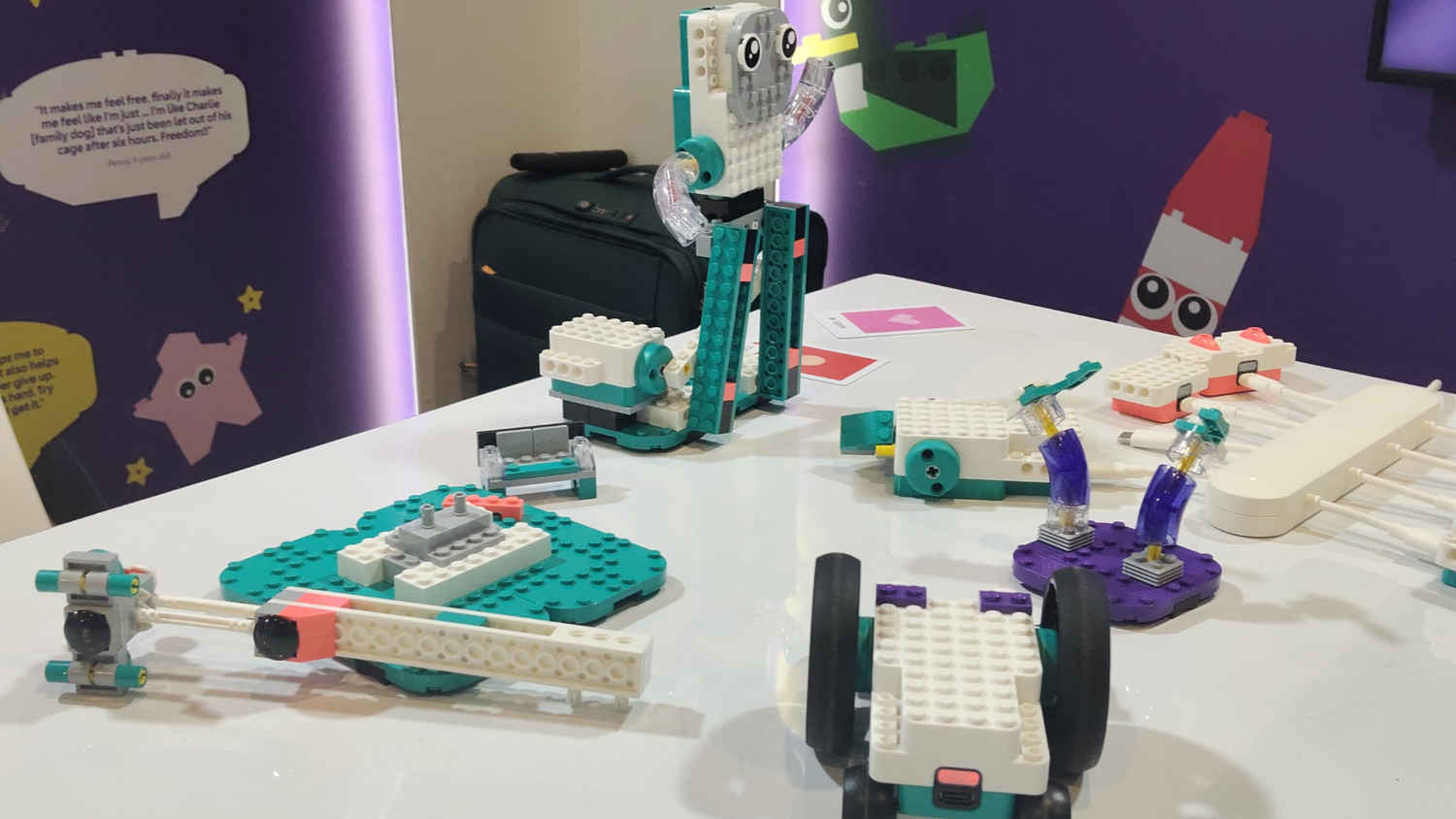

Since the introduction of AI, it has revolutionised a lot of industries, such as consumer tech and video gaming. But interestingly, it looks like we’re moving beyond this now, as at the India AI Summit 2026, I spotted something very cool. Lego, the brand famous among both young children and adults, was showcasing their new products, which have AI integrated into them.
 Survey
I got a chance to try out the demo and look at what exactly they are doing. Without wasting much time, let’s take a look at how it works and how it could change AI for the next generation.
Also Read: Tata’s vision for an AI-powered India at the India AI Impact Summit 2026
Lego and AI? How does it work?
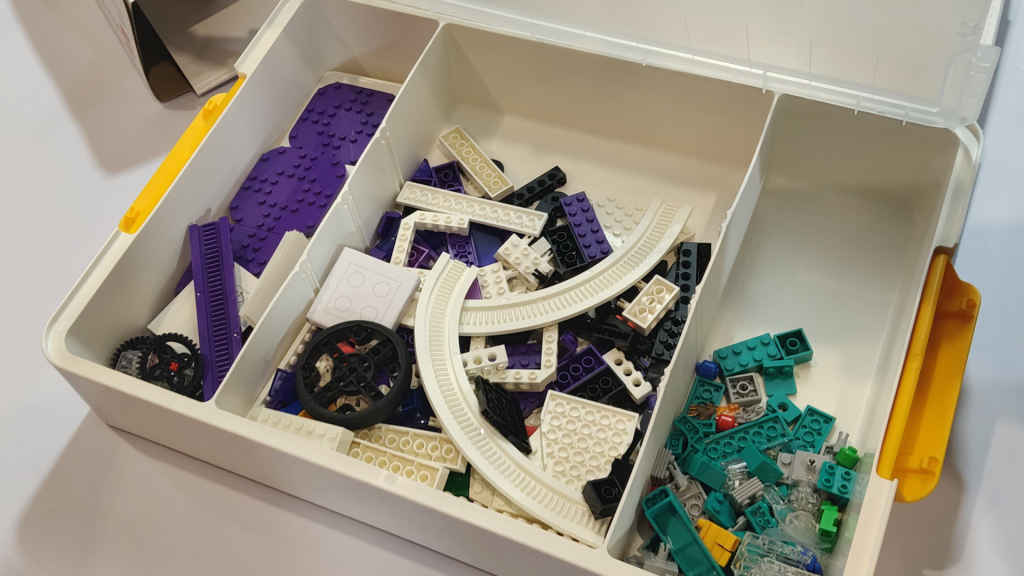
When you first hear ‘Lego’, it is pretty obvious that you would think about the toy company that makes plastic brick toys. Though, their presence at the India AI Summit was something unexpected for me, and I really wanted to understand how exactly the company is integrating AI into their products.
And to answer my questions, there was a person present at the booth. He explained to me that they are launching themselves into a new market, where they want to target young children and teach them about AI. Given Lego’s popularity, it does make sense for them to enter this market.
Detailing how the entire system works, he explained that the company is using a combination of hardware, computer vision, and simplified programming to let children “control” their creations with their bodies. What that means is that kids will be able to program bricks to move as per their body movement.
How is AI integrated?
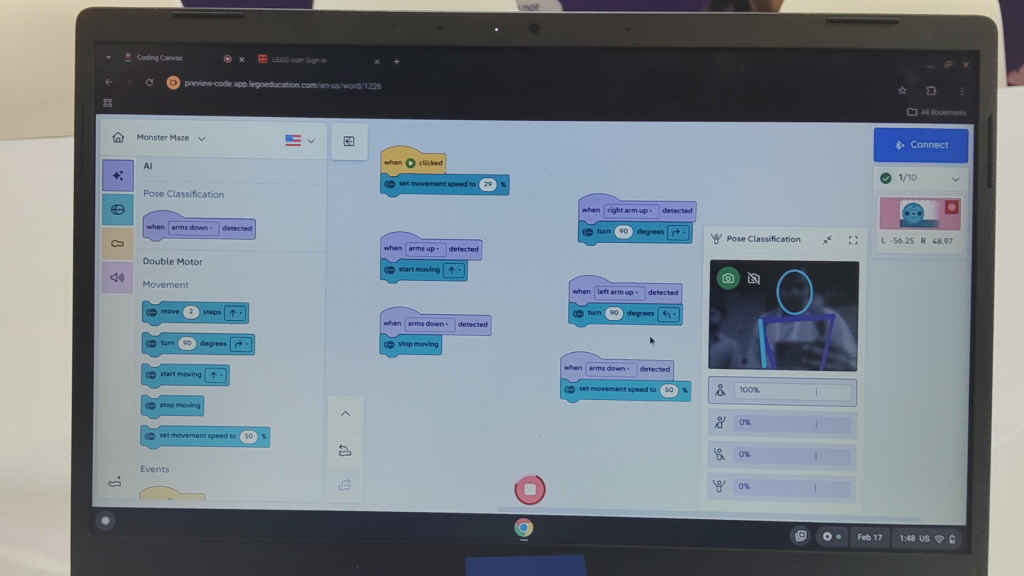
Deep diving into the tech part of this, the spokesperson explained that the children build models using different age-specific kits. It works like every other Lego model, where first they have to complete a model. Though once that’s done, here’s where the interesting part starts: the built model connects to a laptop via Bluetooth to receive instructions.
Instead of using a traditional remote control or keyboard, the system uses the laptop’s camera as the primary sensor. The AI utilises body posture and gesture recognition to understand what the child is doing in real time. The AI here acts as a bridge between the camera’s feed and the robot’s movement.
I got to try the demo on the booth, and it was interesting to see how the platform was pre-trained to recognise specific human actions. The best part is that even a 5-year-old can now code using simple commands, which would result in an action, like moving the car forward.
Pricing and availability of these kits
As per the spokesperson present on the booth, these kits are expected to be available in the Indian market starting April 2026. While the kits are available to pre-order internationally, this launch specifically marks their availability within the Indian market.
No details about the pricing were given out at the summit. Though looking at the pre-order prices for the US, the kits come in three variants. The K-2 kits start at $339 (roughly Rs 30,000), while another variant that targets the 3-5 grade students starts at $429 (roughly Rs 40,000). Last but not least, there’s also the topmost variant for the grade 6-8 students, which starts at $529 (roughly Rs 50,000).
Also Read: India’s Kreativespace is challenging Grammarly & QuillBot at the India AI Impact Summit 2026


