
5 best AI music generation tools in 2026
 Follow Us

AI music generation has moved past the novelty phase. What started as glitchy loops and robotic vocals now produces full songs with structure, emotion, and stem-level control. Here are five tools worth your time, and how they stack up against each other.
 Survey
Also read: AI safety tests are flawed: Anthropic finds Claude detects when it’s being evaluated
Suno

Suno continues to be the application to beat. Simply give it a prompt, such as “a monsoon love song in a lo-fi style,” and it will provide you with a whole song with lyrics and melody. The v5 version is truly an improvement on the previous ones. The lyrics are actually embedded into the rhythm, and not hovering over it anymore. Moreover, the Studio feature allows one to edit particular parts of the song.
For Indian artists, the attractiveness of this AI music maker lies in prompt versatility. Suno can handle Hinglish quite effectively. Its genres include Bollywood-style pop, lo-fi, and indie folk songs, which might come handy for scoring reels and YouTube videos and not using a typical Western tune.
Udio
Where Suno is rapid and focused on songs, Udio caters to the producer that wishes to continue to produce music. It was created by former Google DeepMind scientists and specializes in instrumental production with timeline edits, an inpainting feature that enables users to tweak isolated parts of a track without redoing the entire song, and stem downloads for paid users so that they may separate vocals and instrumentals within a digital audio workstation.
One thing worth mentioning in case you intend to use it for commercial purposes: Udio reached an agreement with Universal Music Group in October 2025 and temporarily blocked downloads from all accounts. Make sure to review the latest terms of use before publishing anything produced with Udio.
ElevenLabs Music
Also read: Top 10 AI video generators in 2026: Which one should you use?
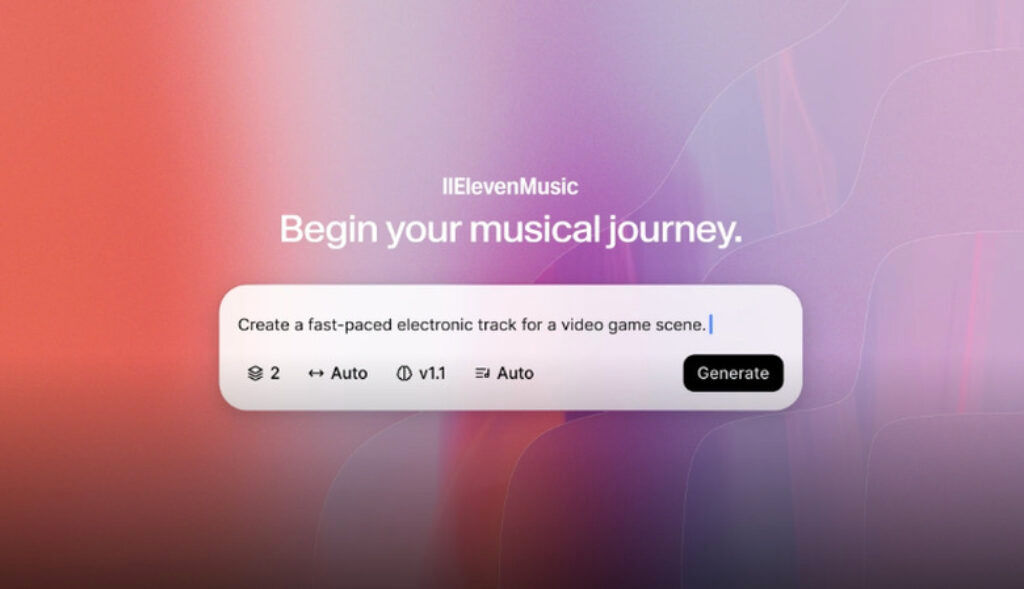
ElevenLabs built its name on AI voice, and that pedigree shows in its music tool. It ships with voice cloning and isolation baked in, which matters if you want a consistent “voice” across a series of tracks or need to separate vocals from an existing reference. It’s a newer entrant compared to Suno and Udio, but the audio quality is already competitive.
Beatoven.ai
Beatoven is not trying to write a song for you; it is trying to compose a background soundtrack for your video. The app asks you to select emotions such as anxiety, warmth, or sadness for different sections of your timeline, and then it composes music accordingly. The Select & Recompose feature gives you the ability to recreate only those sections of the music which do not fit into your composition.
It is this app that I will recommend to YouTubers, podcasters, and small video production companies out there. For content creators who publish their videos on YouTube or Instagram in high numbers, video sync background scoring solves an important issue.
Google Gemini (Lyria 3)
In early 2026, Google added its music generation function to the Gemini application via the Lyria 3 model. Provide it with a description or a picture, and the application will come back with a track complete with personalized cover art. There’s no need to install a separate application or create another account since all the functionality is included into the existing Gemini app. On the free tier, you’ll receive 30-second clips while the Pro version, available to paid subscribers, will be able to generate songs up to 3 minutes in length, comprehending song structure well enough to take instructions about verse, chorus, and bridge.
However, the one distinctive feature of the Lyria 3 model for Indian content creators is that this model can comprehend Hindi prompts along with such languages as English, German, Spanish, French, Japanese, Korean, and Portuguese, which is better than with Suno and Udio where it’s impossible to prompt in Hindi but only to phrase in Hinglish. However, the drawback of the Lyria 3 is that it works via single-turn generation.
The bigger picture
None of them replaces a composer for the work that will be taken seriously by any discerning listener. However, for background music, draft versions, reels, or low-budget commercial usage, the difference between “AI-generated” and “good enough for publishing” has become negligible. The actual choice is not about which software is better, but whether you require a complete song, a soundtrack for a video, or a cheaper option to keep your uploads from being muted.
Also read: RoboCup wants to beat FIFA World Cup Champions by 2050, here’s why


