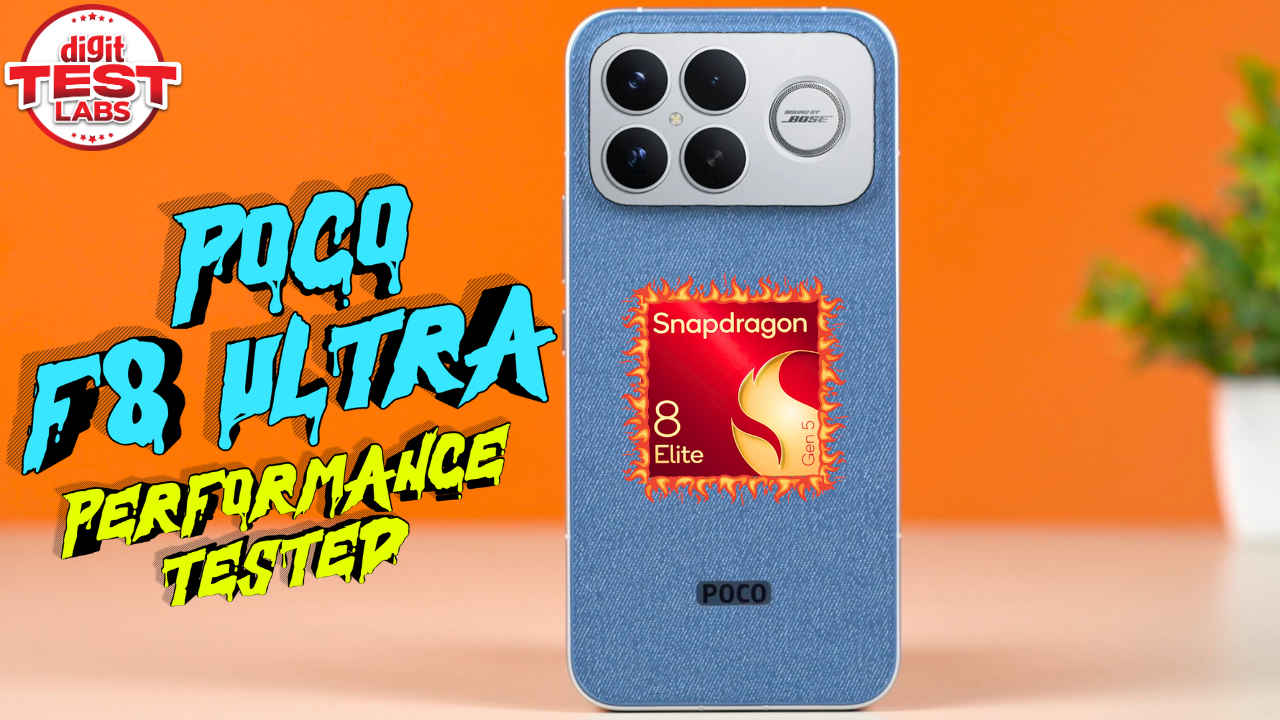
Since the Poco F8 Ultra landed at my desk, I was genuinely excited to test it. Not just because it isn’t available in India yet, but because it runs on what is currently the most powerful chipset you can get on an Android phone, the Snapdragon 8 Elite Gen 5. At this point, though, speed alone isn’t the real story. Phones at this level are expected to be fast. The more interesting question is whether all that performance makes sense once pricing enters the picture, especially if this phone ever comes to India. And if it does, it wouldn’t be surprising to see Poco price the F8 Ultra somewhere in the Rs 70,000 to Rs 80,000 range.
 Survey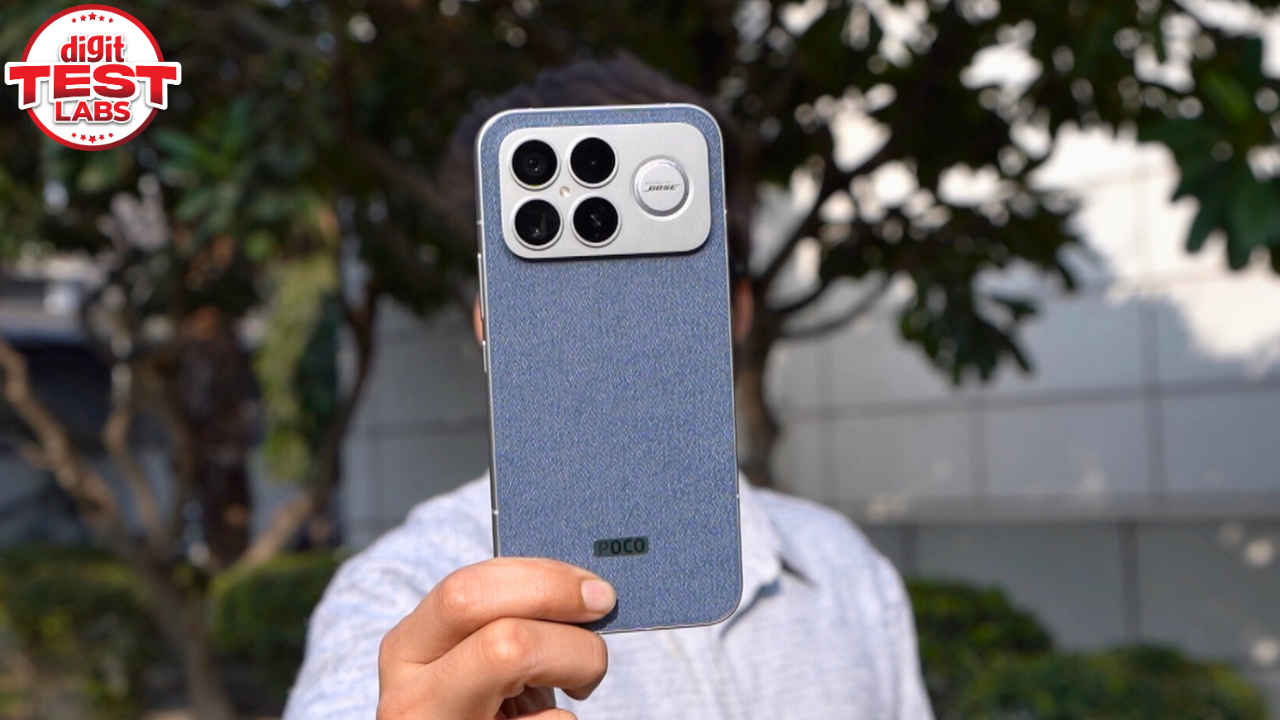
That framing is important because the Poco F8 Ultra is trying to move Poco into unfamiliar territory. This isn’t a value flagship in the usual sense. It’s an Ultra model, built around raw performance, heavy gaming, and top-end hardware. So instead of a light, everyday test, I pushed it the way a performance-focused flagship should be pushed. Long gaming sessions across BGMI, Genshin Impact, and Call of Duty Mobile. Real FPS tracking, frame drops, thermal behaviour, battery drain, benchmark loops, and heavy day-to-day multitasking.


I used the Poco F8 Ultra as my primary phone for more than a week and tested it without shortcuts. This is a performance review in the most literal sense. The F8 Ultra wants to justify its place among high-end flagships, and the only fair way to judge that is to see how it behaves when it’s pushed hard, not just how fast it looks on paper.
Poco F8 Ultra: Specifications
Before jumping into the results, a quick overview of what the Poco F8 Ultra is working with. Under the hood is the Snapdragon 8 Elite Gen 5, built on a 3nm process, paired with an Adreno GPU. As mentioned earlier, this is the most powerful processor currently available for Android smartphones, positioned for top-end CPU and GPU output.
Poco also adds its own VisionBoost chipset, designed to improve graphics rendering and smoothness in demanding scenes. In theory, it should help during heavy gaming loads where frame pacing and visual stability matter.
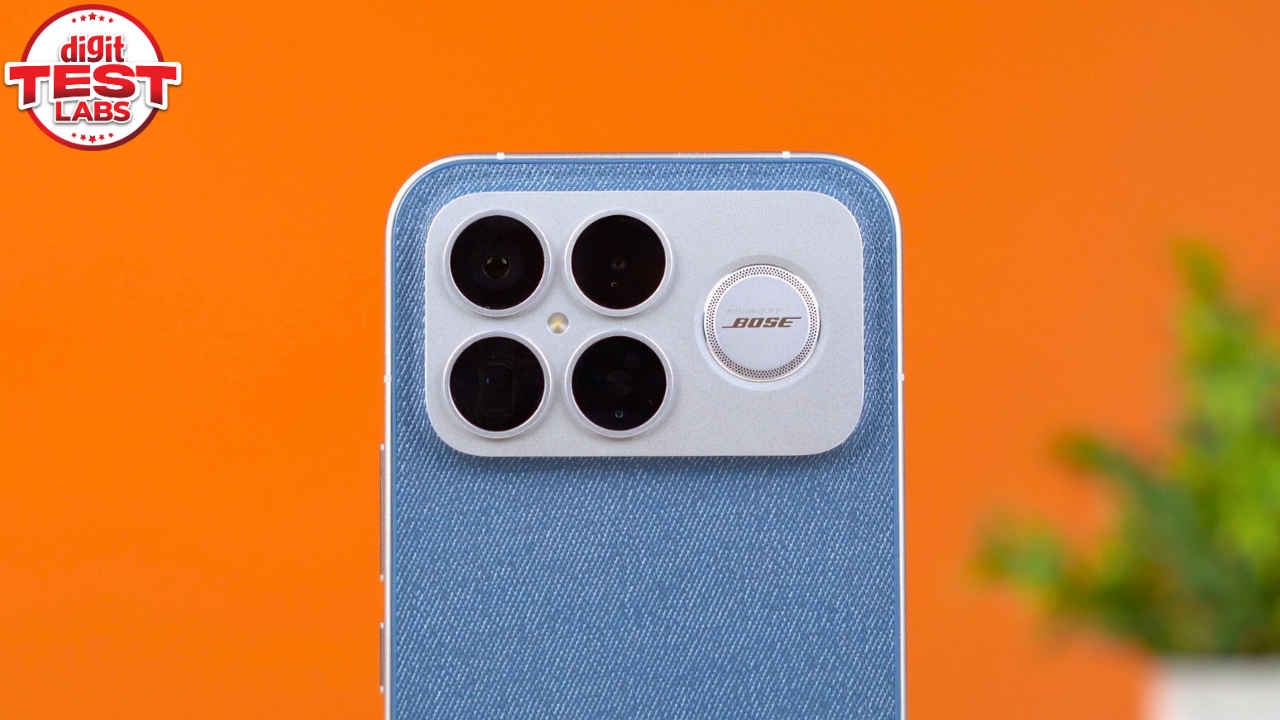
Cooling is another key part of the phone’s performance pitch. Poco uses a large vapour chamber cooling system, aiming for better heat control during long sessions. The display is a 6.9-inch 1.5K AMOLED panel with a 120Hz refresh rate, along with HDR10+ and Dolby Vision support. Poco claims peak brightness of up to around 3,500 nits, so visibility is not meant to be a weak point here.
Battery capacity is also built for gaming endurance. The phone packs a 6,500mAh battery, supported by 100W wired and 50W wireless charging. The unit tested here is the top configuration with 16 GB RAM and 512 GB storage, which should keep multitasking smooth and game load times quick.
Poco F8 Ultra: Benchmarks
Before gaming, the first check was simple. Is the Poco F8 Ultra fast only in marketing terms, or does it actually feel like a high-end device in real use?
On Antutu, the phone scores around 3.8 million, which places it firmly in the top-end Android category across CPU, GPU, and memory performance. At this level, the number itself is not surprising, but it does validate the phone’s positioning.
Geekbench 6 results help explain everyday performance. Single-core performance directly affects app launches, UI navigation, camera opening speed, and general system responsiveness. Here, the F8 Ultra scored 3,598. Multi-core performance reflects how well the phone handles sustained workloads, heavy multitasking, and longer processing tasks, and the F8 Ultra scored 10,928 in multi-core testing.
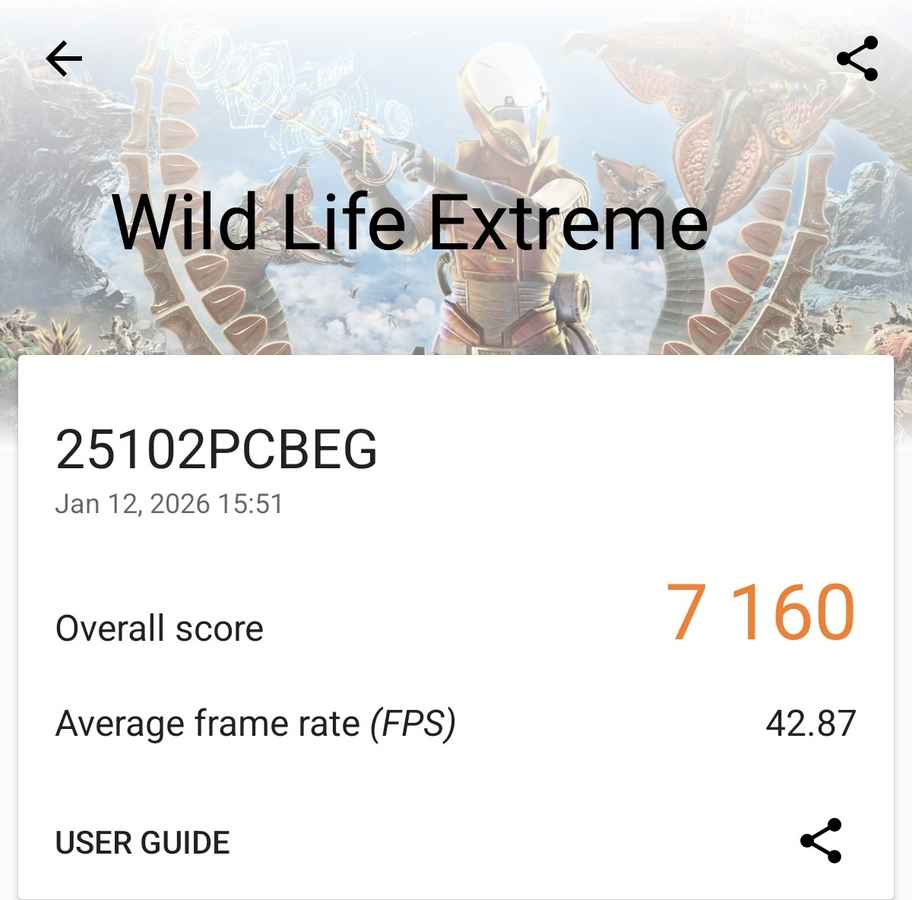
GPU performance is where the Poco F8 Ultra really starts to flex. In stress-heavy benchmarks like Wild Life Extreme, Steel Nomad, and Solar Bay, it delivered scores of 7,160, 2,967, and 13,167, respectively. These results show strong graphical headroom along with decent stability. More importantly, those numbers translate well into real-world use, with the phone holding up comfortably during demanding gaming sessions and extended GPU loads.
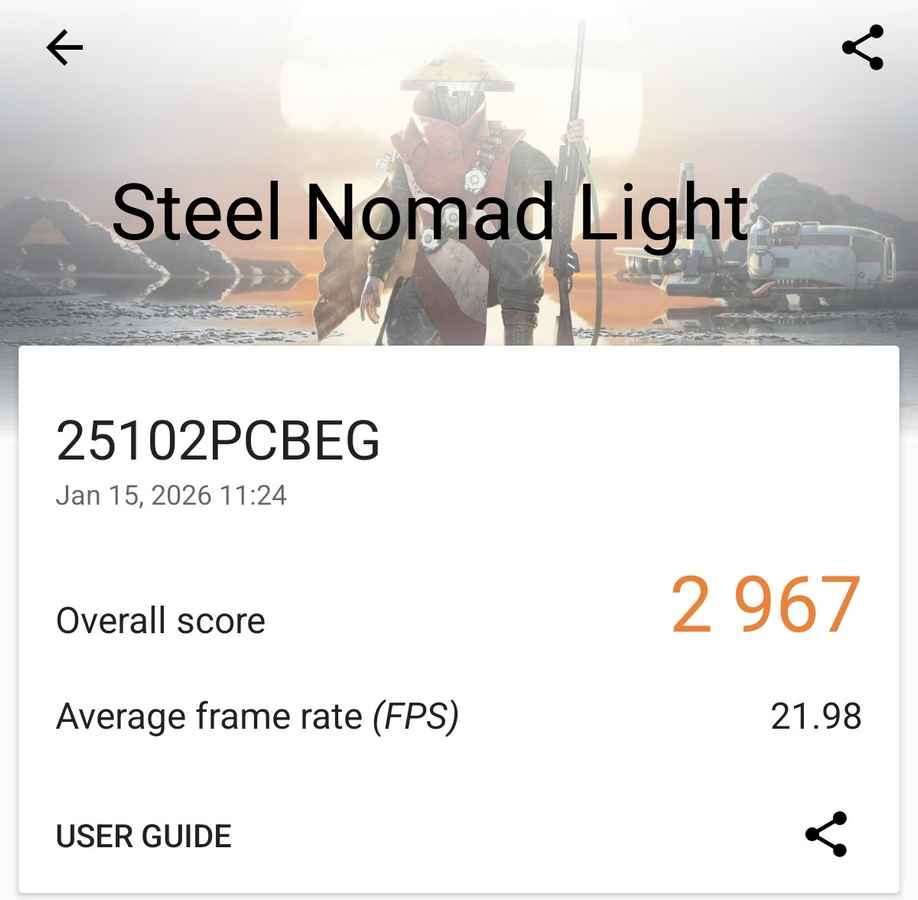
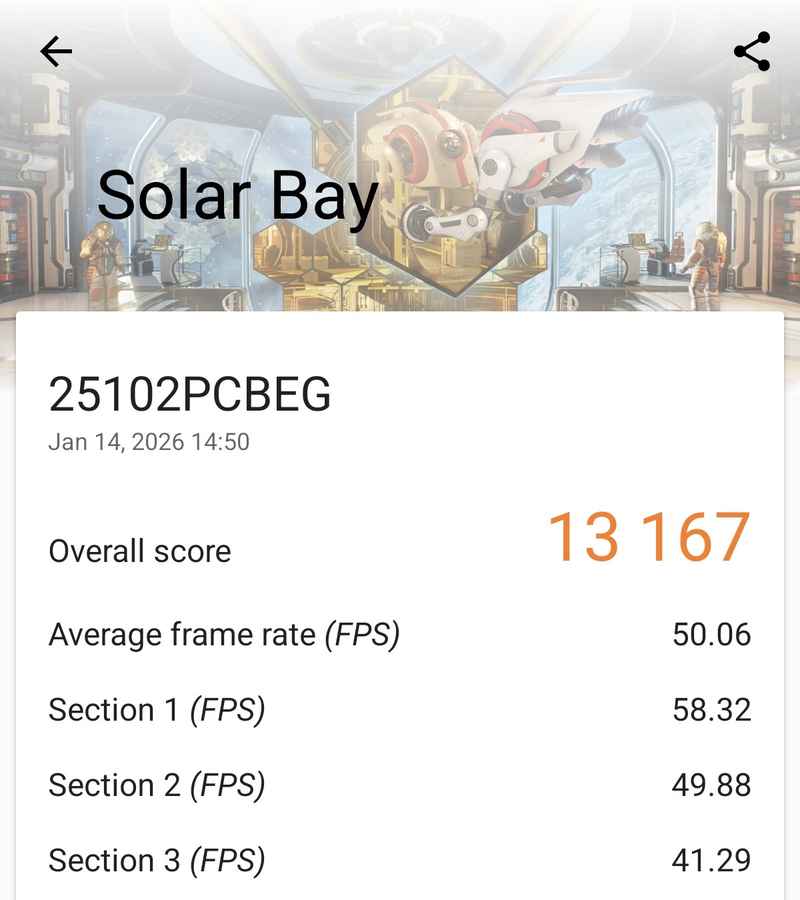
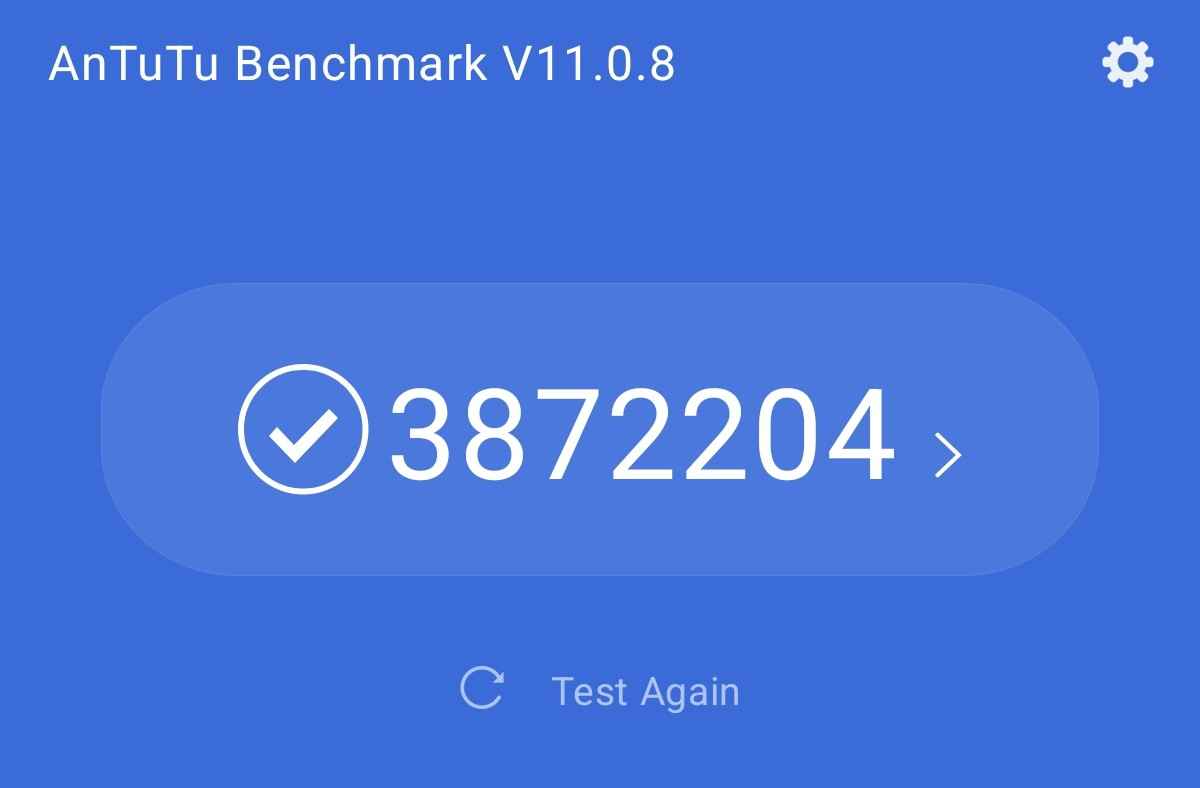
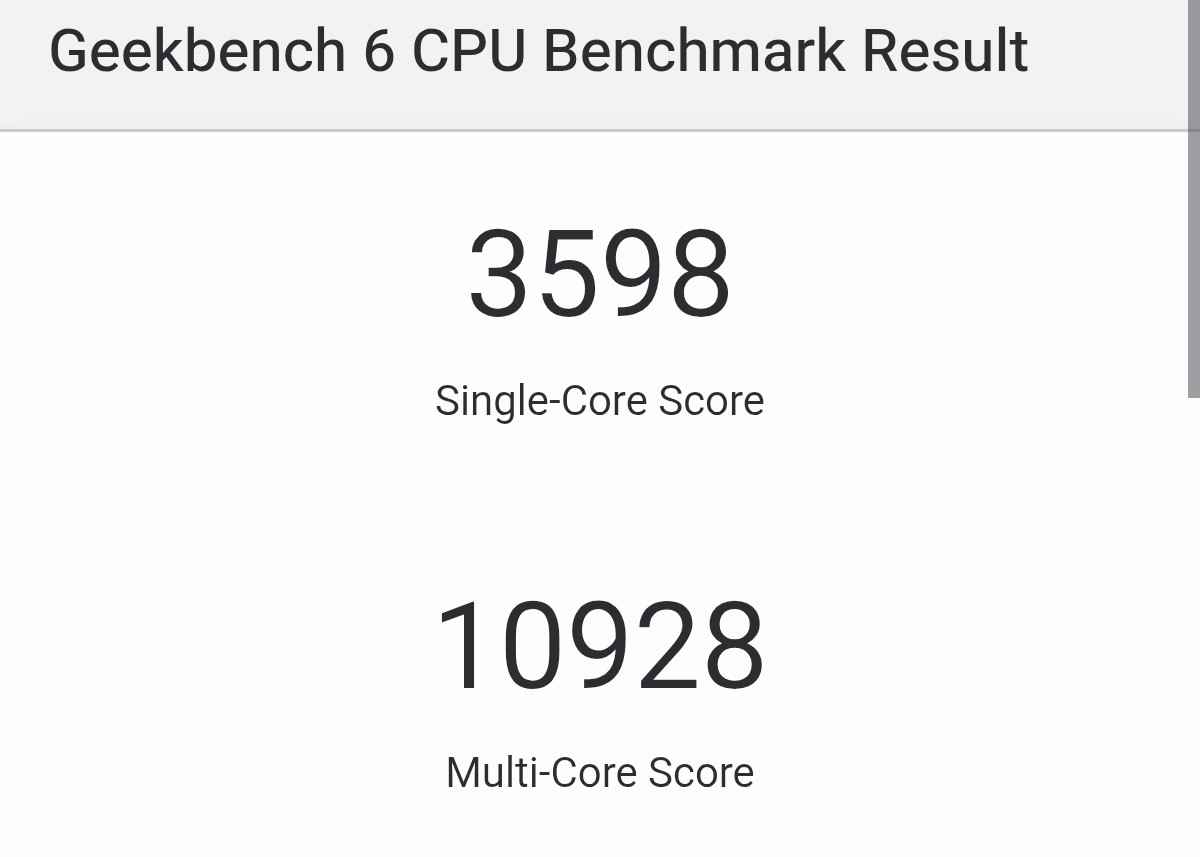
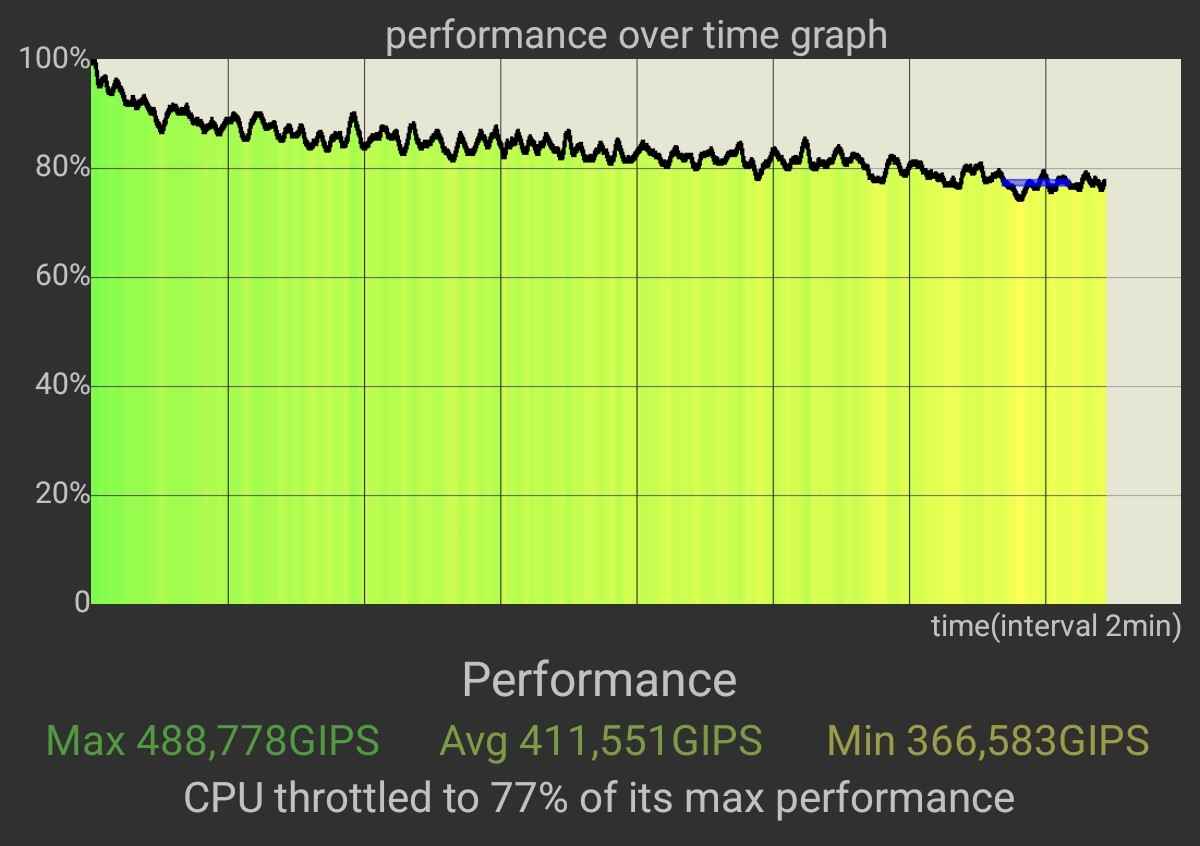
That said, the benchmarks were not perfectly smooth. Some runs crashed midway, and temperatures spiked to 47°C in those instances. This suggests that while the hardware is extremely powerful, software tuning and optimisation could still be tighter, especially at the extremes.
Benchmarking alone is never enough, so I also pushed the Poco F8 Ultra through a real stress routine. Rapid app opening, aggressive switching, heavy multitasking, and attempts to force reloads or stutters. As expected, the phone stayed stable. Animations remained smooth, apps did not randomly refresh, and overall performance remained consistent. In terms of raw responsiveness, this is not a phone that feels fast only on paper.
Poco F8 Ultra: Gaming performance
Genshin Impact
Genshin Impact remains one of the most demanding mobile games and continues to expose weak thermals and inconsistent frame pacing faster than most titles.
With ray tracing effects enabled, lighting and reflections look more natural, and the 1.5K AMOLED panel adds to the visual clarity. More importantly, performance output was strong. That said, maintaining a perfectly stable 60 FPS session is still difficult, even for premium phones, especially over extended play.

The good news is that on the Poco F8 Ultra, Genshin Impact ran almost locked, averaging 59.2 FPS across the full session. Frame pacing stayed stable, with no random dips, and that level of consistency is still rare in Android gaming.
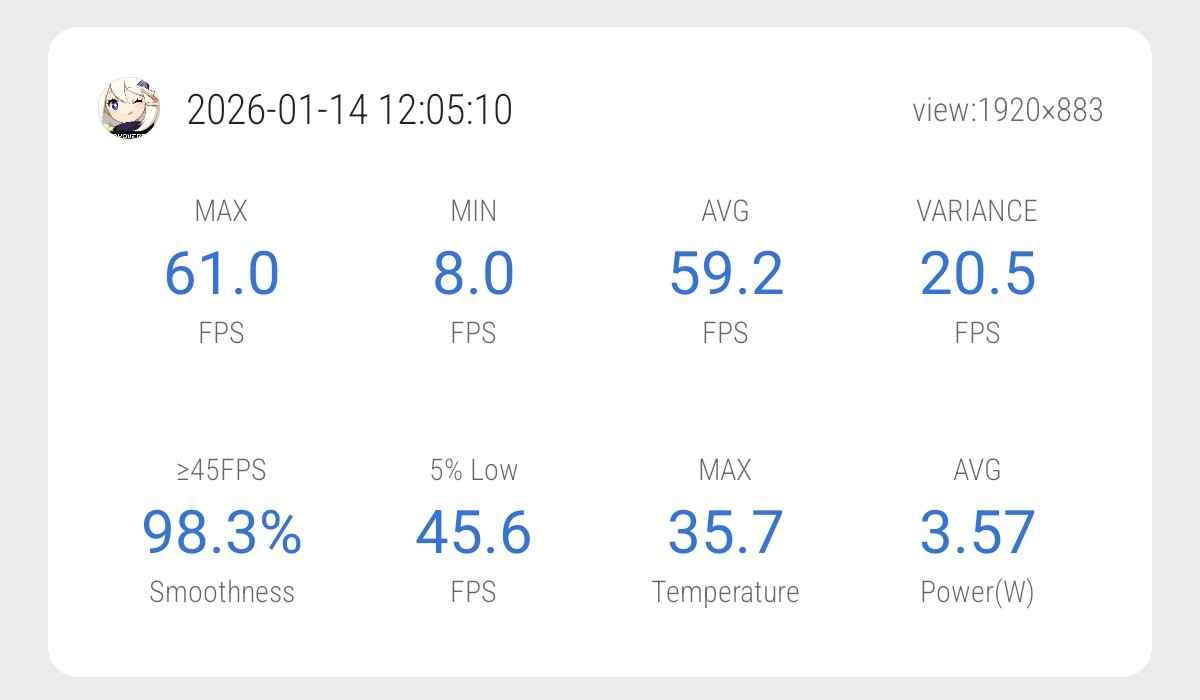
Thermals also stayed controlled. The maximum recorded temperature during gameplay was 35.7°C, which is a strong result for sustained Genshin sessions.
BGMI
BGMI Team Deathmatch sessions were mostly stable, with the Poco F8 Ultra barely dropping below 120 FPS. Gameplay remained smooth, and temperatures stayed well controlled.
In a Classic match lasting around 30 minutes, stability was still strong. The phone held an average of 118.2 FPS, and even after extended gameplay, heating remained under control at under 33°C.
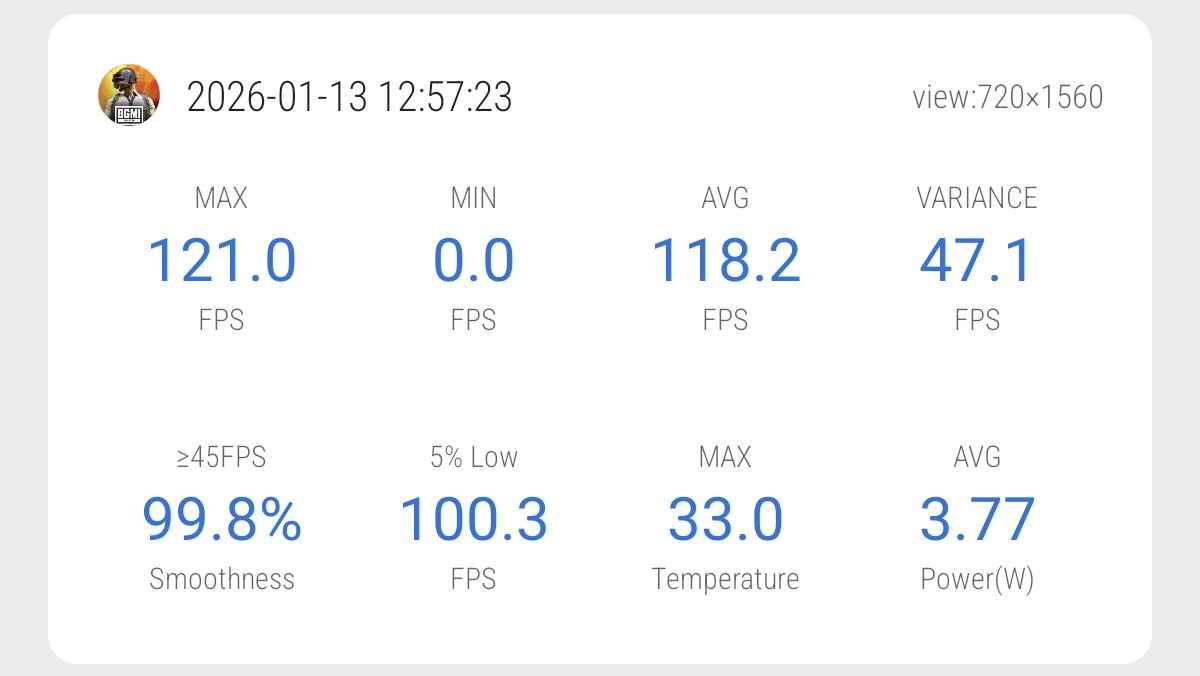
There was one noticeable behaviour worth mentioning. When players drop from the plane, and the scene becomes heavy, the FPS consistently dips to around 110 FPS. However, once that moment passed, performance stabilised again.
Apart from this, the touch response was excellent. There were no missed inputs or obvious latency, which is just as important as FPS for competitive BGMI players. Overall, BGMI performance on the Poco F8 Ultra is clean and stable.
Call of Duty: Mobile
In Call of Duty: Mobile, visuals look sharp on the Poco F8 Ultra’s display. Enemy visibility in darker areas is good, motion stays fluid, and the panel holds up without noticeable ghosting or blur.

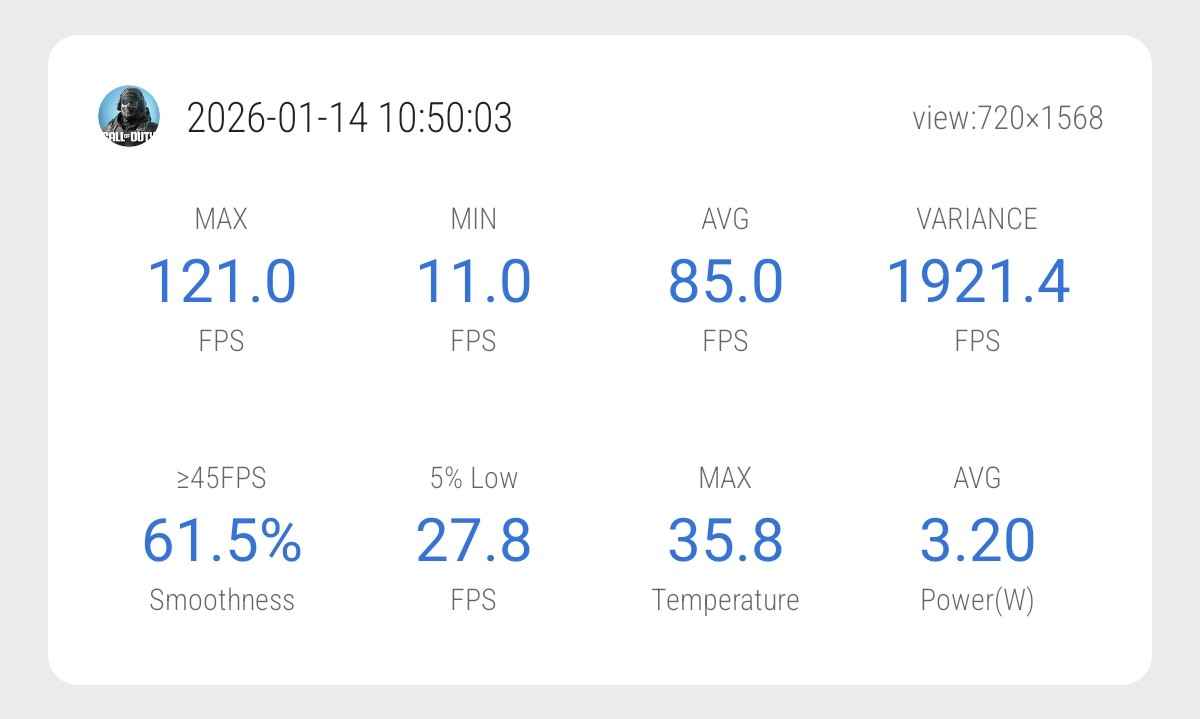
In TDM matches, gameplay FPS averaged around 119 FPS during actual play. However, the overall logged average came in at 85 FPS. This happens because the phone drops FPS during loading screens and menu transitions after each match. Since multiple matches were played back-to-back, those dips pulled the total average down.
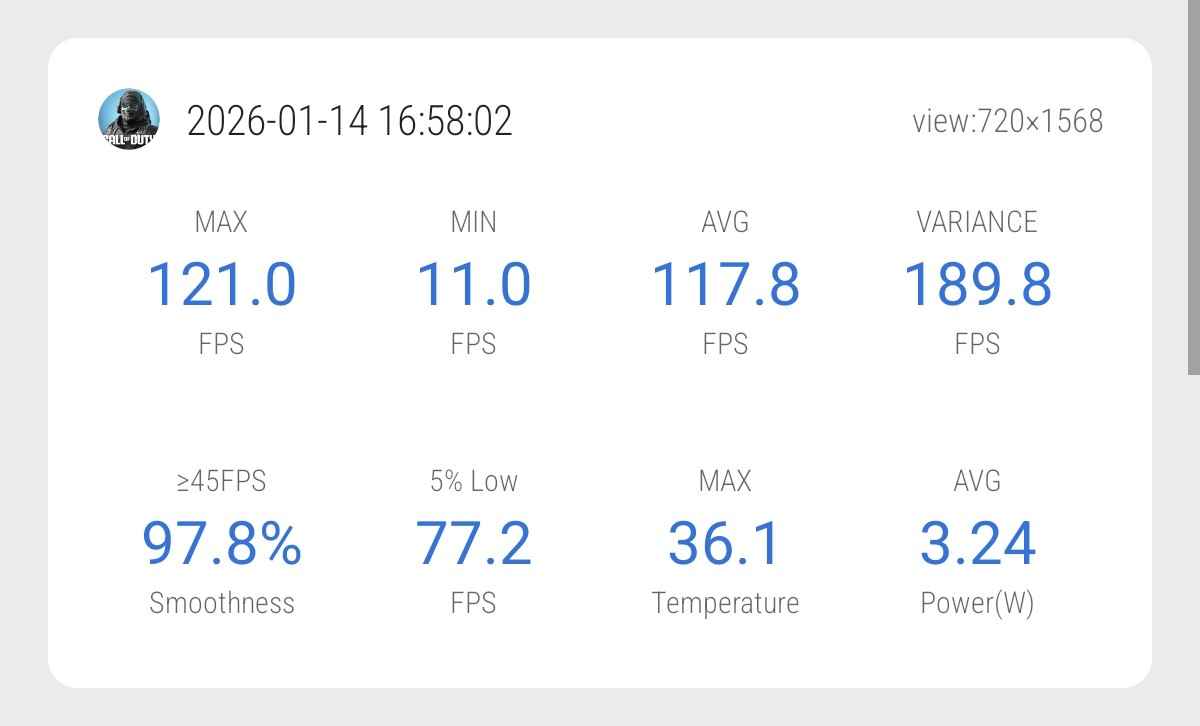
During gameplay itself, CODM at 120 FPS remains smooth and consistent. In the Battle Royale mode, FPS stayed close to locked at 120, with an average of 117.8 FPS. Thermals remained stable here as well, peaking at around 36.1°C.
Poco F8 Ultra: Thermals and battery drain
Thermal behaviour is one of the most important aspects of performance testing. Many flagship chips fail not due to lack of power, but because of heat management and sustained stability.
In normal continuous gameplay, the back of the Poco F8 Ultra usually reached around 35°C after 30 minutes. It feels warm, but not uncomfortable. The dual-layer iceloop cooling system does its job in these conditions.
Under heavier stress testing and repeated benchmark loops, surface temperatures can still climb close to 47°C. That is high enough to suggest the phone could benefit from stronger optimisation under extreme peak loads.
Battery drain during demanding gameplay was also measured. In Genshin Impact at max settings, battery dropped by around 15% per hour, which is in line with what you would expect from flagship-level gaming at full load.
Poco F8 Ultra: Verdict
After all the testing, the conclusion is fairly straightforward. The Poco F8 Ultra behaves like a flagship performance phone. It is fast in real-world use, stable under pressure, delivers strong gaming performance across heavy titles, and manages heat well during most real-world gaming sessions.
The F8 Ultra is not just about benchmark numbers. It holds up during long play sessions, maintains high FPS in BGMI and CODM, and even handles Genshin Impact with a level of stability that many premium phones still struggle to achieve.
The main concern is optimisation at the extreme end. Benchmark crashes and temperature spikes up to 47°C show that the system can still be pushed into instability under peak load scenarios.
The bigger question, though, is pricing. Poco launched the F7 in India at around Rs 32,000, but this is an Ultra model, and Poco’s first Ultra smartphone. Globally, the phone has launched at $749, which roughly converts to Rs 65,000. As I mentioned at the start, if Poco ever decides to bring this phone to India, and considering rising component costs, there is a good chance that pricing may land between Rs 70,000 and Rs 80,000, similar to phones like the iQOO 15 and OnePlus 15.
And that’s where the real debate begins. If the Poco F8 Ultra launches in India, would you be willing to pay around Rs 70,000 for a Poco phone, or would you rather choose a flagship from another brand? From a pure performance standpoint, though, the phone has already made its case.
 Follow Us
Siddharth Malhotra
Siddharth Malhotra is a former software engineer who turned his lifelong fascination with gadgets into a full-time gig as a tech and gadgets anchor & writer. With over 200K followers across his social media platforms, all tuning in for their daily dose of tech, he’s your sneaker-wearing guide through the ever-evolving world of innovation. Expect sharp insights, a dash of humor, and an unshakable love for all things futuristic. View Full Profile


