
Lumio Arc 5 & Arc 7 Projector Review: Cinematic magic for home
 Follow Us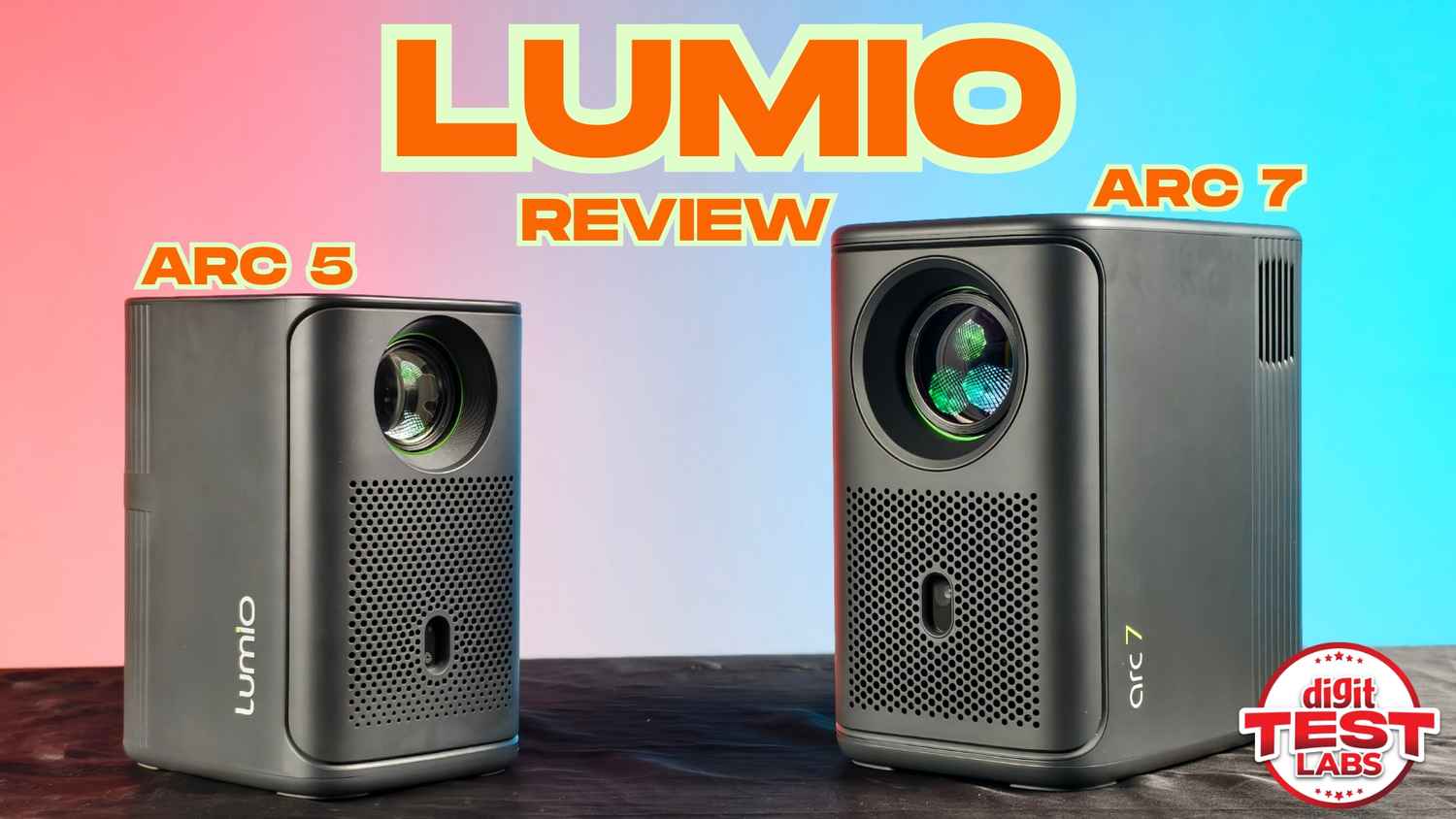

Lumio’s entry into the projector market is a deliberate response to what’s wrong with budget projectors today. For years, Indian buyers have had to choose between obscure brands with poor after-sales support or expensive imports that make little sense for casual use. The Lumio Arc 5 and Arc 7 are designed and tuned in India, promising a frictionless experience powered by Google TV, and both aim to make the big-screen dream accessible without the usual compromises.
These two projectors share the same design and software philosophy, but they serve different audiences. The Arc 5 targets first-time buyers looking for a dependable entry-level experience under Rs 20,000, while the Arc 7 steps up the performance for users who want a more cinematic, accurate, and immersive picture.
Design & Build
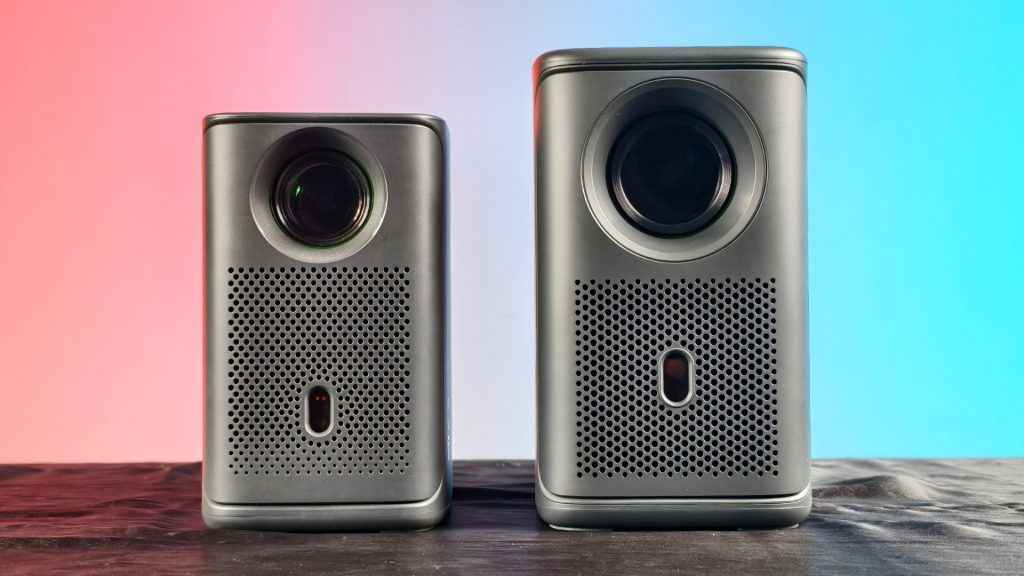
Both the Arc 5 and Arc 7 follow Lumio’s vertical tower design, which saves table space and makes them easy to position in small rooms. The build quality feels solid for their respective price brackets, and the minimal footprint ensures they blend well in most home setups, be it a bedroom, hostel room, or living space.

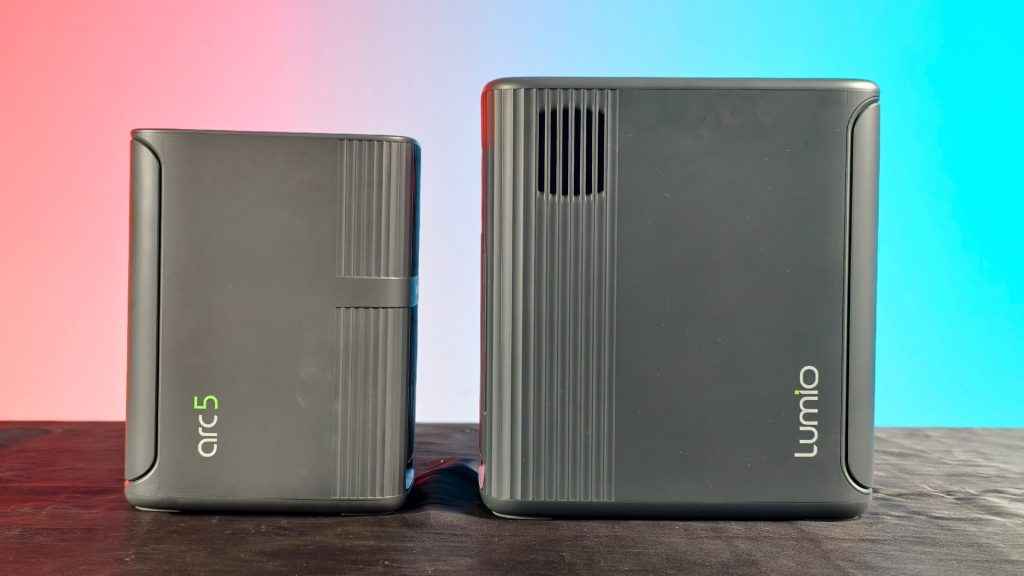


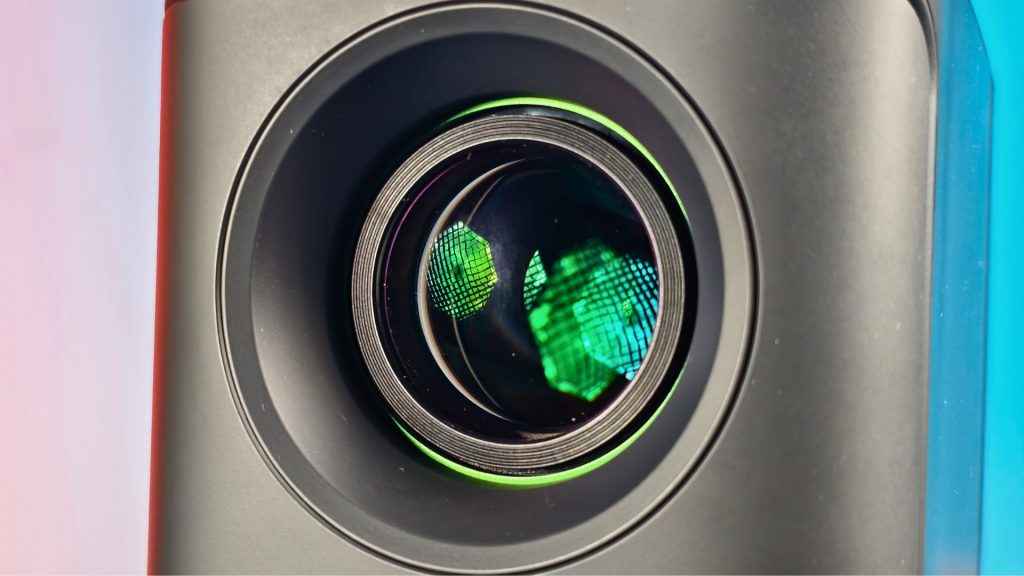
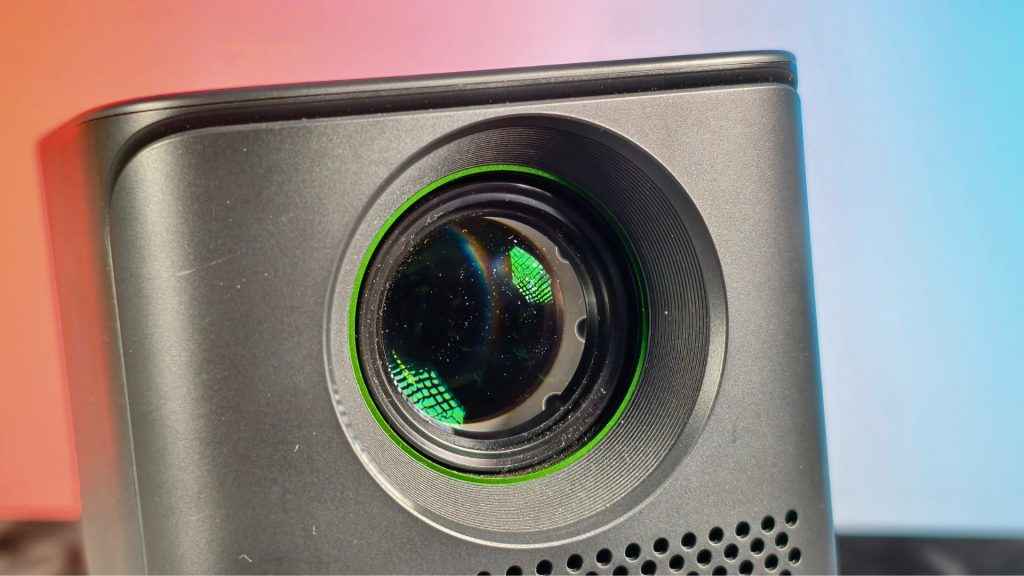
Weighing just 1.3 kg (Arc 5) and 2.36 kg (Arc 7), both are easy to move around and set up. The use of Lumio’s ArcLight sealed optical engine helps prevent dust accumulation, which is a surprisingly common issue with affordable projectors. The fan noise stays well within control, averaging around 30–32 dB during operation, which means you’ll rarely notice it once a movie starts playing.
Ease of Use
One of Lumio’s biggest achievements with the Arc series is how effortless the setup feels. Both projectors feature auto keystone correction, auto focus, and obstacle avoidance, driven by a Time-of-Flight (ToF) sensor. In practice, it works far more accurately than what we’ve seen from budget projectors, correcting trapezoidal distortion and instantly refocusing when moved.
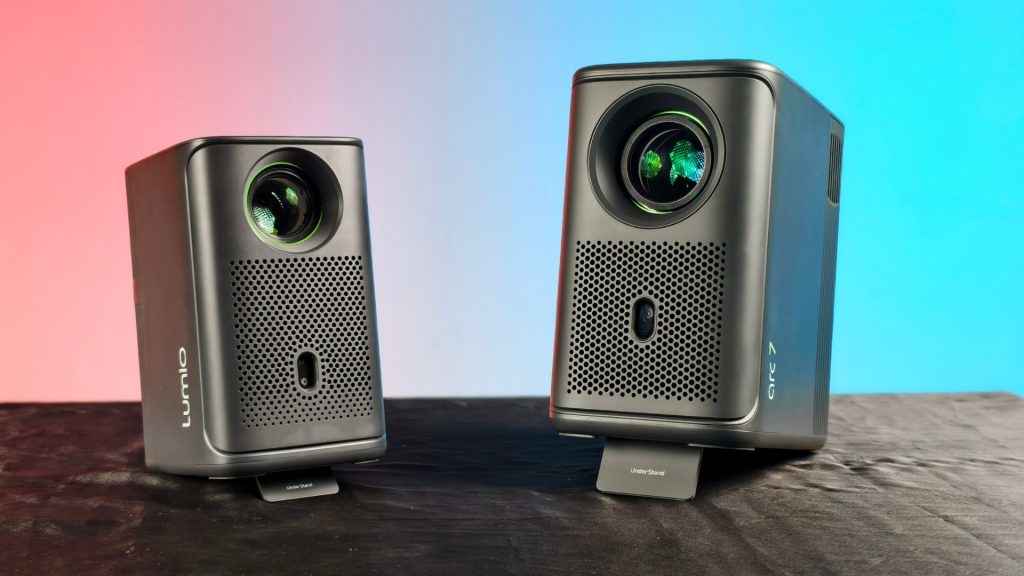
You can place the Arc on a coffee table, bedside stand, or tripod mount, and it recalibrates almost instantly. The built-in foldable kickstand (or as Lumio calls it, the “Under Stand”) makes quick angle adjustments effortless. It’s truly plug-and-play: one power cable, one button, and within seconds you’re greeted by a clean Google TV interface with native Netflix support.
Picture Quality
This is where the Arc 5 and Arc 7 begin to part ways. In side-by-side testing, the Arc 7 immediately stands out for its neutral and accurate colour temperature. Whites look clean and balanced with just a hint of coolness, and skin tones appear natural. The Arc 5, on the other hand, exhibits a noticeable warm/magenta tint, especially visible in menus, grayscale charts, and white backgrounds. While this cast doesn’t ruin the experience for casual viewing, it does push the overall tone towards pinkish hues, which becomes obvious during bright scenes or sports.



Brightness and Contrast
The difference between 200 ANSI lumens (Arc 5) and 400 ANSI lumens (Arc 7) is more significant than the numbers suggest. The Arc 7 produces a visibly brighter and more dynamic image with stronger perceived contrast, especially in dark-room environments. Highlights pop more distinctly, adding depth and dimension to movies and games. The Arc 5, while dimmer, still offers a comfortably viewable image in dark rooms and small spaces, perfectly adequate for binge sessions, provided you manage ambient light and your expectations.


Colour Reproduction
The Arc 7’s wider and more balanced colour output helps deliver vibrant yet natural-looking hues. Blues, greens, and reds retain their distinctiveness without over-saturation. In comparison, the Arc 5’s warmer bias tends to mute greens and distort cooler tones, though its screen uniformity is excellent, producing consistent brightness across the frame with minimal vignetting.


HDR Performance
Both projectors support HDR10 and HLG, but given their brightness levels, the HDR benefits are modest. The Arc 7 handles HDR content better, preserving contrast and depth without colour clipping. Dolby Vision support is absent, but its omission doesn’t hurt much as neither projector has the peak luminance to fully utilise it. Instead, HDR here serves as a gentle enhancement rather than a dramatic effect. Colours remain faithful, and tone mapping avoids the crushed blacks or overblown highlights typical of cheap HDR implementations.


Audio Performance
Both models integrate Dolby Audio-tuned speakers, but again, the Arc 7 pulls ahead with dual 8W drivers and a passive radiator, delivering surprisingly rich and room-filling sound. For small to mid-sized rooms, it’s more than enough. In use, dialogues are crisp, and music playback has decent body. The Arc 5’s 5W speaker performs admirably for its size but lacks the depth and separation of the larger sibling.


HDMI ARC, Bluetooth 5.1, and 3.5 mm outputs offer flexibility for connecting soundbars or external systems, and latency over Bluetooth remains minimal for most streaming scenarios.
Software and Content
This is where Lumio decisively differentiates itself from the cluttered projector market. Both the Arc 5 and Arc 7 run official Google TV, not the clunky AOSP variants seen in cheap imports. You get native Netflix certification, Play Store access, Chromecast, and Google Assistant voice controls out of the box.
Lumio’s in-house TLDR interface adds an extra layer of convenience, surfacing trending music, sports scores, and playlists without jumping between apps. In day-to-day use, performance is smooth and lag-free, thanks to the MTK9630 chip paired with 2GB RAM and 16GB storage.
Real-World Viewing Experience
In a dim or dark room, both projectors deliver a satisfying cinematic experience, with the Arc 7 clearly offering more brightness headroom and superior tonal balance. For most users, the Arc 5 is perfectly suited for bedrooms or hostel setups. It’s compact, consistent, and makes big-screen viewing effortless.
The Arc 7, meanwhile, feels like the more mature sibling. It’s brighter, more accurate, and with sound powerful enough to fill larger spaces. It’s not meant to rival Rs 1-lakh projectors, but for its price range, the overall design and image quality are impressive.
Verdict
The Lumio Arc 5 and Arc 7 mark a promising new chapter for made-in-India home projectors. Both nail the fundamentals, ease of use, Google TV integration, and reliability, while offering thoughtful engineering touches like auto keystone and sealed optics that genuinely improve usability.
If you’re buying your first projector under Rs 20,000, the Lumio Arc 5 is an easy recommendation. It’s affordable, compact, delivers a cinematic experience unmatched in its segment and is ideal for dark-room binge sessions and casual entertainment.
For those who can stretch the budget, the Lumio Arc 7 elevates the experience considerably. It’s brighter, more colour-accurate, and backed by better audio, making it a genuine all-in-one home theatre option for small and mid-sized rooms.


