
UN Warns of Record-Breaking Global Temperatures in Next Five Years
 Follow Us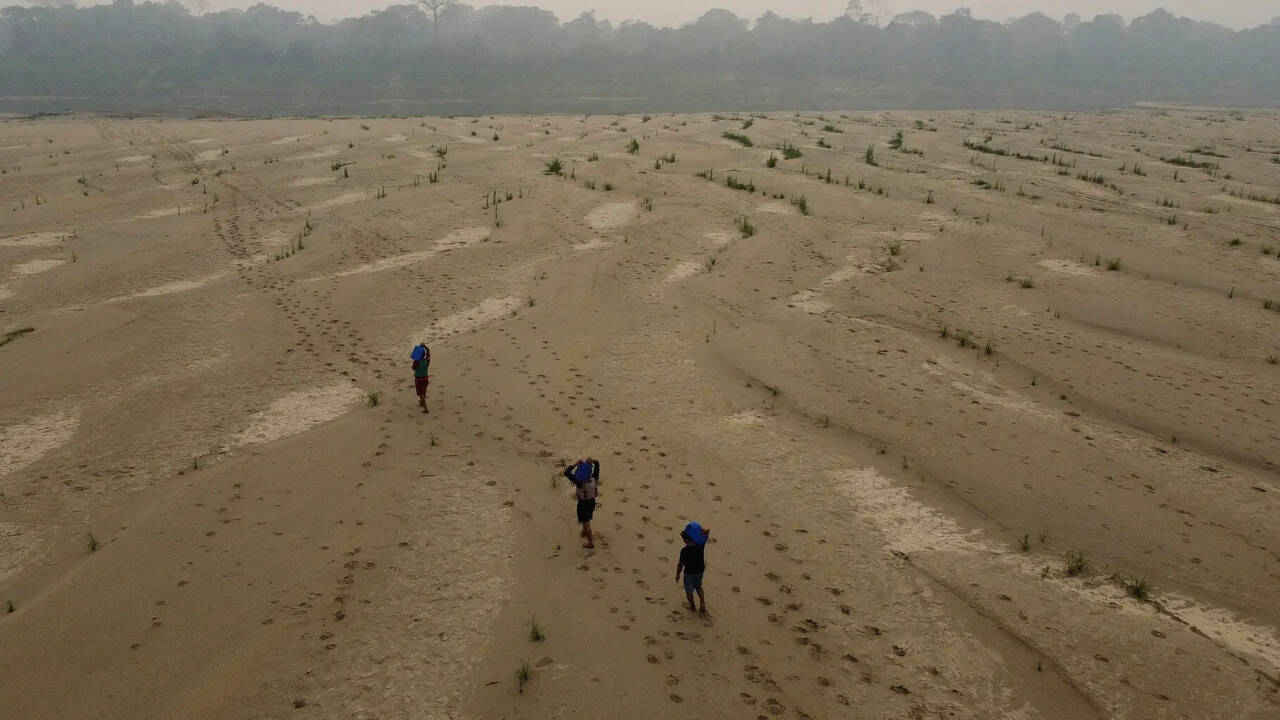

According to new projections from the United Nations, the Earth is likely to exceed the internationally recognized climate threshold and set new records for high temperatures within the next five years. The World Meteorological Organization (WMO) anticipates a significant rise in global temperatures, particularly in the Arctic.
 Survey
The WMO forecasts a nearly 3 degrees Fahrenheit (1.66 degrees Celsius) increase in Arctic temperatures by 2030, alongside the potential for severe droughts and wildfires in the Amazon, a critical region for mitigating climate change. Experts assert that the continued burning of fossil fuels will lead to more frequent extreme weather events, including floods, droughts, and heat waves.
Temperature Projections and Climate Thresholds
The UN climate agency and the UK’s Meteorological Office project a 75% likelihood that the average global temperature from 2026 to 2030 will surpass 1.5 degrees Celsius (2.7 degrees Fahrenheit) above pre-industrial levels. This threshold was established in 2015 as part of the Paris climate agreement and is crucial for preventing severe climate impacts.
A previous UN science report indicated that surpassing this 1.5-degree threshold could lead to increased mortality, ecological dangers, and species extinction. Although the increase may seem minor, many ecosystems, including coral reefs and glaciers, are unable to withstand additional stress.
Implications of Exceeding Climate Limits
The WMO reports a 91% chance that at least one of the next five years will exceed the 1.5-degree threshold, with an 86% probability that one of those years will break the record for the hottest year, currently held by 2024. The organization estimates that each year from now until 2030 will register temperatures between 1.3 degrees Celsius (2.3 degrees Fahrenheit) and 1.9 degrees Celsius (3.4 degrees Fahrenheit) above late 19th-century levels.
Melissa Seabrook, a climate scientist at the UK Meteorological Office, emphasized that the 1.5-degree mark is not a definitive cutoff. She stated, “Every kind of 0.1 of a degree has more and more severe impact.” She highlighted the unprecedented heat experienced in Europe as an example of this trend.
The Role of El Niño in Future Temperature Trends
Forecasts suggest a strong El Niño, a natural climate pattern that raises global temperatures, is expected to develop soon and may persist until 2028. This phenomenon could contribute to record-breaking temperatures in 2027, as noted by Seabrook.
If the average temperature over the next five years exceeds 1.5 degrees Celsius, it would indicate a quarter-degree Celsius (0.45 degrees Fahrenheit) increase in a decade, significantly faster than historical warming rates, which were closer to two-tenths of a degree Celsius per decade.
Accelerated Warming in the Arctic
Climate projections indicate that warming in the Arctic is occurring at a rate 3.5 times faster than the global average due to diminishing ice and snow cover. This cycle exacerbates warming as reduced ice leads to increased solar radiation absorption.
Between 2020 and 2025, average winter temperatures in the Arctic were already 2.1 degrees Fahrenheit (1.2 degrees Celsius) higher than the 1991-2020 average, with predictions that the next five winters could be 5.1 degrees Fahrenheit (2.8 degrees Celsius) warmer.
Concerns for the Amazon and Global Climate
The report anticipates drier and hotter conditions in the Amazon basin, which could have dire consequences for local communities and the environment. Increased wildfire risks threaten to transform the Amazon from a carbon sink into a source of carbon emissions, worsening climate change.
Conversely, the Sahel region in Africa, which has been particularly dry, may experience increased rainfall, potentially leading to flooding.
Urgent Call for Climate Action
United Nations officials have expressed concern that current efforts to combat climate change are insufficient. U.N. climate chief Simon Stiell remarked, “Despite the progress of recent years, it’s clear that global heating is still outpacing global efforts to contain it.” He noted the severe impacts of climate change already being felt worldwide, including extreme heat and economic repercussions.


