
UN Climate Projections Indicate Record Heat and Overheating Arctic by 2030
 Follow Us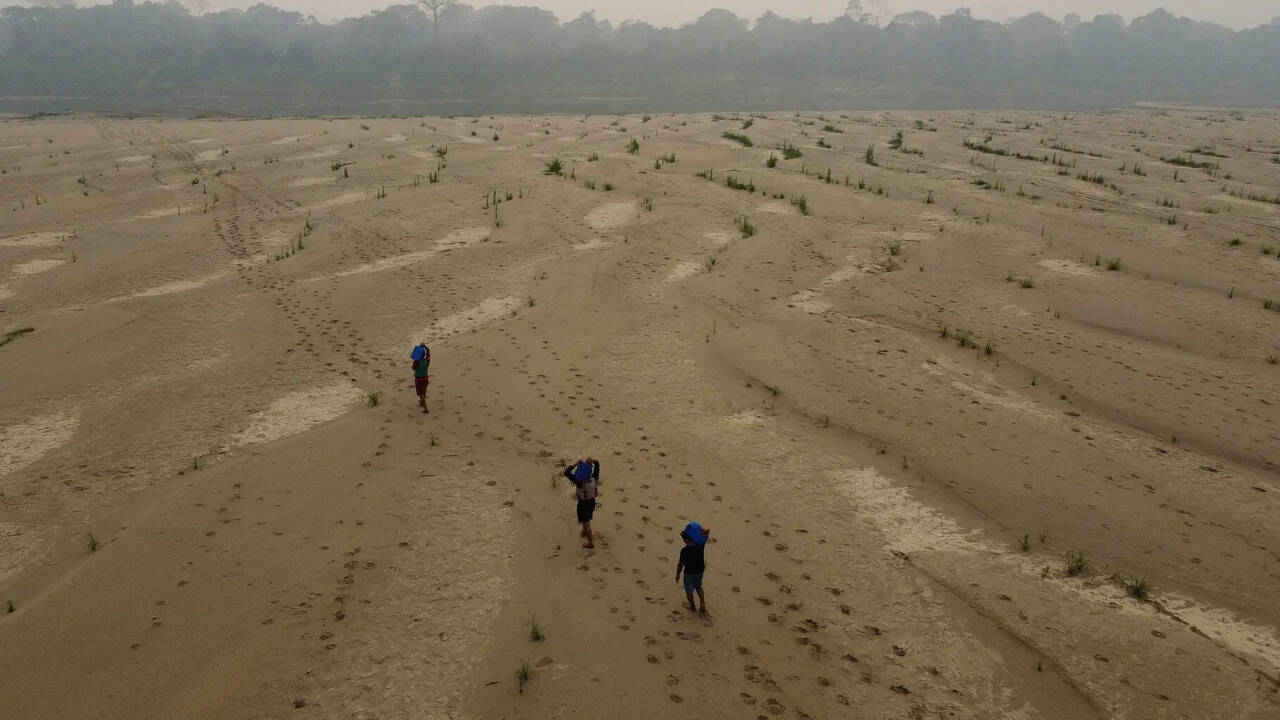

According to new projections from the United Nations, the Earth is expected to exceed the international climate threshold for safety multiple times within the next five years, leading to record-breaking temperatures.
 Survey
The World Meteorological Organization (WMO) anticipates significant warming in the Arctic and an increase in extreme weather events, such as droughts and wildfires, particularly affecting the Amazon region, which plays a crucial role in mitigating climate change.
Projected Temperature Increases
The WMO’s report indicates a 75% probability that the global average temperature will surpass 1.5 degrees Celsius (2.7 degrees Fahrenheit) compared to pre-industrial levels between 2026 and 2030. This threshold is established under the Paris climate agreement as a critical limit for global warming.
Exceeding this temperature mark is linked to increased risks of mortality, environmental hazards, and species extinction, as highlighted by earlier U.N. science reports. Even a minor increase in temperature can significantly impact vulnerable ecosystems, including coral reefs and glaciers.
Implications of Exceeding the Threshold
The WMO estimates a 91% chance that at least one of the next five years will surpass the 1.5-degree threshold, with an 86% probability that one of those years will set a new record for the hottest year, previously established in 2024.
Melissa Seabrook, a climate scientist at the U.K. Meteorological Office, emphasized that crossing the 1.5-degree threshold does not signal a sudden disaster but rather a continuum of increasingly severe impacts. Each increment of 0.1 degrees contributes to more extreme weather phenomena.
Arctic Warming and Climate Feedback Loops
The report outlines that Arctic temperatures are rising at a rate 3.5 times faster than the global average, primarily due to diminishing ice and snow that previously reflected solar radiation. This cycle exacerbates warming, leading to further ice melt.
From 2020 to 2025, Arctic winters were already 2.1 degrees Fahrenheit (1.2 degrees Celsius) warmer than the historical average, with projections suggesting the next five winters could be 5.1 degrees Fahrenheit (2.8 degrees Celsius) warmer.
Drought Risks in the Amazon
The WMO’s findings predict that the Amazon basin will face heightened temperatures and unusual dryness, posing risks for both local communities and the global climate. The anticipated conditions could lead to increased wildfire occurrences, transforming the Amazon from a carbon sink to a carbon source.
In contrast, the Sahel region in Africa, known for its dryness, is expected to experience above-normal rainfall, raising concerns about potential flooding.
Global Response to Climate Change
U.N. officials have expressed concern that current efforts to combat climate change remain insufficient. U.N. climate chief Simon Stiell remarked that despite recent advancements, global warming continues to outpace initiatives aimed at mitigating its effects.
Stiell noted, “Every nation is already paying a huge price from this global climate crisis,” highlighting the severe impacts of extreme heat, storms, and droughts on human life and economies.


