
Study Reveals Pigeons May Use Liver for Navigation
 Follow Us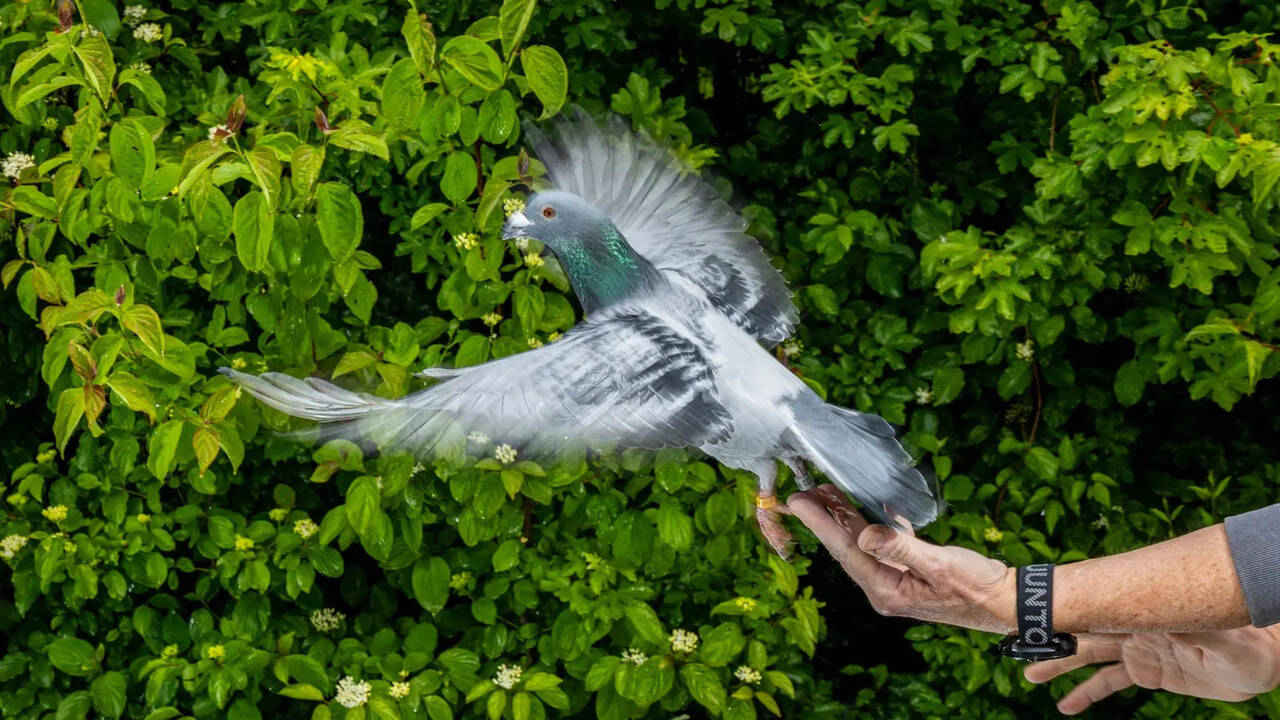

A recent study suggests that pigeons may rely on their liver to navigate home, adding a new dimension to our understanding of avian navigation methods.
 Survey
Researchers discovered that specialized immune cells in the liver could play a critical role in how these birds orient themselves, potentially utilizing iron-rich cells as part of their magnetic sensing capabilities.
Pigeons’ Navigation Techniques
Pigeons are known for their remarkable ability to fly long distances, often covering hundreds of miles in a single day. Historically, humans have utilized these birds for communication, including the delivery of messages during wartime.
Scientists have long sought to understand how pigeons navigate without losing their way. Various theories suggest that they might detect magnetic cues through light-sensitive molecules in their eyes or via sensory mechanisms in their beaks or inner ears.
New Research Findings
In a groundbreaking study, researchers, including Martin Wikelski from the Max Planck Institute of Animal Behavior, investigated the navigational abilities of pigeons. They focused on identifying magnetic cues within the birds’ organs and found significant evidence in an unexpected location: the liver.
According to Christian Kurts from the University of Bonn, the immune cells in the pigeon’s liver, which are responsible for breaking down red blood cells and storing iron, may be crucial for navigation. When these cells were temporarily removed, the pigeons struggled to find their way.
Implications of the Findings
The study revealed that the birds’ magnetic compasses were disrupted only on overcast days, indicating that they also rely on the sun for navigation. This research, published in the journal Science, is the first to propose a comprehensive theory regarding the involvement of immune cells in magnetic sensing.
Clivia Lisowski, a co-author of the study, suggested that the immune cells, located near nerve fibers in the liver, could transmit their magnetic sense to the brain, aiding pigeons in their navigation.
Future Research Directions
The researchers hypothesize that other birds and animals, such as mice, might navigate using similar mechanisms. However, experts emphasize the need for further investigation to confirm how pigeons utilize this navigational method and how these signals reach the brain.
Veterinary pathologist Simon Spiro and biologist Hal Drakesmith noted that the complexity of magnetic navigation might not have a singular explanation, suggesting that different methods may be employed based on specific navigation tasks.


