
Inverter AC vs split AC: Which is one is cheaper, is more efficient and easy to maintain
 Follow Us
Inverter ACs use less electricity and give steady cooling compared to regular split ACs.
Running an inverter AC costs less per hour than a normal split AC.
Split ACs are cheaper to buy, while inverter ACs help save money in the long run.

The heatwaves are taking over the Indian subcontinent, and as the temperature goes up, so does the need for an air conditioner. If you’re planning to purchase a new AC, then you may be confused on whether you should invest in an inverter AC or a normal split AC. While a split AC refers to the design of the air conditioner with indoor and outdoor units, an inverter AC focuses more on how the compressor works. Today, most inverter models are also split ACs, but their cooling method and electricity usage are different. In this article I’ll walk you through things like running costs, pricing and more for the inverter AC and the split AC so that you can make your decision.
 Survey
Inverter AC vs split AC: Efficiency and daily running cost
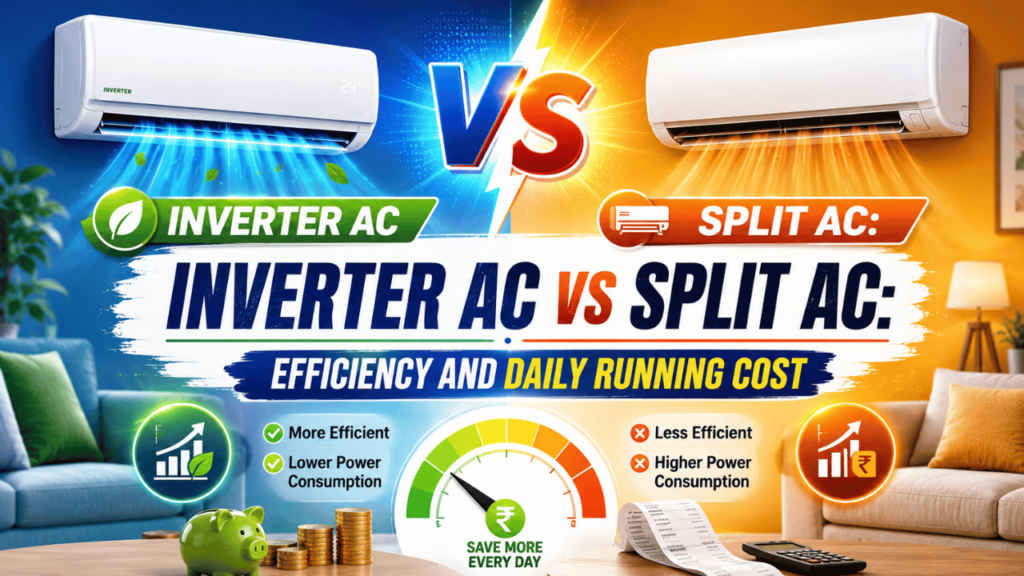
The efficiency and electricity consumption of the inverter AC and split AC are two of the main key differences that can influence your decision and, indeed, your pocket as well. The inverter AC adjusts the compressor speed of the air conditioner depending on your room temperature. This eliminates the need to switch your AC on and off as it runs at different speeds to maintain cooling.
On the other hand, the regular split AC with a non-inverter compressor runs at full capacity. It stops completely once it reaches the required temperature level, and once the room gets warmer, it starts again. It consumes more electricity than the inverter AC.
The inverter AC, which has a capacity of 1.5 tonnes, consumes an average of 0.8 to 1 unit of electricity per hour, and its operational cost comes to around Rs 6 to Rs 8 per hour. But on the other side, the regular split AC consumes more electricity, about 1.2 to 1.5 units of electricity per hour, costing Rs 10 to Rs 12 per hour.
Inverter AC vs split AC: Servicing

As far as the maintenance is concerned, both of these AC units require routine cleaning and maintenance. The filters, coils, and drainages must be cleaned regularly to avoid any problem associated with cooling.
Nevertheless, the electronic components and sensors that are found in inverter air conditioners make them relatively expensive to fix if any problems occur beyond their warranty period. On the other hand, Split AC units have a relatively straightforward design, making repair much cheaper and easier.
Also read: Google Gemini may soon think deeper, book restaurants and shop groceries for you
Inverter AC vs split AC: Price
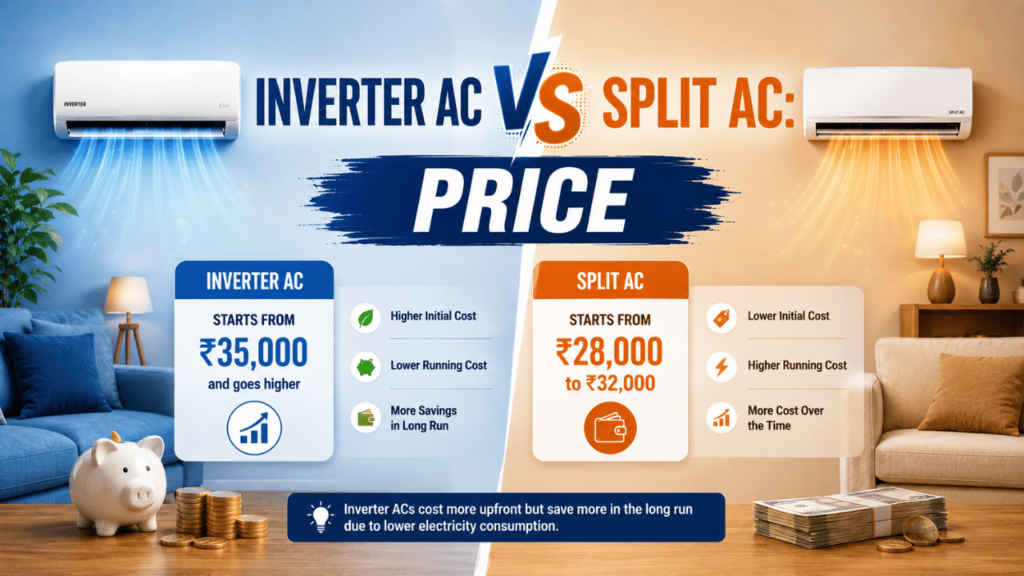
Another thing that can change your mind is the price of an inverter AC and a regular split AC. A basic 1-tonne non-inverter split AC is usually around Rs 28,000 to Rs 32,000 in India, while the inverter ACs generally start from around Rs 35,000 and can go much higher depending on capacity and star rating.
However, you need to keep in mind that though a standard split AC might look affordable during purchase, the electricity usage of those devices is usually higher and can be a strain on your pocket in the long term. However, the inverter ACs may require a bigger initial investment, yet you can still save more in the longer run as their cost of running is comparatively lower than the standard split AC.


