
OpenAI finds hidden recording device in office, says AI helped identify employee behind it
 Follow Us
OpenAI has revealed that it found a hidden recording device inside one of its offices.
The company said it used its AI models to investigate the device and identify the employee who allegedly planted it.
The device was reportedly placed in an executive conference room.
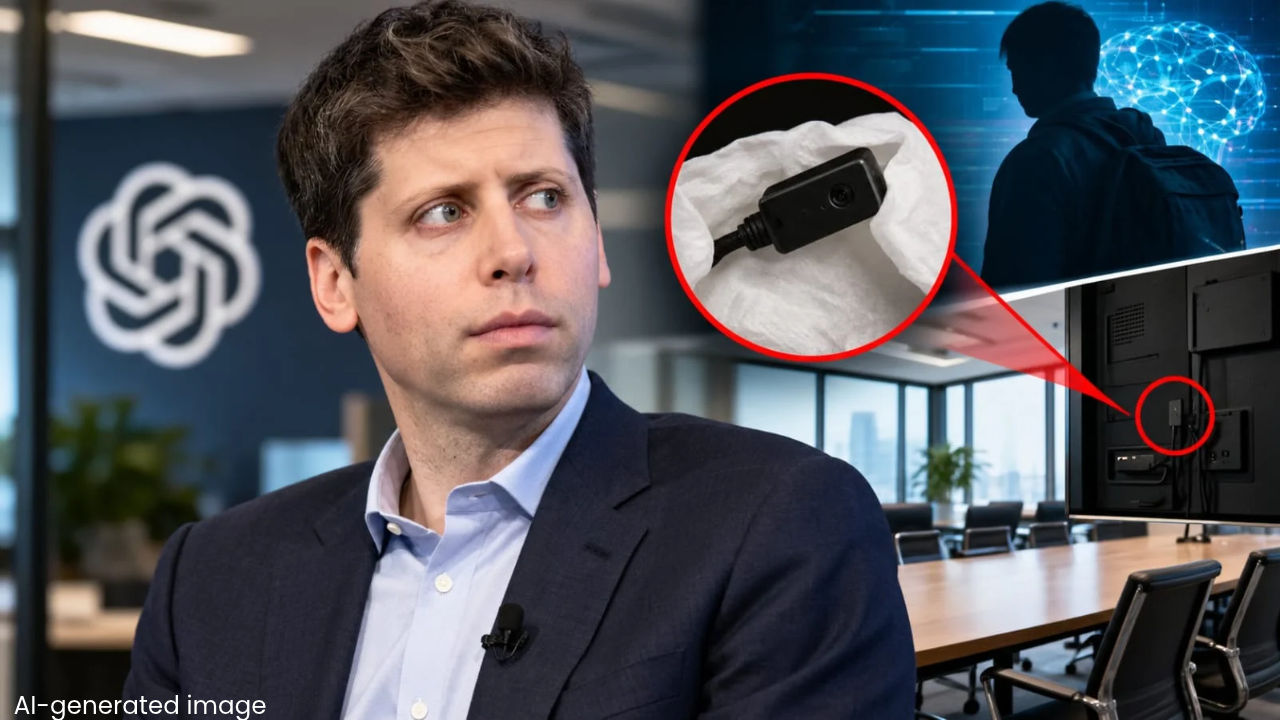

OpenAI has revealed that it found a hidden recording device inside one of its offices. The company said it used its AI models to investigate the device and identify the employee who allegedly planted it. The device was reportedly placed in an executive conference room and the employee responsible had been terminated. The company clarified that there was no indication of the individual inappropriately accessing or taking sensitive company information, including AI model weights, source code or customer data. The incident has raised questions about internal security at AI companies working on advanced technologies.
 Survey
OpenAI says AI helped identify employee
In a post on X, OpenAI said it used its AI models to investigate the device and determine where it came from. The investigation helped the company identify an employee who had allegedly planted it.
The company said, “We referred the matter to the FBI, and we’re grateful to the agents and prosecutors who moved quickly to make an arrest.”
OpenAI confirmed that the employee had been terminated. However, it said there was no evidence that the individual had improperly accessed or taken sensitive company information. “At this time, we have no indications of this individual inappropriately accessing or exfiltrating model weights, source code, or customer data,” the company said.
OpenAI stressed protecting its technology, data and employees remains a priority. The company added that its security programme is designed to address threats ranging from insider risks and cybercriminals to nation states.
Also read: OpenAI reportedly wants to bring back Sora AI, but not everyone may be able to use it
We discovered a sophisticated recording device that was hidden inside one of our offices. We used our models to understand the device and where it had come from, identifying that a specific employee had planted it a few days earlier. We referred the matter to the FBI, and we’re grateful to the agents and prosecutors who moved quickly to make an arrest. The FBI’s investigation is ongoing and we will continue to support their work. At this time, we have no indications of this individual inappropriately accessing or exfiltrating model weights, source code, or customer data. The employee was terminated. We take protecting our technology, data, and people seriously, and as a matter of national importance. Our security program is designed to protect against a wide range of threat actors, from insider risks to cybercriminals to nation states, and this case is an example of how AI can help address these sophisticated security threats.
— OpenAI Newsroom (@OpenAINewsroom) October 13, 2026
Hidden Recording device was planted in a conference room
According to a report by Reuters, US federal agents arrested Abdulrahman Alfozan, a 35-year-old Saudi national who worked as an engineer at OpenAI. The US Department of Justice said he was charged with installing a concealed recording device in an executive conference room.
The device was discovered on September 30 and was installed on or about September 28. According to an FBI complaint, it was connected to a USB port on the back of a TV. The thumb-sized device had a microphone and could connect to a camera. It was reportedly concealed in toilet paper. Investigators also found a similar customised device in Alfozan’s personal bag.
Also read: Anthropic warns AI models may soon self-replicate without access to a datacentre: Check details
“Abdulrahman Alfozan allegedly concealed a covert recording device inside his employer’s executive conference room to secretly capture sensitive communications about the company’s super intelligence technology,” FBI Director Kash Patel was quoted as saying in the report.
The FBI complaint also revealed that Alfozan had used an AI productivity agent to seek information about meeting-room calendars and capabilities for about a month, until September 16.
If convicted, Alfozan will face up to five years in prison, a fine of $250,000 and three years of supervised release.
The case highlights growing concerns about the security of sensitive AI research as companies compete to develop advanced technologies.


