
India unveils its first electric flying taxi prototype that can fly 110km on a single charge: All details
 Follow Us
IIT Madras-incubated The ePlane Company unveiled the PT-01 eVTOL prototype designed for urban air mobility.
The electric aircraft offers a 110km range and will initially be deployed for emergency medical services.
Ground testing is expected to begin next year, while commercial certification and operations are planned by 2028.
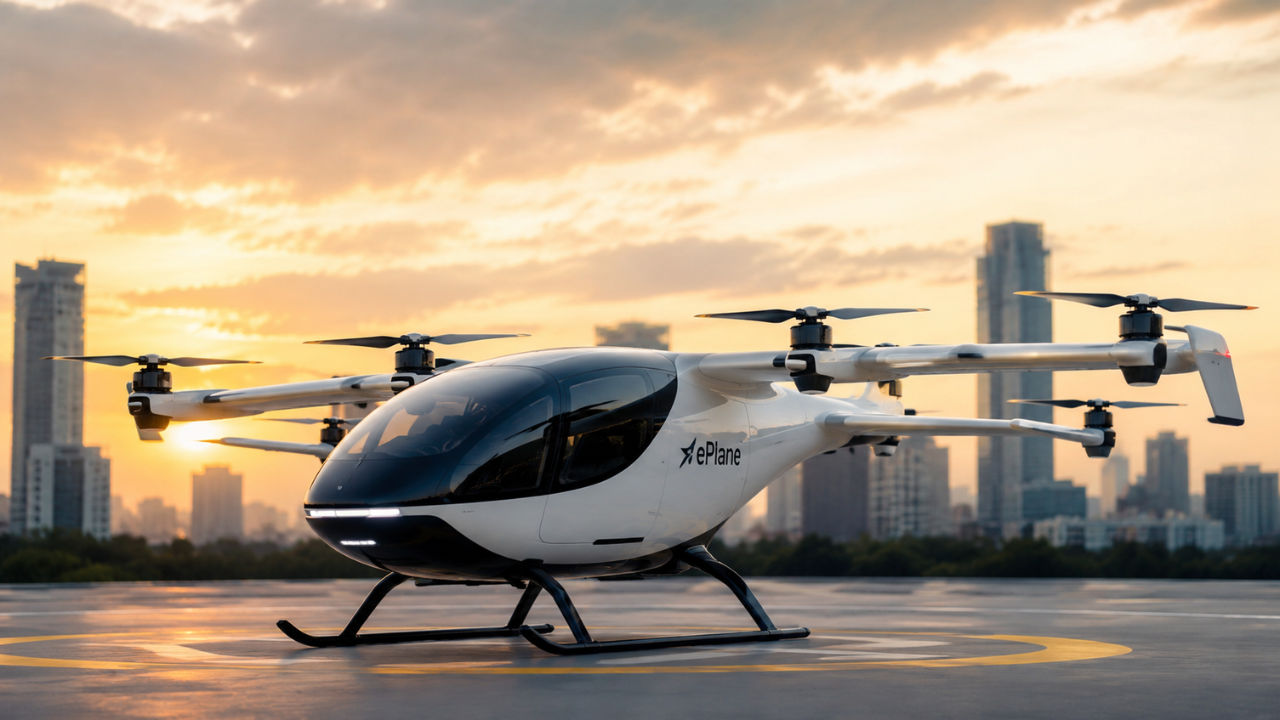

India has taken a big step towards urban mobility with Chennai based startup The ePlane Company introducing the country’s first full scale electric vertical take off and landing aircraft prototype. Incubated at IIT Madras, the company introduced the prototype, called PT-01, at its newly inaugurated production facility on the IIT Madras Discovery Campus.
 Survey
The aircraft is said to begin ground testing next year, while the commercial operations may start in 2028. Initially, the company plans to deploy the aircraft for emergency medical services before expanding into passenger transport.
What is an eVTOL aircraft?
An eVTOL aircraft is designed to have the vertical lift capability of a helicopter and the forward flight efficiency of a conventional aeroplane. These aircrafts do not need runways and instead use multiple electric motors and propellers powered by batteries.
The ePlane prototype weighs around 2.2 tonnes, features an eight metre wingspan and is designed to cover approximately 110 kilometers on a single charge. The company says its compact footprint would allow it to operate from existing hospital helipads and rooftops without requiring major infrastructure upgrades.
Why air ambulances first?
Rather than launching directly as an air taxi, the ePlane Company wants to use the aircraft for medical emergencies. Air ambulances are considered one of the most practical early applications because hospitals already have dedicated landing areas and faster patient transport can be critical during emergencies.
The prototype has been designed to carry a pilot and up to 200kg of payload, allowing it to transport a patient, paramedic and essential medical equipment. The aircraft also incorporates multiple electric propellers, giving it additional redundancy if one propulsion unit fails during flight.
Commercial launch still years away
The first electric plane has entered the prototype stage and the commercial deployment will depend on the successful testing and regulatory approvals. As mentioned above, the trials are said to start in 2027 before certification flights start later the same year.


