
Govt delays UPI MDR fees rollout beyond Diwali: Here is everything we know
 Follow Us
NPCI has postponed UPI MDR charges until after Diwali.
UPI payments above Rs 2,000 via wallets will attract a 0.4 per cent fee.
The new implementation date is yet to be announced.

NPCI has delayed the introduction of MDR fees on UPI payments until the festive season ends, which was initially intended to go live on October 15. The UPI Steering Committee took the decision following an internal discussion about the difficulties of introducing these charges during the festive season. At the time of writing, the authorities have not shared a new date for the implementation of the MDR fees. Merchant groups, trader associations and payment companies have previously reached out to the government seeking a relaxation during the festive season to avoid disrupting business during this crucial period. Here’s everything you need to know about the proposed changes and how they could affect merchants and customers.
 Survey
UPI MDR fees: Why did NPCI delay it?
NPCI has confirmed in a recent press release that MDR charges will not be introduced from October 15, as planned earlier. Instead, the implementation has been postponed until after Diwali. In the press release, NPI said, ‘UPI and the Services Steering Committee today decided that, keeping in mind the festive season, Merchant Discount Rate (MDR) on select Person-to-Merchant (P2M) UPI transactions shall be implemented immediately post Diwali at a date to be notified separately.’
The committee has not yet announced the exact date for introducing the MDR charges. The delay is important because the government is concerned that extra payment costs could increase the burden on businesses, especially as inflation is rising. Merchants may pass these extra costs on to customers through higher prices or additional fees. While talking about the MDR charges, the Finance Minister has also previously said that the decision would be left to the stakeholders.
Also read: ColorOS 17 announced in India: New features, supported Oppo phones and rollout schedule
The current delay on MDR charges follows requests from merchant groups, fintech firms, and payment companies, which asked for more time to prepare for the new fee structure. Not only that, but these groups have also previously raised concerns about the impact of additional charges during the festive season, as the businesses usually see their higher sales at that time period.
MDR fees: What is it and how much will merchants pay?
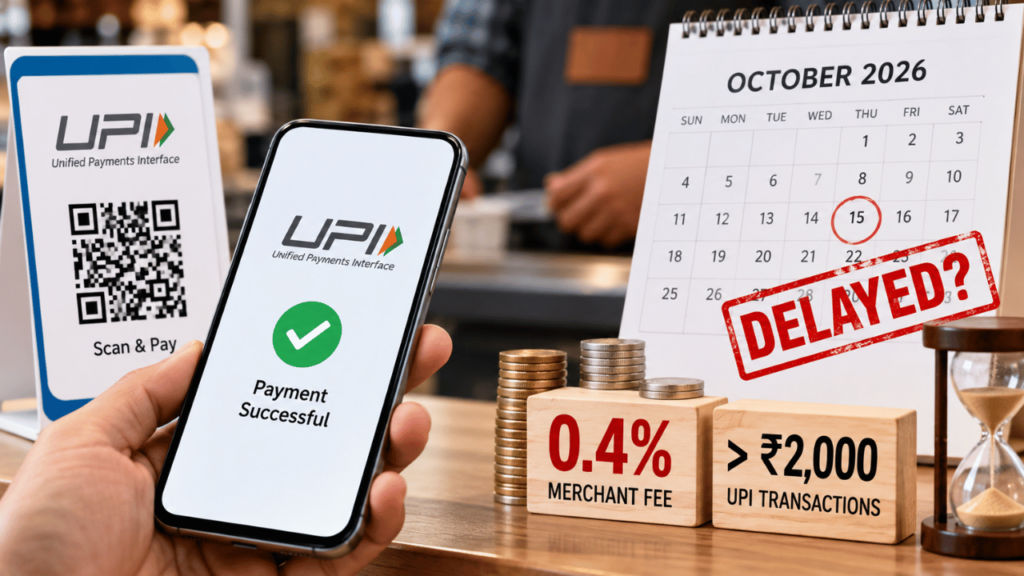
Merchant Discount Rate (MDR) is a small fee that merchants pay to payment processors, card networks, and banks for processing electronic or digital transactions. UPI transactions have traditionally been free from MDR charges. However, the government recently announced that UPI payments above Rs 2,000 made through Prepaid Payment Instruments (PPIs) like wallets will attract MDR.
Also read: Vivo V80 vs Oppo Reno 16 vs OnePlus 15R: India price, display, performance, camera and more compared
According to the information shared by the UPI Steering Committee last month, transactions above Rs 2,000 will attract an MDR of 0.4 per cent, or 40 basis points, while a payment of Rs 10,000 would cost Rs 40 in MDR. The government has also capped the charges at Rs 300 for payments above Rs 75,000.


