

Fake LPG booking scam: Urgent booking links and QR codes could empty your bank account, tips to stay safe
 Follow Us
Scammers are sending fake SMS, WhatsApp links and QR codes claiming urgent LPG booking due to shortages.
Users are tricked into sharing OTPs, bank details or downloading malicious apps via fake portals.
Authorities advise booking only via official platforms and reporting fraud at National Cyber Crime Reporting Portal or helpline 1930.
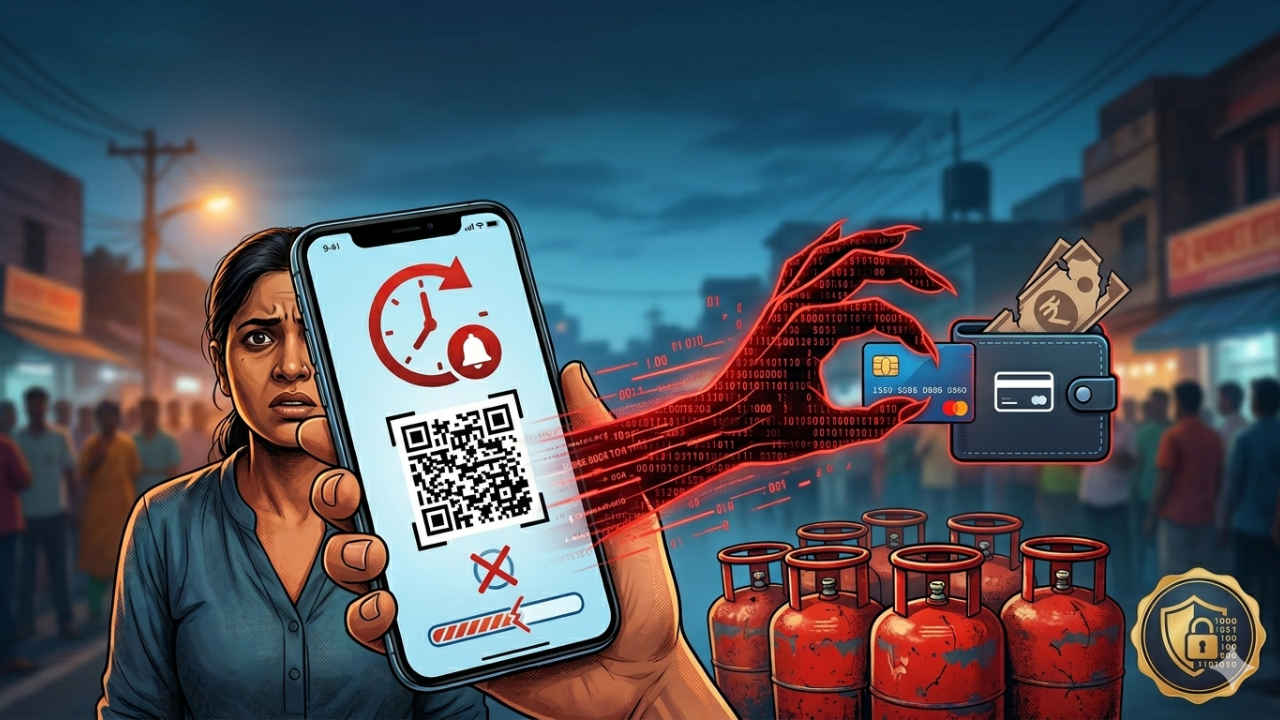

We all know that the Israel-US-Iran conflict has impacted the LPG supply in India. The LPG cylinders have been selling at skyrocketing prices. Now, it appears that scammers appear to have been using this crisis situation to loot people. To cater to this, the Indian Cyber Crime Coordination Centre (I4C), operating under the Ministry of Home Affairs, has issued an advisory cautioning everybody against the growing number of fraudulent LPG booking schemes that exploit supply-related anxiety to steal money and sensitive personal data.
 Survey
Taking to X, the authority’s official handle shared a post talking about fake LPG scams along with an infographic breaking down the scam’s mechanics. Here is how scammers are targeting the citizens and how you can be safe.
Shortage fear as weapon
Of course, the LPG price hike has created panic and scammers are reaching out to potential victims via SMS, WhatsApp messages and social media ads, warning them of an impending LPG shortage and nudging them to book immediately or grab a limited-time discount. This urgency leaves little room for recipients to pause and verify.
These messages carry links mimicking official LPG booking portals. Some victims are directed to download third-party applications or scan QR codes, all designed to funnel payment or extract financial credentials such as OTPs, PINs and bank account details.
Advisory details
The I4C advisory lays out clear patterns that users should treat as red flags- any message demanding immediate cylinder booking citing a shortage, redirecting to unfamiliar websites asking for APK downloads outside official stores, or asking for banking information should be treated with suspicion. It said that original LPG service providers would never ask for payments or personal details through third-party links.
Tips to stay safe
As per the infographic, all LPG bookings should be made through official apps or verified websites of authorised distributors. Everyone is advised to avoid any engagement with the links or attachments from unknown senders and to directly contact their LPG provider if they receive any such communication before taking action.
And if you have already fallen into such traps, you can complain at www.cybercrime.gov.in or by calling the national helpline 1930.


