
India removes BAT-BMS and Epoch Li-ion apps from Play Store and App Store over e-rickshaw shutdown concerns
 Follow Us
The government removed two apps over e-rickshaw safety concerns.
Viral videos raised fears about possible misuse of Bluetooth-connected batteries.
Experts say better battery security can help prevent misuse.
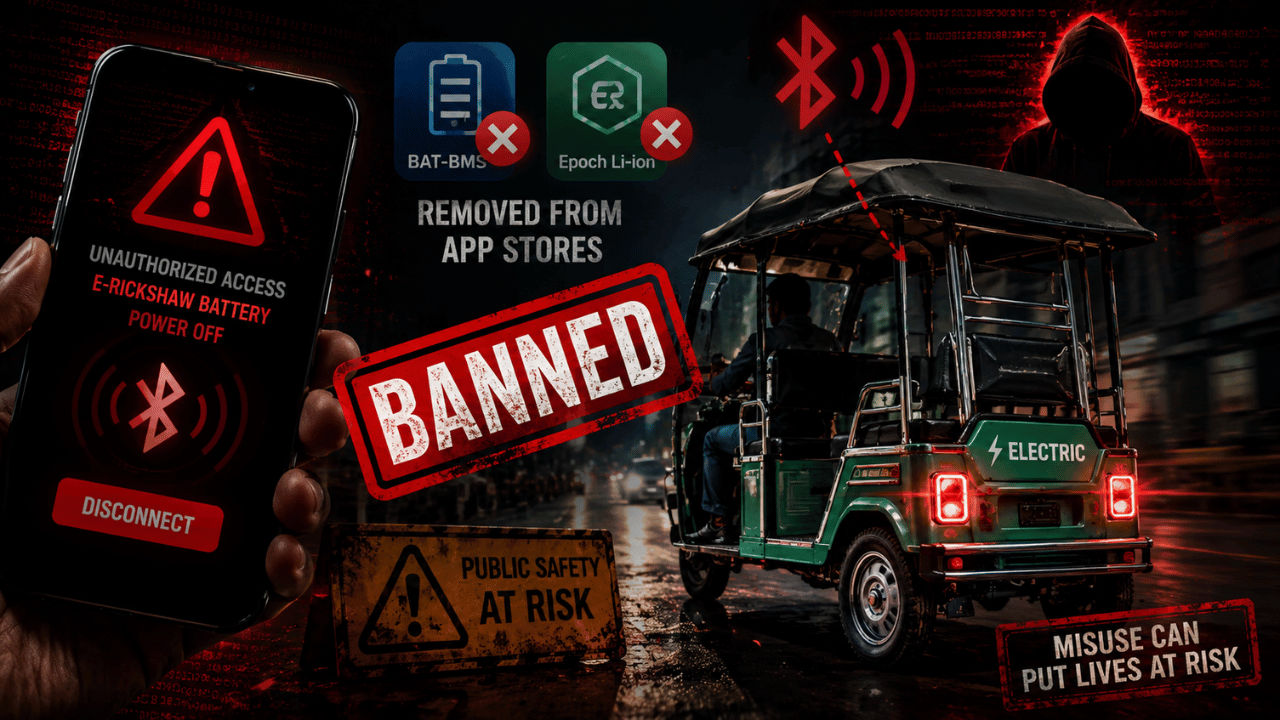

The Indian government has directed the App Store and Play Store to remove two mobile applications that were allegedly linked to stopping moving e-rickshaws through Bluetooth connectivity. The order was issued by the Ministry of Electronics and Information Technology (MeitY) after reports claimed that some users could connect to nearby battery systems and switch off their power using the apps. Although there is no confirmed evidence that the applications could remotely stop e-rickshaws while they were in motion, the government acted as a precaution. Following the directive, both BAT-BMS and Epoch Li-ion apps have reportedly been removed from the app stores, raising concerns about public safety and potential misuse of Bluetooth-enabled technology.
 Survey
MeitY confirms removal of BAT-BMS and Epoch Li-ion apps
Speaking at the CII Cybersecurity Summit on July 3, MeitY Secretary S Krishnan confirmed that two applications, BAT-BMS and Epoch Li-ion, which were reportedly used to turn off the e-rickshaw battery remotely, have now been taken down.
The action from the government came when several videos appeared on social media where many people connected to nearby e-rickshaw batteries using Bluetooth and cutting the power supply. As the clips went viral, they quickly raised fears among drivers and passengers about the safety of such battery systems.
Also read: Meta CEO Mark Zuckerberg says AI agents have not progressed as he expected
How BAT-BMS and Epoch Li-ion apps work
BAT-BMS is a Chinese app developed by Shenzhen Grenergy Technology. It was created as a companion app for Bluetooth-enabled lithium-ion batteries, as it allows users to check battery details such as voltage, current, temperature, charging cycles and battery health. Furthermore, it’s important to note that a device can only connect to a battery at a time.
Aside from the abovementioned, there was a feature that lets users switch the battery’s discharge function on or off using the app. However, it was there as a safety measure, and at the time of development, it wasn’t considered that some notorious people would misuse it.
Experts say the problem is not the monitoring features themselves but weak security settings in some battery management systems. Many low-cost electric vehicles use battery systems that either lack password protection or continue to operate with factory default credentials. This can allow anyone within Bluetooth range to connect if proper security measures are not in place.


