
AI helped couple conceive after trying for 19 years: Here’s how
 Follow Us
Columbia University’s STAR AI scanned 25 lakh images to find viable sperm in a “sperm-free” sample.
Two identified sperm were used for fertilisation, resulting in a successful pregnancy.
STAR could revolutionise fertility treatments for men with azoospermia if validated in larger trials.
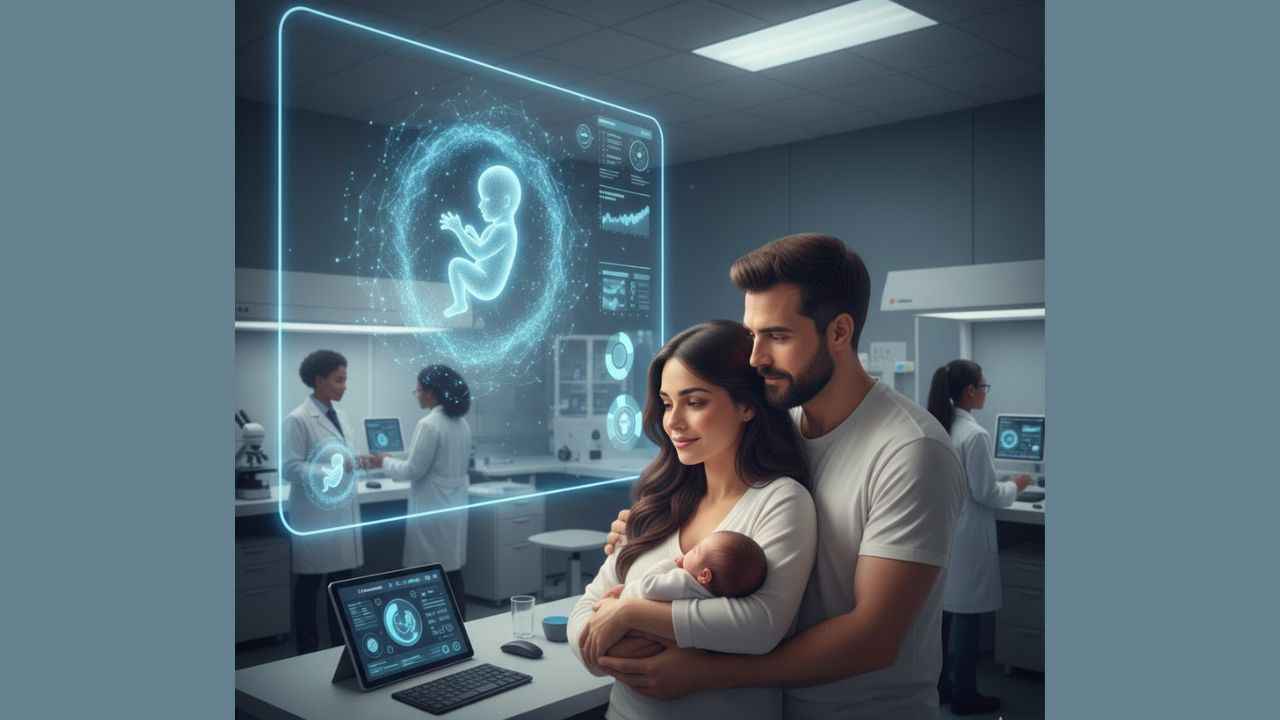

Days after OpenAI banned ChatGPT from providing medical advice, artificial intelligence has been reported to help a couple conceive after nearly two decades of infertility. According to The Lancet, researchers at Columbia University used an AI-based system that scanned 25 lakh images of a semen sample over 2 hours to identify two viable sperm cells, something that conventional methods had failed to achieve. The sperm were later used to fertilise eggs, resulting in a successful pregnancy.
 Survey
As per the report, the 39-year-old man and his 37-year-old partner had undergone multiple failed IVF cycles and surgical extractions with no success. Traditional microscopic searches often reveal “a sea of cellular debris, with no sperm visible,” said Zev Williams, director of the Columbia University Fertility Centre. Many such couples are told they have little chance of conceiving biologically.
To address this challenge, the researchers developed Sperm Tracking and Recovery (STAR), an AI-assisted technique that uses high-speed imaging and machine learning to locate rare sperm cells in samples previously classified as sperm-free. The system is said to scan over eight million images in less than an hour, identifying potential sperm cells with exceptional precision.
How this AI system works
Once the AI pinpoints a viable sperm cell, a microfluidic chip with tiny, hair-like channels isolates the portion of the sample containing it. A robotic arm then extracts the sperm, which can either be used immediately for fertilisation or preserved for later use. In this case, STAR identified seven sperm cells, two of which were motile. These were injected into mature eggs, leading to the formation of embryos and eventually a successful pregnancy.
Also read: Cybercriminals exploit LinkedIn DMs with fake investment invites to steal Microsoft credentials
At eight weeks, the patient’s ultrasound showed normal fetal development and a healthy heartbeat. While this is based on a single successful case, larger clinical trials are underway. If validated, STAR could transform fertility treatments, offering new hope to men with azoospermia.


