
Pokemon Go users unknowingly created dataset of 30 billion images that was used to train delivery robots
 Follow Us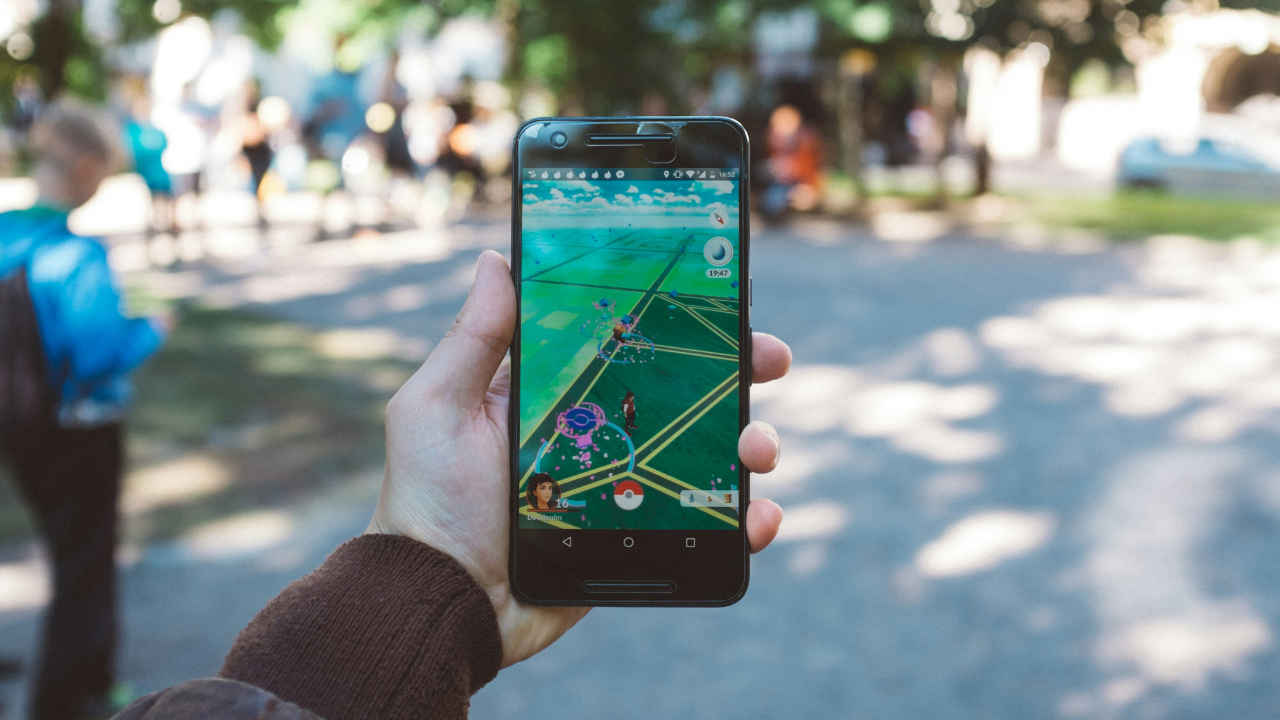

Back in 2016, an interesting trend was gripping India. Niantic’s Pokemon Go, a mobile game, sent people running in the streets and parks to catch their favourite pokemon. The game used augmented reality to place digital creatures in real world locations, making players explore their surroundings like real trainers. Nearly a decade later, the craze may not feel as intense as before, but the game still has millions of active players worldwide. And according to recent reports, those players have unknowingly helped build a massive real world image database that is now powering delivery robots navigating city streets. Read on to know all about it.
 Survey
Also read: Microsoft is bringing AI to your Xbox, how can it help gamers
Pokemon Go players helped build a massive dataset
According to a report by NewsForce, images and scans collected through Pokemon Go and other augmented reality apps have created a dataset containing more than 30 billion real world images. This means that each time a player was scanning a landmark in the game, they were helping build the dataset for Niantic, without knowing anything about it ofcourse.
We all know that Pokemon Go has always encouraged players to visit specific real world landmarks such as gyms, monuments and public spaces. And many times, players are also asked to scan these locations using their smartphone cameras to improve the game’s accuracy. However, it did much more.
Each scan captured images along with important metadata from the phone. This included location coordinates, camera orientation, device movement data and other sensor readings. Individually, these scans looked like simple gameplay interactions. But when combined across millions of players, they created an extremely detailed visual map of the physical world.
Niantic says the data collected through its AR games now includes roughly 30 billion images captured from different angles, lighting conditions and times of day. Many of these images are concentrated around more than a million popular real world locations that players frequently visit inside the game. And since every image is tied to precise spatial information, the dataset effectively forms a multi angle 3D representation of streets, buildings and public spaces. This huge pool of real world imagery has now become the foundation for a new technology developed by Niantic’s AI spinout, Niantic Spatial.
How is Niantic using this data?
Niantic Spatial is now using this massive dataset to build a ‘visual positioning system’. Instead of relying only on GPS signals, the system determines a device’s location by analysing what its camera sees and comparing it with the company’s global image database.
This approach is especially useful in dense urban environments where GPS signals often bounce off buildings and become inaccurate. In such conditions, location estimates can drift by tens of metres, which is enough to place a delivery robot on the wrong street or even the wrong building entrance.
Moreover, the technology is already being used by Niantic’s partner Coco Robotics, a last mile delivery startup operating around a thousand sidewalk robots across cities in the United States and Europe. These robots travel at roughly five miles per hour and carry items such as groceries or large food orders. To deliver accurately, they must reach the exact doorstep rather than just the general neighbourhood.
Each robot uses multiple cameras to observe its surroundings and match those visuals with Niantic Spatial’s world model. By combining camera based localisation with GPS, the robots can identify their position far more precisely. In simple terms, the same spatial data that once helped players find virtual Pokémon is now guiding real machines through busy city streets.
Also read: Resident Evil Requiem to get a story expansion, team confirms


