

Smartwatch vs screenless fitness band: How do they track heart rate, sleep and recovery?
 Follow Us
Both wearables use optical sensors, movement data and algorithms to estimate heart rate, sleep stages and recovery.
Screenless fitness bands continuous wear and longer battery life, while smartwatches offer real-time workout data and on-wrist features.
Neither device type is inherently more accurate, as sensor quality, fit and tracking algorithms all affect results.
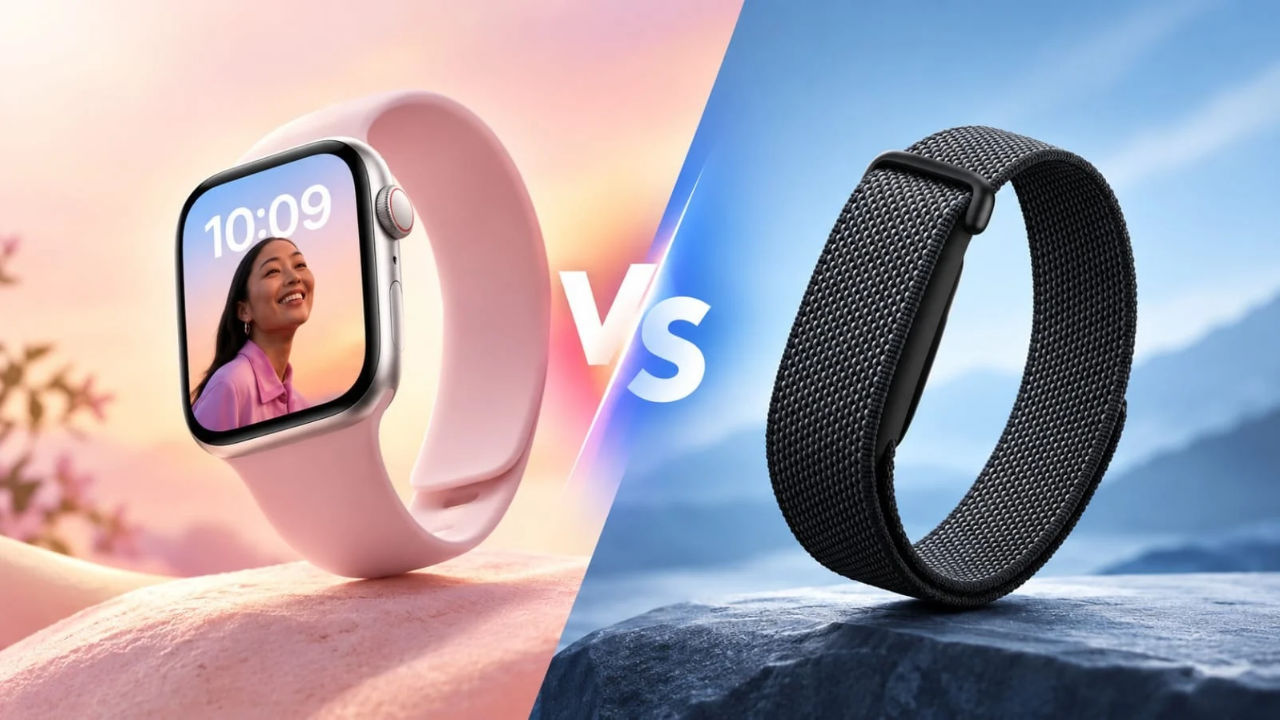

The smartwatches and screenless fitness bands may look very different, but they rely on many of the same technologies to monitor your health. Both of these are considered reliable devices to track heart rate, sleep, activity and other bodily signals using sensors that collect data throughout the day and night. But there are differences- how frequently they collect certain readings, how their software interprets the data, and how the results are presented to users.
 Survey
For example, smartwatches such as the Apple Watch or Garmin wearable put health information on your wrist along with notifications, apps and workout controls. On the other hand, screenless trackers such as Whoop or Fitbit Air take a different approach and prefer prioritising continuous monitoring and insights through a companion smartphone app. But does removing the display change how the devices measure your body? Here is how their technology works and what separates the two categories.
How do smartwatches and screenless bands measure heart rate?
Heart rate has been one of the most important health metric that almost every individual want to keep track of. And for that, both of these device types commonly use a technology called photoplethysmography, or PPG. The sensors shine light into the skin and measure how much of it is reflected or absorbed as the blood volume changes with each heartbeat. So the next time you see a green light flashing out from your wearable, you know what it is. Some devices also use red and infrared light for additional measurements.
READ: Google Fitbit Air gets blood pressure and insulin resistance tracking, but there’s a catch
The sensor’s readings are then converted into a signal that software analyses to estimate beats per minute. Many of the wearables also use an accelerometer, which detects movement, to help distinguish a genuine pulse from noise caused by a moving arm or a loosely fitted device.
But optical heart rate tracking has its own limitations. Vigorous movement, poor sensor contact, sweat and individual differences in skin and tissue can affect the readings. A screenless design does not automatically make a device more accurate, just as a smartwatch’s larger body does not necessarily make its readings less reliable. Sensor quality, fit and the manufacturer’s algorithms all matter.
Heart rate variability (HRV), which measures variations in the time between successive heartbeats, is another commonly used metric. Wearables use HRV readings to help estimate changes in recovery and stress, although the results depend on when and how the measurements are taken.
Sleep tracking relies on movement and physiological signals
Neither a smartwatch nor a screenless band directly observes your brain activity to determine your sleep stages. Instead, consumer wearables estimate sleep using a combination of movement, heart rate and other available signals.
An accelerometer helps the device identify periods of movement and stillness. Optical sensors can then provide information about changes in heart rate, while compatible devices may use blood oxygen levels, skin temperature and estimated breathing patterns to build a more detailed picture.
Algorithms combine these signals to estimate when you fall asleep, how often you wake up and how much time you spend in light, deep and REM sleep. These are estimates rather than direct measurements of sleep stages, which are assessed more comprehensively in a clinical sleep study using additional signals, including brain activity.
Screenless trackers have one practical advantage: their smaller, display-free design and longer battery life can make them easier to wear overnight. That can help users collect more consistent data over several nights. Smartwatches can do the same, provided they are comfortable enough to wear to bed and have sufficient battery charge.
Neither category is guaranteed to detect every brief awakening or classify every sleep stage correctly. Results can vary between devices, and a more detailed graph does not necessarily mean a more accurate one.
How do these devices calculate recovery scores?
You might have seen people posting their recovery scores on social media platforms. That score is an estimate calculated by combining multiple signals to give users an idea of how well they may be recovering.
The common inputs include overnight HRV, resting heart rate, sleep duration and quality and recent physical activity. Some devices also consider breathing rate, skin temperature, or longer-term changes from a user’s usual baseline.
But the main difference is how each manufacturer’s software turns those inputs into recommendations.
Sports-focused smartwatches, particularly those from Garmin, can combine sleep and HRV data with workout history, training load and estimated recovery time. This helps users decide whether to undertake another demanding session or opt for lighter exercise.
Screenless trackers such as WHOOP focus heavily on trends in sleep, daily strain and recovery. Their companion apps can also help users compare their readings with lifestyle factors, including late meals, alcohol consumption, or changes in routine, when the relevant tracking and logging features are available.
These approaches are not mutually exclusive. Smartwatches can offer detailed wellness insights, while screenless trackers can be useful for athletes. The distinction is largely in how each platform presents the data and what it encourages users to do with it.
Does a screenless design mean longer battery life?
Battery life is one of the clearest differences between the two categories. Smartwatches must power a display, operating system and often a broad range of apps and connected features. Their battery life varies considerably by model, screen settings, GPS use and workload.
Screenless trackers avoid the power demands of a display and typically offer longer stretches between charges. That can make round-the-clock wear more convenient and reduce interruptions to sleep tracking. However, the absence of a screen does not mean the sensors are necessarily collecting data at a higher frequency or that every measurement is processed in the cloud.
Both categories can perform some calculations directly on the device, while companion apps may handle additional analysis. The precise sampling schedule, processing method and use of cloud services vary by manufacturer and model. It is therefore difficult to claim that all smartwatches sample intermittently while all screenless trackers continuously record every biometric signal.
Which should you choose?
A smartwatch is a better fit for people who want to check their heart rate during a workout, view pace and other exercise metrics in real time, use GPS and receive notifications without reaching for a phone. Depending on the model, it can also offer detailed sleep, recovery and wellness tracking.
A screenless fitness band may suit people who prefer to wear a lightweight device throughout the day and night without a display demanding their attention. Its companion app becomes the main place to review sleep patterns, recovery estimates and longer-term health trends. Battery life and comfort may also make continuous wear easier.


