
Why the vivo X300 series could be the best flagship of 2025
 Follow Us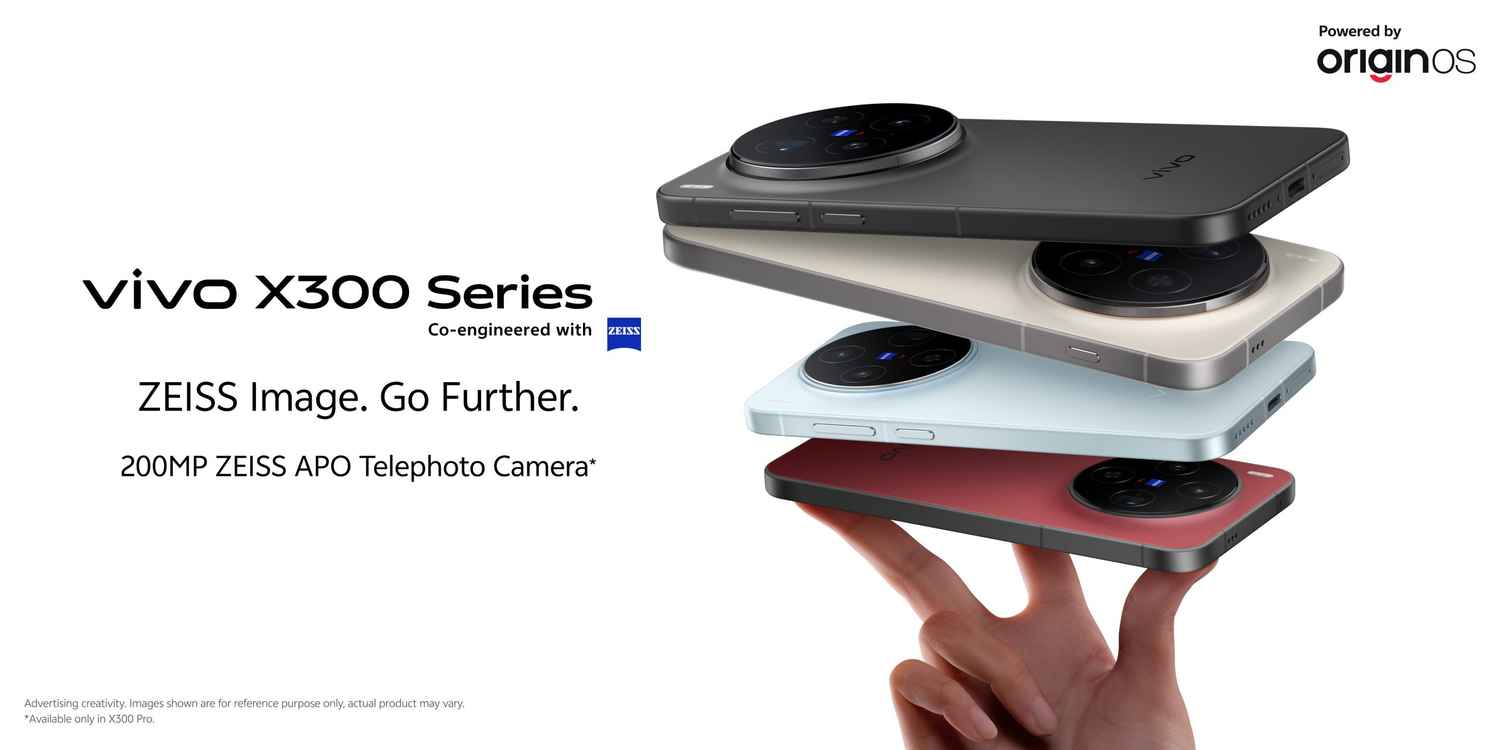

For anyone who has followed flagship smartphones over the past few years, one thing has become obvious: the bar keeps climbing. It’s no longer enough for brands to offer a great camera or a polished design. People now expect a phone that feels smart, dependable, and genuinely pleasant to use every day. And if there’s one brand that has quietly but consistently moved in that direction, it’s vivo with its X-series. As we close out 2025, vivo is getting ready to introduce the X300 and X300 Pro, and there’s already a genuine buzz among users who care about photography, a clean design, and smooth performance.
 Survey
Do note, this doesn’t feel like the usual yearly refresh. Because, from everything we’ve seen so far, the vivo X300 series is turning out to be one of the most well-rounded flagship launches of the year. And to understand why, it’s worth looking at how far the X-series has come.
A look at vivo’s X-series evolution
The vivo X-series started out as a premium showcase, designed to highlight the company’s most advanced ideas. Over the years, it slowly grew into one of vivo’s strongest flagship lines, known for taking photography, design, and the overall user experience quite seriously. The early models had a very clear goal: make phones that feel good from the moment you pick them up. Light, comfortable, and good-looking devices that didn’t try too hard yet felt thoughtfully made. vivo kept refining that approach with every new generation.

The vivo X50 series was where things really changed. Launched at a time when people were glued to their phones more than ever, it introduced gimbal camera stabilisation, something no other brand had attempted back then. It instantly gave the X-series its own personality.
The vivo X60 series carried that forward with Zeiss co-engineered cameras and a slim, elegant body. The Zeiss T* coating, better portrait tuning, and improved colour science helped vivo take a big step up in mobile photography. Phones like the X70, X80, X90 and X100 continued pushing that momentum with larger sensors, better stabilisation, and reliable low-light performance.
Then came the vivo X200 series in late 2024. Powered by the MediaTek Dimensity 9400 SoC and featuring an excellent 200MP periscope telephoto camera, it didn’t just close the gap with long-time flagship leaders; in many real-world comparisons, it surpassed them. Reviewers and photographers widely felt the X200 Pro delivered some of the best portrait and zoom results of the year.
And all of this steady progress brings us neatly to what comes next: the vivo X300 series.
Innovations in design, camera, and performance
Across its generations, the vivo X-series has built a clear identity around meaningful innovation rather than flashy changes for the sake of it. You can see this clearly in the way the design language has matured. vivo moved from simple, functional builds to premium constructions with curved or flat edges, better grip, refined textures, and finishes that feel genuinely premium in the hand. The X-series has always tried to strike a balance between looking elegant and feeling comfortable, and that balance has only improved over time.
The camera side is where the biggest jumps happened. The Zeiss partnership, which began with the X60 series, brought a level of polish you could immediately notice in portraits, colour accuracy, and low-light results. Features like gimbal stabilisation, dedicated portrait lenses, large sensors, and careful image tuning helped vivo compete with, and many times outperform, the biggest camera brands in the flagship space.
Performance has evolved right alongside everything else. From the early Snapdragon-powered models to the latest MediaTek Dimensity 9500 in the X300 series, vivo has consistently used top-tier chips to keep things smooth and responsive. And with today’s imaging depending heavily on AI and complex processing, this performance matters more than ever. It ensures that features like night mode, portrait effects, and high-quality video run effortlessly.
Put together, the improvements in design, camera, and performance have helped the X-series grow into a flagship line that feels complete, thoughtful, and far from one-dimensional.
How the X-series sets the direction for other vivo smartphones
One of the biggest strengths of the X-series is that it often acts as vivo’s testing ground. It’s where the brand introduces its most ambitious ideas before they eventually make their way into the wider line-up. Over time, many X-series innovations have trickled down to the V-series, T-series, and even parts of the Y-series.
Camera algorithms, portrait tuning, and night photography improvements usually debut on the X-series first, and then define the look of photos across vivo’s more mainstream phones. A great example is Zeiss tuning, once exclusive to the X-series but now found in devices like the vivo V60, giving mid-range users a taste of that flagship imaging experience.
The same story applies to design elements. Camera modules, finishes, and texture choices often appear on the X-series before becoming familiar across vivo’s more affordable models. Fast charging has followed a similar pattern too, with high-speed charging first showing up on flagship devices before making its way down the line-up.
All of this shows how central the X-series is to vivo’s strategy. It’s the place where the brand experiments, learns, and refines its biggest ideas before sharing them with a much larger audience.
vivo X300 Series and the ‘best of everything’ philosophy
The upcoming vivo X300 series feels like the result of everything the brand has learned from a decade of building the X-series. Instead of leaning on one big headline feature, vivo seems to be aiming for a flagship that gets all the important things right: design, performance, software, cameras, and day-to-day ease of use.
At the heart of the series is the MediaTek Dimensity 9500 chipset, which brings strong performance and advanced AI processing. Paired with vivo’s imaging expertise, it’s built to handle everything from high-resolution photos to long 4K video sessions without hesitation. Whether it’s portrait processing, low-light scenes, or real-time video enhancements, the X300 series is designed to keep things smooth and stable.
The camera system remains the star of the show. With Zeiss tuning, improved telephoto hardware, and better low-light performance, vivo is clearly building on the success of the X200 series. And that’s a big deal, because the X200 didn’t just close the gap with long-established flagship leaders; it surpassed many of them in portrait and zoom photography. The X300 Pro looks ready to push that lead even further, especially with its new and powerful 200-megapixel periscope lens.
Software plays an equally important role here. OriginOS 6 promises smoother animations, smarter AI tools, and everyday quality-of-life improvements that make the phone feel more fluid and friendly to use. For a lot of people, software feel is just as important as raw specs, and vivo seems to be paying attention to that.

All of these upgrades naturally place the X300 series in the same conversation as the iPhone 17 series. And vivo is clearly positioning it as a strong alternative. With the Dimensity 9500 and OriginOS 6 working together, the X300 series is expected to deliver AI capabilities that match, and in some imaging tasks, potentially exceed Apple’s approaches. This includes tools like AI Multi-Crop, Live Photo Erase, smarter HDR fusion, and ZEISS Natural Portrait processing, all powered by the 115-TOPS NPU and the V-series imaging chip. These systems allow the phone to reinterpret a frame, clean up distractions, and apply more natural colour and skin-tone mapping in a way that rivals traditional computational pipelines. Telephoto performance is one area where vivo already has an edge, and with the new periscope lens, that lead could widen even further.
What makes the vivo X300 series especially interesting is that it aims to offer this complete flagship package at a more accessible price point. For users who want premium features without going into the ultra-premium bracket, the X300 series becomes a very compelling option.
Taken together, the performance, software, and camera improvements create a flagship that feels well-rounded, thoughtful, and genuinely easy to recommend.
A closer look at the Extender Kit


One of the most interesting parts of the vivo X300 series is the new Extender Kit, which is said to come with both the X300 and X300 Pro. The company hasn’t revealed every detail yet, but the idea itself is quite exciting: instead of being just a phone, the X300 Pro becomes something you can shape around your needs. The kit includes Zeiss 2.35x teleconverter lenses that boost the phone’s optical zoom, and there’s NFC built in, so the phone instantly recognises the lens the moment you attach it. There’s even a dedicated teleconverter mode in the camera app that switches on automatically, which is a nice touch.


For people who love shooting photos or videos, this add-on basically gives you more reach without needing a separate camera. If you take a lot of zoom shots or travel photos, this is one of those things that can genuinely come in handy. And it’s not just for creators; users doing work, presentations, or casual edits on the go can also get more out of the phone thanks to the extra flexibility.
Looking ahead…
Looking at everything the vivo X300 series brings together, it really does feel like a milestone for the brand. It’s not just a new flagship with a refreshed spec sheet; it’s the result of years of steady progress, fine-tuning, and learning from what users actually care about. The design feels more mature, the cameras continue to raise the bar, and OriginOS 6 ties it all together in a way that makes the phone feel effortless to use. And with the Extender Kit coming to the X300 Pro, vivo is clearly trying to offer something a little different this year.
With the global launch set for 2 December, the vivo X300 series is definitely worth keeping an eye on as we wrap up 2025.


