Exclusive: How Vivo redesigned OriginOS 6 for a fluid experience
 Follow Us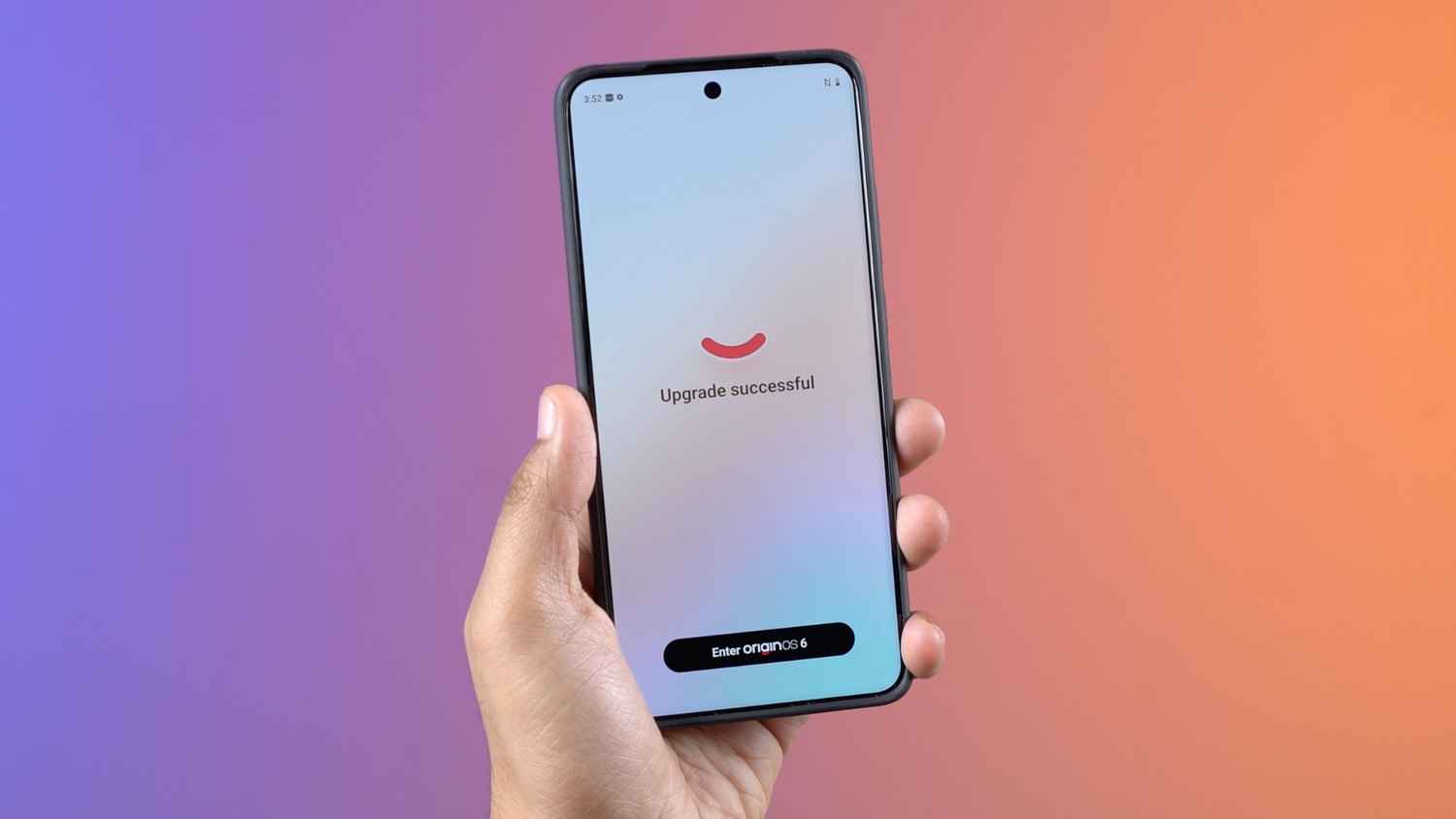

There’s something poetic about the way Vivo is trying to talk about software these days. For years, Vivo built hardware that looked and felt premium, but when you unlocked the screen, the illusion often slipped. Funtouch OS was fast, packed with features, but too fragmented and cluttered to feel like a unified experience. It worked, yes, but it never flowed. With OriginOS 6, Vivo seems to be doing something it rarely gets credit for: slowing down, listening and rebuilding its foundation. We sat down with Vivo’s product team to pick their brain on this new direction they’re taking with the OriginOS.
 Survey
From Choice to Originality
Vivo’s transition from Funtouch OS to Origin OS has been a long time coming. It was launched four years ago primarily for phones in China and this year it’s being extended to international markets.
“This shift is based on consumer need,” a vivo spokesperson told me. “People are no longer choosing just hardware — they’re choosing the overall experience in which OS plays an important role.”
He compared it to buying a car. “When people enter a car now, they don’t start by asking how many seats it has. They talk about the experience. The same applies to smartphones. The in-cabin experience matters more than the engine.”
In other words, Vivo isn’t chasing specs anymore, it’s about mood, response, and rhythm. The company has realised that India’s smartphone users have matured. Many of them are on their third or fourth device, and they now want their devices to feel premium, not just look premium.
Defining Smoothness: The Feeling You Can’t Benchmark
OriginOS 6 arrives under the banner “Smooth at Origin.” It’s easy to dismiss that as another marketing slogan until you hear how Vivo defines “smooth.”
“Smoothness is an experience. And experience is a feeling. You can’t compare it quantitatively, you can only compare it to what you felt before,” he said.
He spoke about the modern user juggling everything at once: booking a cab, ordering dinner, paying bills, all while expecting their phone to keep up seamlessly. “We’ve benchmarked not against competitors, but against consumer expectations,” he said. “That’s where smoothness begins.”
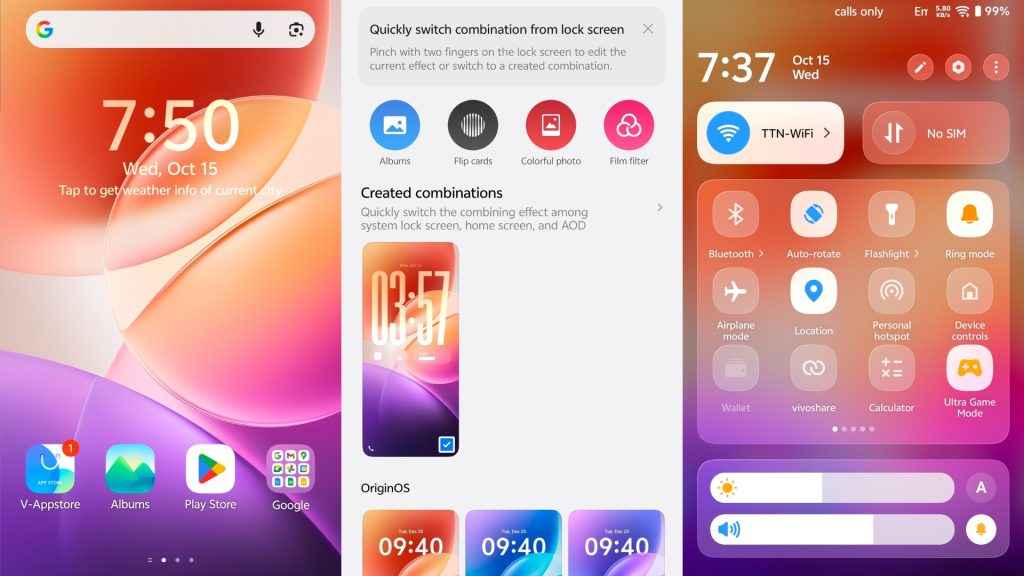
Spend time with OriginOS 6, and you start to see what he means. The real measure of performance isn’t in frame rates or launch times, but in the absence of friction. Swiping through the control centre or juggling multiple apps feels less like navigating menus and more like gliding across one continuous surface.
From Fixing Pain Points to Anticipating the Future
When I mentioned that OriginOS 6 feels intentionally calmer in use, they said, “It’s not just about fixing the pain points. We have to balance what’s relevant today and what’s coming next.”
That’s where the software’s subtle integration of AI comes in. Vivo’s approach to intelligence feels almost understated. Rather than flaunting features, it focuses on moments and actions. “AI should help you relive memories or make work easier, not overwhelm you,” he explained.
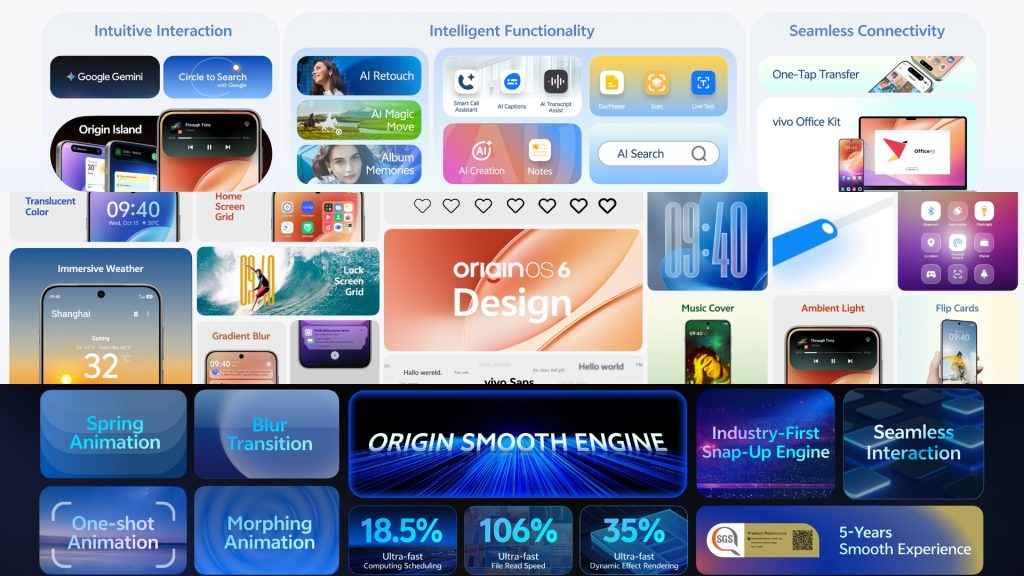
He broke AI usage into two main categories: creativity and productivity. “In photos, AI helps you customise what’s inside the frame, change lighting, background, or mood. In productivity, it’s about speed and accuracy, converting speech to text, summarising meetings. Those are tangible improvements, not gimmicks.”
In OriginOS 6, intelligence just quietly shows up when needed. Whether it’s the Notes app summarising your thoughts or the gallery suggesting subtle edits, vivo’s AI feels less like a feature and more like a habit forming in the background.
User Orientation as a Core Principle
My conversation with Vivo’s product team kept circling back to one phrase: user orientation.
“We try to identify the scenarios where vivo can provide the best experience,” they said. “Whether it’s through design, innovation, or understanding what’s next. Everything branches out of that.”
The new portrait filters that mimic Indian wedding styles, or the Diwali themes that light up your lock screen, aren’t just localisation efforts; it’s about emotional relevance.
“Premium experience,” he added, “isn’t niche anymore. It’s better for more people now. The definition has evolved.”
He illustrated it with an interesting analogy:
“When someone buys a Rs 20,000 phone today, they still want it to look and feel premium. They may not buy a Mercedes, but they expect their car, or phone, to give them that sense of pride.”
That, he said, is why features like finish, lighting, even the design of a camera ring matter. They’re tiny details that signal care. “Everyone wants to express themselves on Instagram, in life. Premium is no longer a luxury; it’s a language.”
AI Without the Fatigue
By now, even the word “AI” feels exhausted. Every brand, every OS, every app claims to have it. But for vivo, he claimed, AI is just one part of a larger story. “You can’t build an experience around just AI. Smoothness and design intuitiveness can’t be replaced,” he said.
What’s refreshing here is that vivo is positioning AI as an ingredient, one that makes the whole dish more digestible. “Consumers don’t care about how many AI features you have,” he added. “They care whether those features enable them to do things better.”
Clean Slate, Not Clean Install
Ask anyone who’s used a Vivo phone before, and one gripe comes up instantly: bloatware. Vivo knows this. And for once, it’s not defensive about it. “People have expectations that the OS should feel clean but still offer customization,” he admitted. “With OriginOS, we’ve addressed that pain point.”
My early beta experience with OriginOS shows improvement in clutter and notification management. Even small annoyances, like intrusive alerts from preloaded apps, are being reviewed before the public release.
The Road Ahead
When asked what OriginOS 6 means for vivo’s future, he said. “It’s a continuation. Every version, from Funtouch OS 14 to 15, has been part of the same journey, step by step. Now it’s about scale.”
And as for what he wants users to feel when they use OriginOS 6? His answer was simple:
“Premium is no longer a niche word. It’s better for more people now. Everyone wants something that feels refined, expressive, and proud.”
That, perhaps, is the essence of what vivo is trying to communicate. Not revolution, not reinvention, but refinement. A step toward aligning its software with the elegance of its hardware, and its philosophy with the rhythm of its users’ lives.
In the past few weeks of using the OriginOS beta, I’ve realised OriginOS 6 isn’t Vivo’s comeback story, it’s its coming-of-age. It’s a company finally learning to slow down, to stop measuring its worth in numbers and start expressing it in feel. “Smoothness,” as Vivo calls it, might just be the art of letting technology breathe again.