
Top 5 Camera Phones We Tested in 2026: Our picks for the best camera smartphones
 Follow Us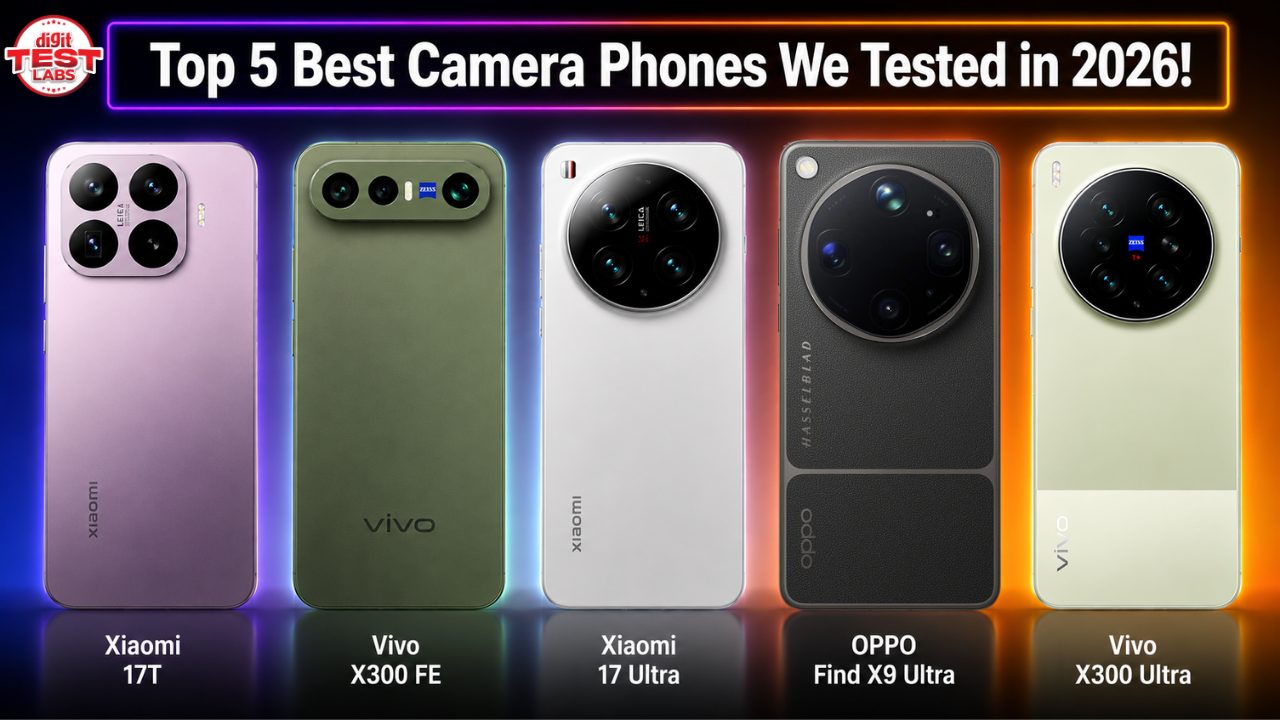

If 2026 has taught us anything, it’s that the smartphone camera wars are far from over because brands like Vivo, Oppo and Xiaomi all went all in this year, and if you’ve been following our reviews, you already know how competitive things have gotten. We’ve spent the last few months on some of the most camera-first flagships to launch in India and took these devices and shot everywhere from Rishikesh and Dharamshala to an IPL match, and in one case, we shot an entire short film. Now we’ve put five of the best camera phones of the year through our full review process, purely on the one thing that matters most here the cameras. We considered the Digit camera scores, which combine the rear camera and the selfie camera, alongside everything we experienced shooting on each of these phones in the real world. So, here are the five best camera phones we’ve tested in 2026.
 Survey
Vivo X300 Ultra
Topping our list is the Vivo X300 Ultra, and if you’ve read our full review, you already know why. This is not just a phone with a good camera; it’s a proper, fully loaded setup, and it shows the moment you start shooting with it.
On the camera front, you get full manual control in Pro mode, complete with LOG shooting, and a genuinely useful spread of focal lengths: 14mm, 35mm, 85mm, 170mm and 230mm. These are the focal lengths that you actually end up using each of them, depending on the shot. Portraits are where the X300 Ultra shines the most: skin tones look natural, background separation is clean, and there is a certain character to the images that is hard to put into words until you see it yourself.
Zoom holds up impressively well too, and general daylight shots are sharp with excellent dynamic range, the kind where you rarely have to second-guess a shot before you take it. Vivo even sells a Photographer kit for this phone in India. However, Vivo also sent us the Pro Video Rig, and we used that exact setup to shoot an entire short film on the X300 Ultra.
With a Digit rear camera score of 103, the highest of the five, and 40.8 for the selfie shooter, the X300 Ultra is easily the most complete camera flagship we tested all year. At over Rs 1.5 lakh, it isn’t cheap, but if the camera is your top priority, this is the one to buy.
Also read full review: Vivo X300 Ultra review: Raising the bar for what a flagship should be in 2026
Oppo Find X9 Ultra
Right behind Vivo X300 Ultra is the Oppo Find X9 Ultra, and this one deserves a special mention for having the best selfie camera on this list. Backed by a 50MP autofocus sensor, it pulls in sharp facial detail and handles edge detection really well; hence, it got the highest Digit selfie score of 41.2.
On the rear, Oppo’s Hasselblad-tuned system is led by a 200MP 1/1.12-inch main sensor, and the star of the show is the world’s first 50MP 10x optical telephoto lens-yes, optical, not just any marketing gimmick. We shot with it everywhere from the mountains in Dharamshala to an IPL match, and even at 30x zoom, details like the tattoo details of Virat Kohli and grass texture were still visible.
Portraits are arguably where this phone earns its Ultra badge the most: the edge detection is some of the best we have seen on any smartphone, and the bokeh looks so natural and creamy. The one con is that faces tend to brighten up slightly across shooting conditions, on the rear and the selfie camera both, something Oppo could fix with a software update.
At Rs 1,69,999, with a Digit rear camera score of 102, the Find X9 Ultra is a phone for people who want a proper zoom lens and don’t want to compromise on selfies either.
Also read full review: Oppo Find X9 Ultra review: More camera than smartphone
Xiaomi 17 Ultra
In third place is the Xiaomi 17 Ultra, and honestly, this one might have the most technically ambitious camera system of the five. The 1-inch Light Fusion 1050L main sensor, paired with a fast f/1.67 Leica Summilux lens, pulls in more light and dynamic range than smaller sensors can fake in software, and it shows in low light especially, where twilight skies and warm artificial lighting retain the kind of subtle tonal gradients that most phones just crush.
The real showstopper, though, is the 200MP continuous optical zoom telephoto, which covers a 75-100mm equivalent range and lets you frame a subject at exactly 3.5x or 3.8x with full optical quality instead of settling for fixed focal lengths. Even the in-sensor 2x crop became our most-used focal length during testing, especially for food shots. If you’re shooting close subjects at 23mm, it introduces barrel distortion that subtly warps proportions.
Then there’s Leica’s colour science tying the whole system together, with the Authentic and Vibrant looks, plus a proper monochrome mode that feels genuinely artistic rather than a filter slapped on top.
With a Digit rear camera score of 102 and 38.7 for selfies, and a price of Rs 1,39,999, the Xiaomi 17 Ultra is the pick if you want the most versatile zoom range on a camera phone right now.
Also read full review: Xiaomi 17 Ultra long-term review: This is what ultra should mean
Xiaomi 17T
At number four is the Xiaomi 17T. This device is proof that you don’t need ‘Ultra’ pricing to get a genuinely good camera phone. Xiaomi 17T has a triple camera setup led by a 50MP Sony IMX906 primary sensor with OIS, alongside a 50MP telephoto with 5x optical zoom lens and a 12MP ultrawide camera.
You also get Leica’s tuning here, with Authentic and Vibrant colour profiles and dedicated portrait modes, and this is honestly where the 17T impressed us most. Background separation is good, skin tones stay natural, and edge detection around hair holds up well even in tricky portrait shots. Out of the camera, images lean towards punchy colours and elevated contrast, built for social media, and if you prefer something more restrained, the Leica Authentic mode delivers flatter, more natural tones instead.
In low-light shots, it falls a bit short; in the images, noise comes in, the white balance is on the warmer side, and the ultrawide camera lacks autofocus. At Rs 60,000, with a Digit rear camera score of 88, the Xiaomi 17T is for anyone who wants a proper Leica-tuned portrait camera without paying Ultra flagship money.
Also read full review: Xiaomi 17T Review: The return of fan-favourite formula
Vivo X300FE
Rounding out the list is the Vivo X300FE. Now, Vivo wants to give flagship camera DNA to a more compact, relatively accessible package. The triple camera setup is led by a 50MP Sony IMX921 primary sensor with OIS, paired with a 50MP Sony IMX882 telephoto and an 8MP ultra-wide, and the ZEISS partnership brings along multifocal portrait modes ranging from 23mm to 100mm.
On the camera front, the main sensor does most of the heavy lifting, and it does it well. The images come out sharp with strong dynamic range, and low-light shots hold up better than most phones in this segment, though colours occasionally lean towards oversaturation. The telephoto is reliable too, and interestingly, it often produces more natural-looking portraits than the phone’s own dedicated portrait mode.
The ultra-wide is the weaker side of the camera, with a noticeable drop in detail and dynamic range compared to the other two lenses, and zoom past 3x gets aggressive with its processing, sometimes leaving images looking a little too smoothed out.
Additionally, Vivo is also offering a Telephoto Extender Gen 2 lens to enhance your zoom photography. With a Digit rear camera score of 85 and 34 for selfies, the X300 FE is for anyone who wants a taste of Vivo’s flagship camera experience in a smaller, easier-to-hold phone.
Also read full review: Vivo X300 FE Review: Fan of this edition but…
Which one should you buy?
That’s our ranking of the five best camera phones we tested in 2026. If there’s one thing that stood out while putting this list together, it’s how much better zoom photography has gotten on flagship phones this year. Continuous optical zoom, dedicated long-range telephoto lenses and even teleconverter accessories are showing up across this list, and it shows in just how usable these cameras are at range.
If the camera is the only thing you care about, go with the Vivo X300 Ultra. If you want the best of both worlds, a stellar rear system and the best selfies on this list, the Oppo Find X9 Ultra is right there too. And if you’re not ready to spend Ultra flagship money, the Xiaomi 17T proves you don’t have to.


