
Samsung Galaxy Z Flip 7 vs Motorola Razr 60 Ultra: Which flip phone wins in 2025?
 Follow Us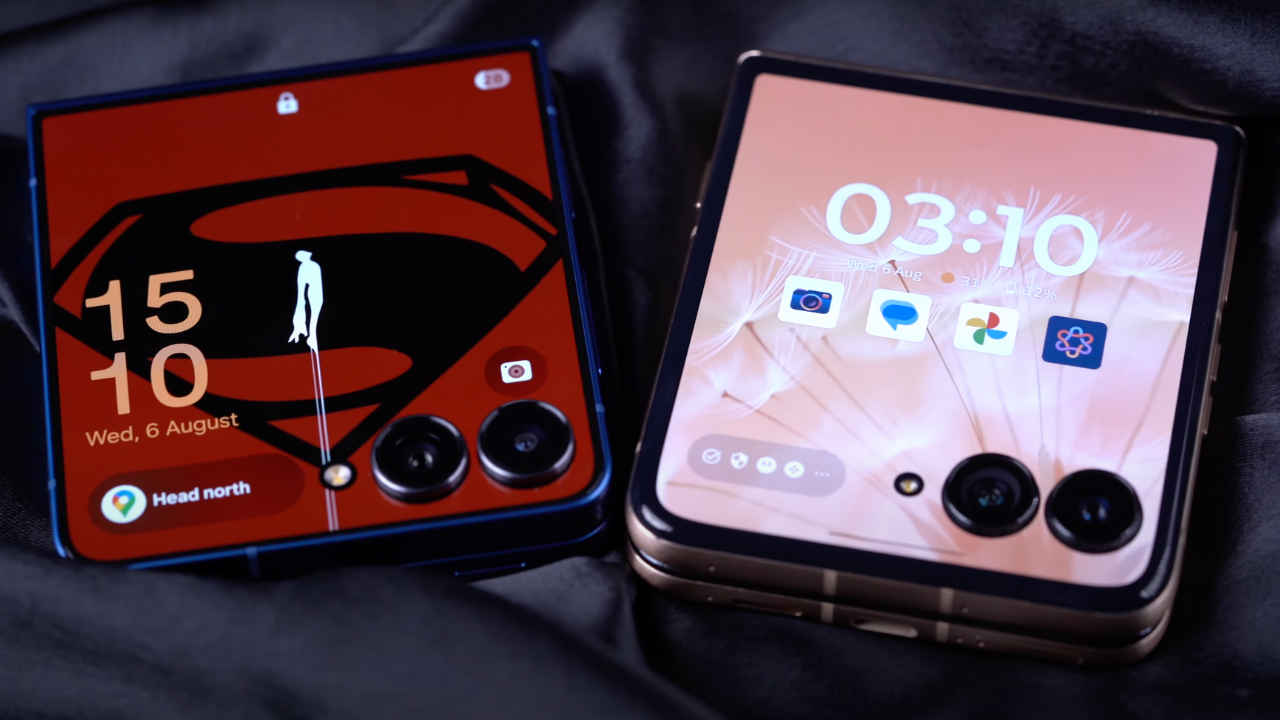

Foldable phones have gone through a remarkable transformation over the past few years. What was once a quirky, nostalgic design for those who missed the flip phones of the early 2000s has now evolved into a serious segment of the smartphone market. Today’s clamshell foldables are no longer just conversation starters; they are packed with high-end specs, premium build materials, and features that rival even the most powerful traditional smartphones. But still, I think foldable phones are more about experience than their benchmark scores and numbers.
 Survey
In 2025, two names dominate the conversation when it comes to clamshell foldables: Samsung and Motorola. Samsung has been refining its Flip series for years, pushing design polish and durability with each generation. The Galaxy Z Flip 7 (review) represents their latest evolution, promising a sleeker form, refined software, and a premium user experience. Motorola, on the other hand, has been playing the competitive game hard with its Razr series. The Razr 60 Ultra (review) is their boldest attempt yet, packing in top-tier hardware, aggressive display specs, and unmatched flexibility on the outer screen.
I’ve been using both the Galaxy Z Flip 7 and the Motorola Razr 60 Ultra side by side, flipping them open and shut dozens of times a day, testing their cameras in bright sunlight and low light, streaming videos, running benchmarks, and generally seeing how they hold up as daily drivers. This isn’t just about who makes the better foldable; it’s about which device gives you the better experience in 2025. Let’s break it down.
Samsung Galaxy Z Flip 7 vs Motorola Razr 60 Ultra: Design
Design is the first thing you notice about a foldable, and in clamshells, it’s even more important because you’re interacting with the hinge and folding mechanism multiple times a day.
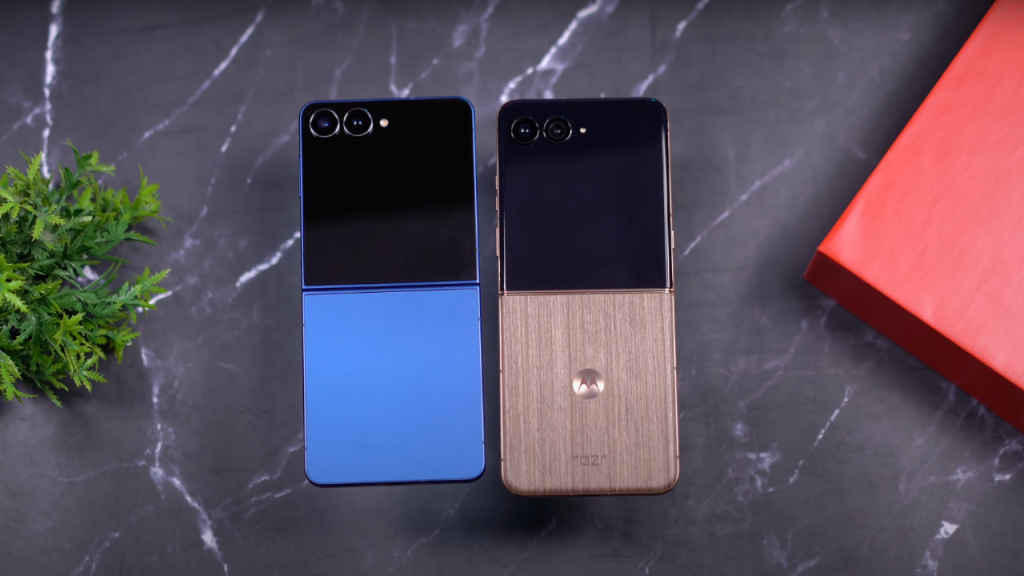
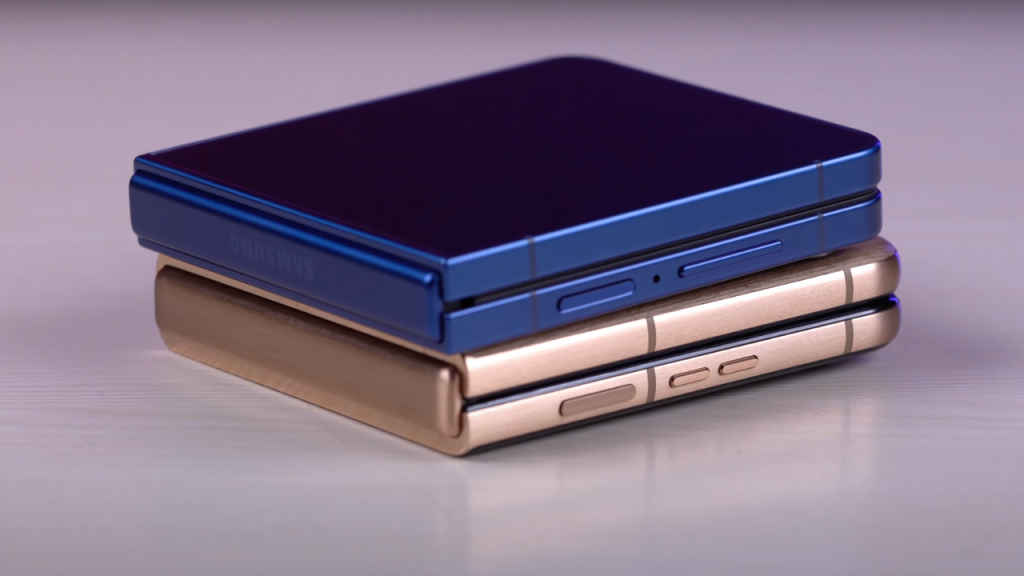
The Samsung Galaxy Z Flip 7 makes a strong first impression with its thin 6.5mm profile and feather-light 188-gram weight. Samsung uses Gorilla Glass Victus 2 for durability, pairs it with an IP48 rating for dust and water resistance, and has engineered the hinge so that it folds completely flat and there is no hinge gap at all. That sounds like a small detail, but it makes the phone look cleaner, prevents dust from settling in, and feels better in the pocket. The hinge also closes with a satisfying click, and the new blue colour option has serious head-turning appeal. Samsung’s design language here is all about sharp, tailored lines and polish. As I say, it’s the “suited and booted” flip phone.
The Motorola Razr 60 Ultra takes a slightly different approach. It’s thicker at 7.2mm and heavier at 199 grams, but it brings a reassuring heft to the hand. The use of Gorilla Glass Ceramic makes it feel solid, and the titanium-reinforced hinge adds extra confidence about its durability. It has the same IP48 rating, but the hinge here moves with a smoother, more relaxed action compared to Samsung’s tighter snap. Motorola also curves the edges slightly, making it comfortable to hold for longer periods. This design is less about precision tailoring and more about a sturdy, confident feel; think linen shirt versus tailored suit.
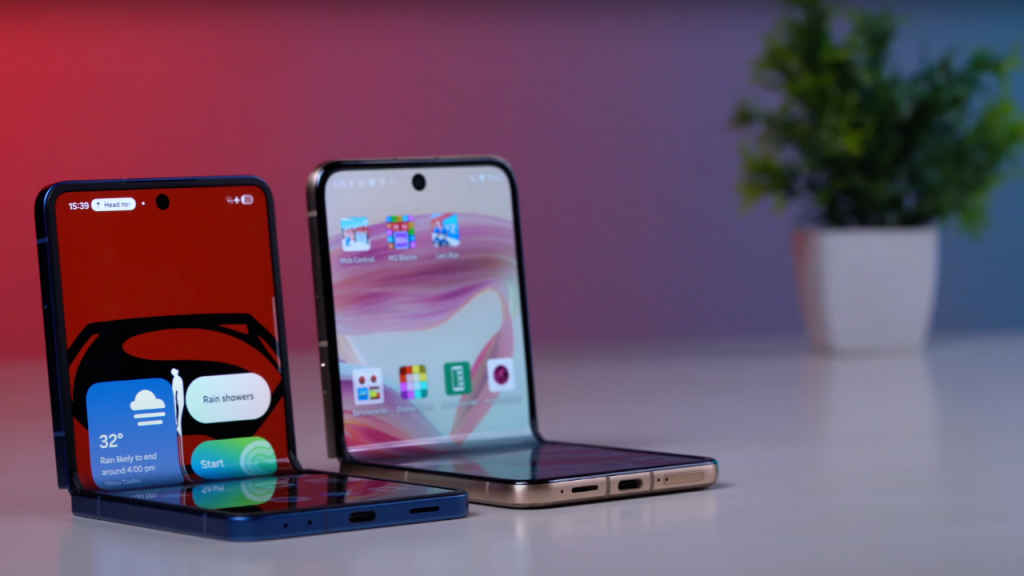
One major thing that adds a score in Samsung’s basket is the fact that when you open their clamshell, it does not turn into a phone with an awkward height, an issue I’ve had with the clamshells in the past. The 6.9-inch display feels like a proper phone and does not give that awkward in-hand feel, something I found missing with the Moto Razr 60.
If portability and a polished aesthetic are your priorities, the Galaxy Z Flip 7 has the edge. If you want a flip phone that feels rock-solid and built to last, the Razr 60 Ultra will win you over.
Samsung Galaxy Z Flip 7 vs Motorola Razr 60 Ultra: Outer display
The cover display is one of the biggest differentiators between these two devices because it affects how often you even need to open the phone.
On the Galaxy Z Flip 7, you get a 4.1-inch AMOLED panel with a 120Hz refresh rate. It’s flat, which allows for thin bezels, and it’s bright and crisp to look at. Samsung has polished the cover screen experience with OneUI 8, giving you clean animations, fluid transitions, and a premium interface. The catch? Functionality is limited. You can use widgets and a handful of selected apps like Maps and Music, but you can’t run just anything on it. And even for those apps, you will have to use them via the Good Lock app. Even after six generations of Flip phones, Samsung is still being conservative here.
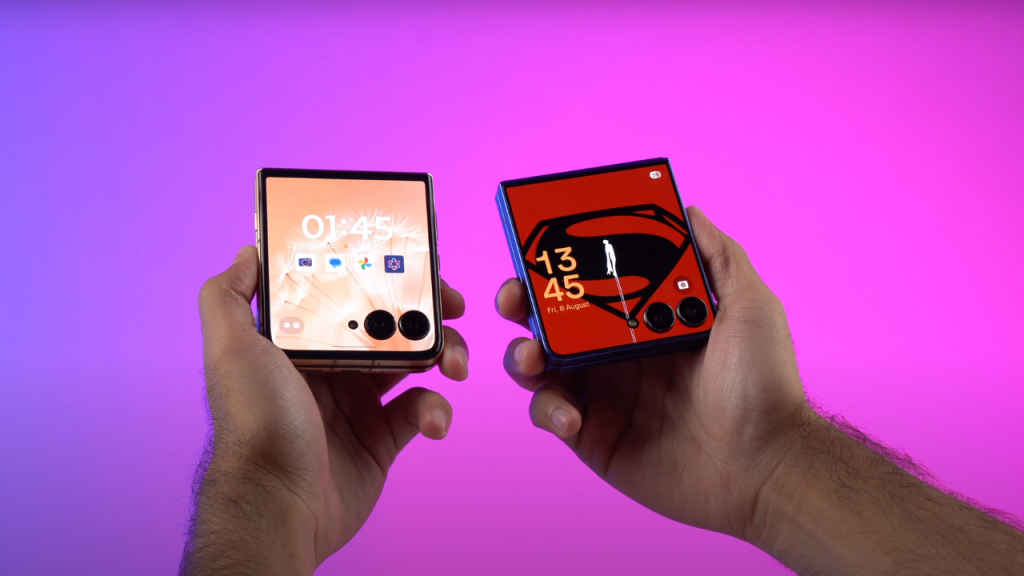
Motorola, on the other hand, gives you a 4-inch LTPO AMOLED outer screen with a 165Hz refresh rate, Dolby Vision, and HDR10+ support. LTPO means the display can adjust its refresh rate dynamically, ramping it up for smooth scrolling or dialling it down to save battery. But the real highlight is usability. The Razr 60 Ultra’s cover display is essentially a mini smartphone; you can run full apps, play games, and even run benchmarks without unfolding the phone. That kind of flexibility changes how you use the device entirely, and once you get used to it, it’s hard to go back.
Motorola clearly takes the lead for outer display capability, while Samsung’s is more about refinement and visual polish.
Samsung Galaxy Z Flip 7 vs Motorola Razr 60 Ultra: Main display
Open these devices up, and you’re greeted with two of the best foldable displays on the market.
Samsung fits the Flip 7 with a 6.9-inch FHD+ AMOLED panel running at 120Hz, capable of hitting 2610 nits of peak brightness and supporting HDR10+. Motorola’s Razr 60 Ultra stretches slightly larger to a 7-inch 1.5K AMOLED with a faster 165Hz refresh rate, 2640 nits peak brightness, HDR10+, and Dolby Vision support. On paper, Motorola wins the spec battle with higher resolution, higher refresh rate, and Dolby Vision.
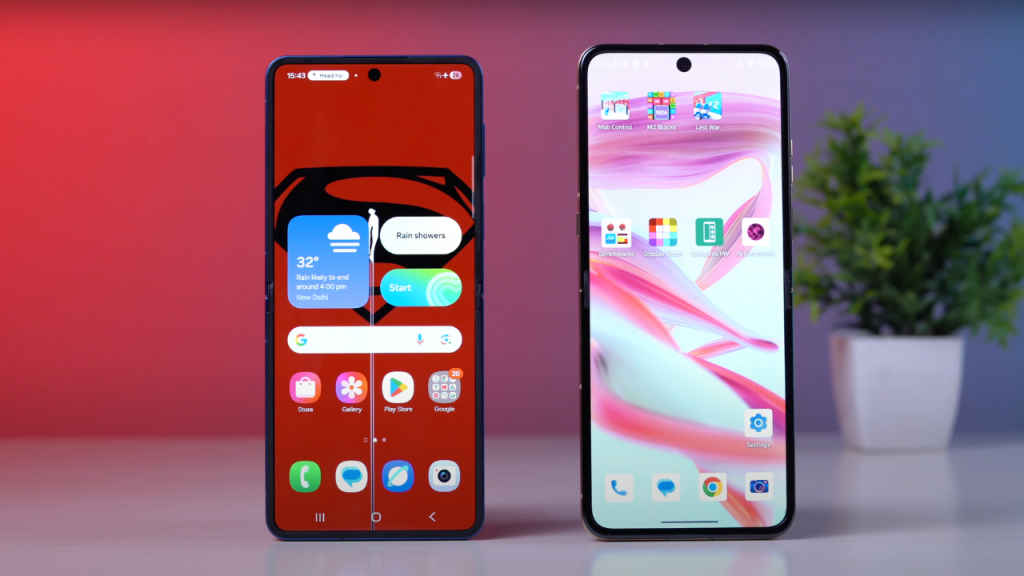
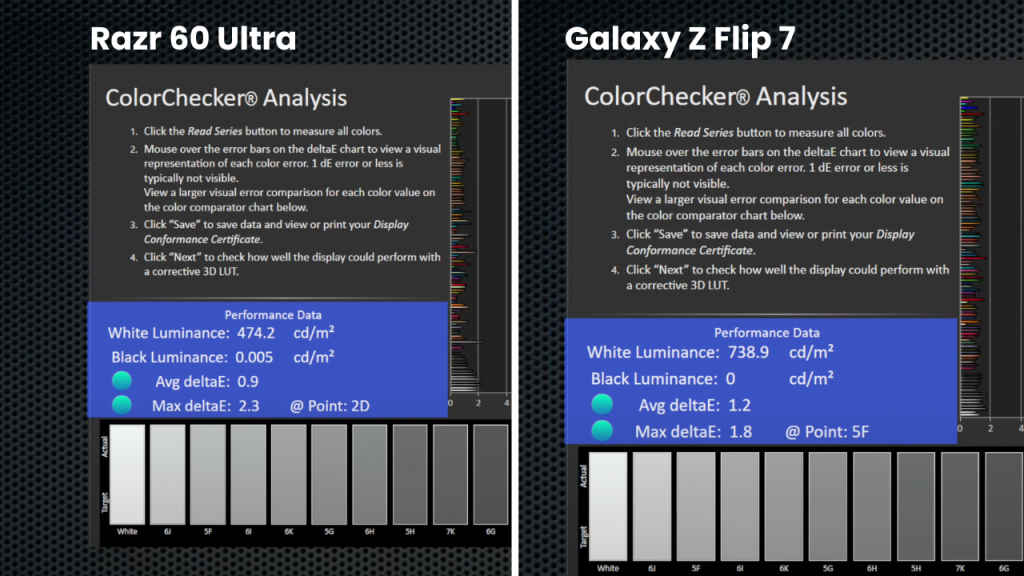
In practice, the difference in resolution isn’t dramatically visible in day-to-day use, but the extra smoothness from Motorola’s 165Hz refresh rate is noticeable, especially when scrolling quickly or gaming. In our brightness tests, both phones crossed 2600 nits in auto mode, making them excellent for outdoor use. In terms of colour accuracy, Motorola scored a delta E of 0.9 in our Calman test, while Samsung came in at 1.2. Both are very accurate, but Motorola edges ahead.
Both have loud stereo speakers, but Samsung’s haptic feedback is among the best on any foldable right now, making interactions feel more tactile and premium. And the 6.9-inch display on Samsung feels closer to our regular candy bar phones, just want to bring that point back. I am honestly very happy about it.
Samsung Galaxy Z Flip 7 vs Motorola Razr 60 Ultra: Performance and Software
Samsung uses its in-house Exynos 2500 chip in the Galaxy Z Flip 7. It’s paired with OneUI 8, which is fast, visually polished, and loaded with AI-powered features. Motorola opts for Qualcomm’s flagship Snapdragon 8 Elite chip in the Razr 60 Ultra, running MotoUI, which has a near-stock Android feel with minimal bloat.
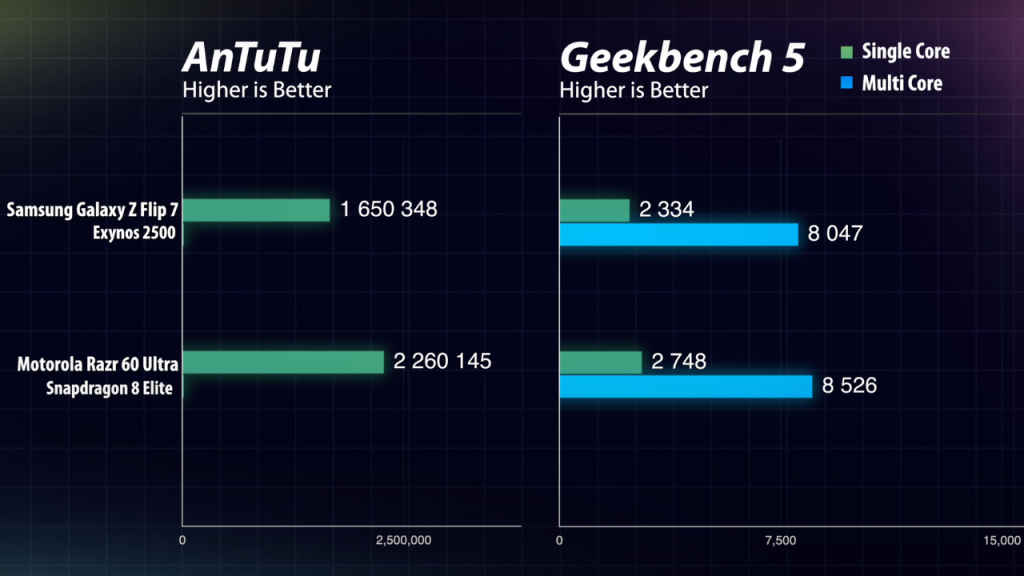
In benchmarks, the Snapdragon 8 Elite flexes its muscles, with the Razr 60 Ultra scoring significantly higher than the Flip 7 in both AnTuTu and Geekbench tests. This means Motorola has the edge in raw performance.
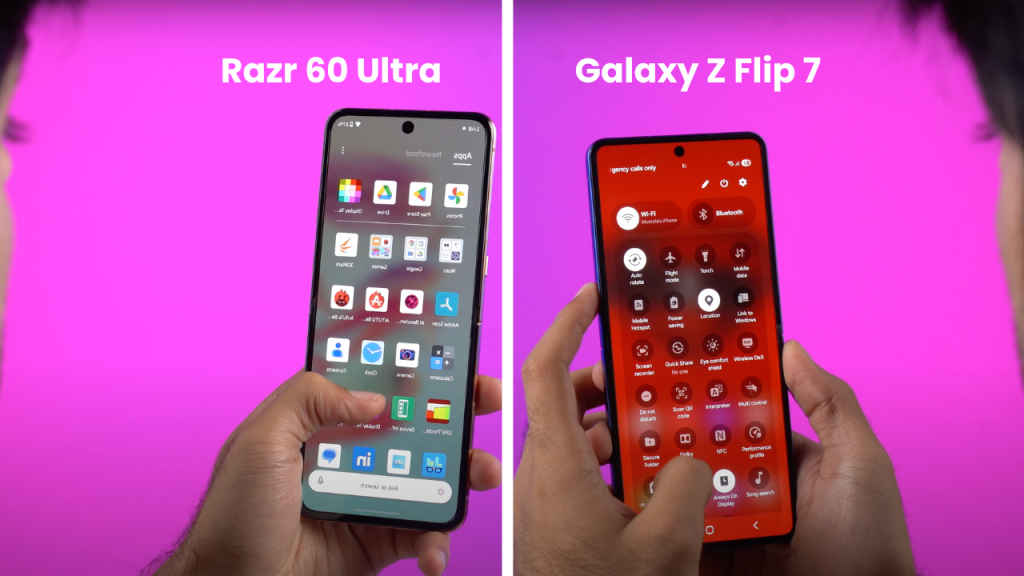
However, Samsung’s strength lies in consistency and longevity: it promises an industry-leading seven years of software and security updates, compared to Motorola’s three years of OS updates and four years of security patches. For anyone keeping a phone beyond the typical two- to three-year upgrade cycle, that’s a huge advantage.
Samsung Galaxy Z Flip 7 vs Motorola Razr 60 Ultra: Cameras
The Motorola Razr 60 Ultra features dual 50MP sensors, one for the main camera and one for the ultrawide, and can shoot up to 8K at 30fps. Samsung equips the Galaxy Z Flip 7 with a 50MP main and 12MP ultrawide camera, with video maxing out at 4K at 60fps.
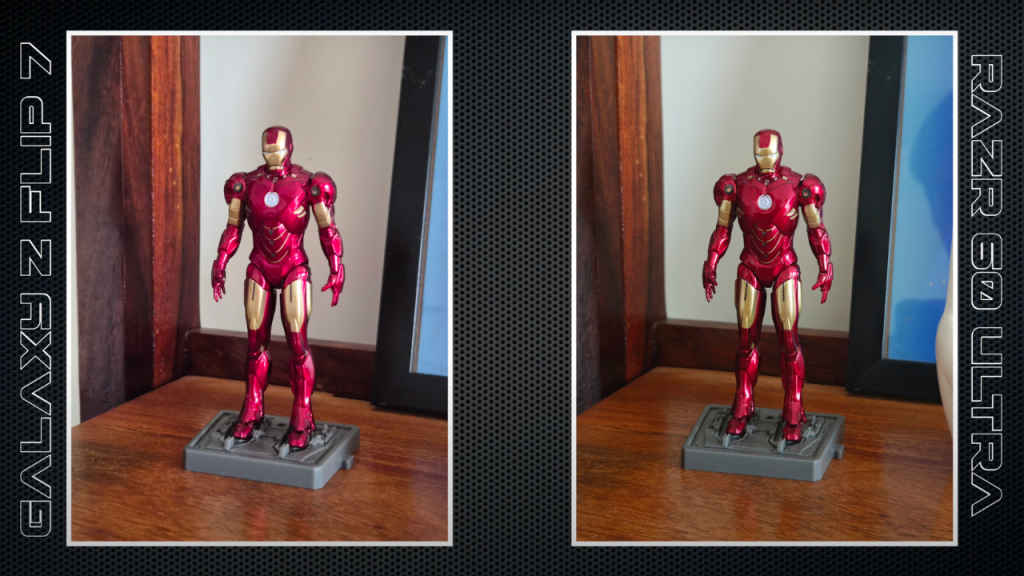



Motorola’s images tend toward warmer, more cinematic tones with a softer look. This gives photos a cosy and almost DSLR-like character, if we talk about portraits. For portraits, Motorola delivers creamier background blur, but Samsung nails subject separation and skin tones with greater accuracy. Samsung’s photos, by contrast, are sharper, with more accurate colours and better texture retention in highlights and shadows.
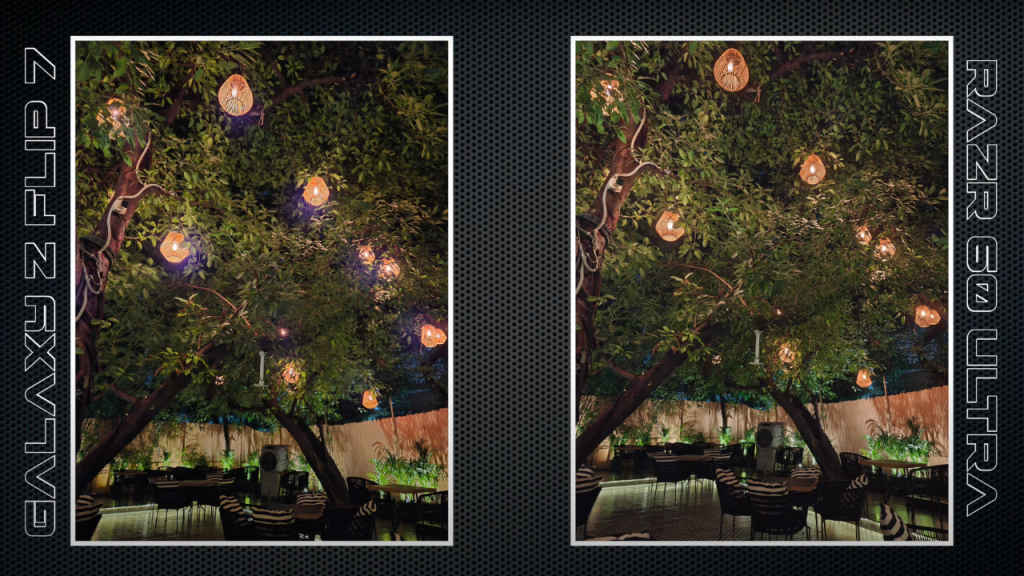

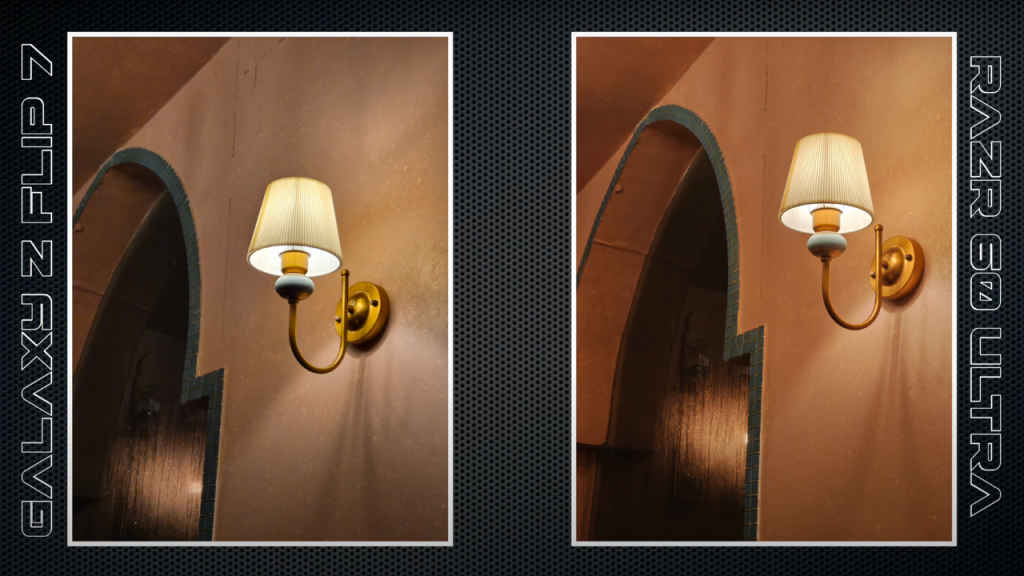
In low-light conditions, the Flip 7 keeps white balance consistent and retains fine details, while the Razr 60 Ultra controls noise well but smooths out textures and sometimes drifts towards yellow tones.
Samsung Galaxy Z Flip 7 vs Motorola Razr 60 Ultra: Battery and charging
Motorola pulls ahead in battery capacity with a 4700mAh cell, compared to Samsung’s 4300mAh. That translates to better standby time and slightly longer overall usage on a single charge. Charging is also faster on the Razr 60 Ultra, with 68W wired, 30W wireless, and 5W reverse wired support.
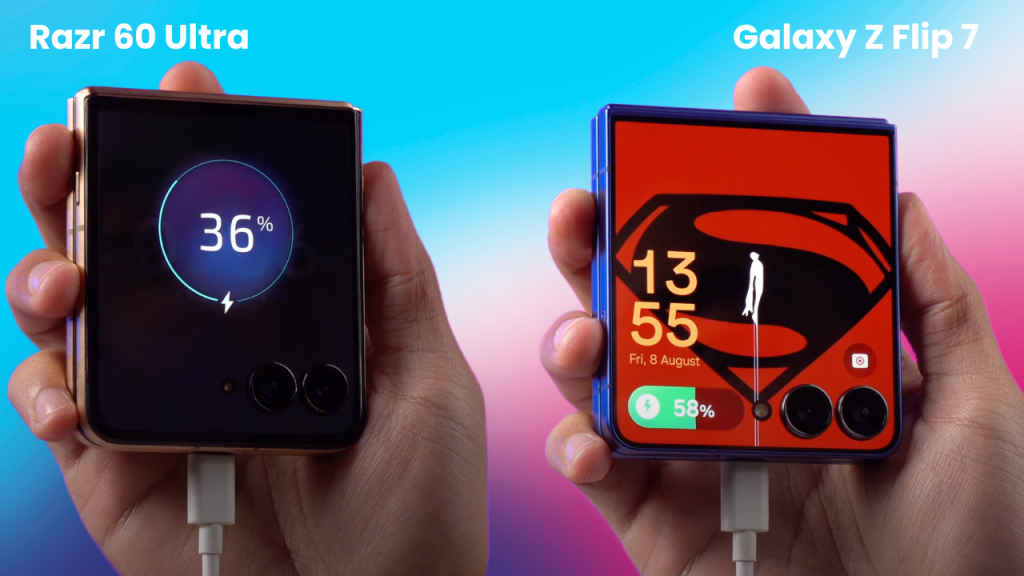
Samsung offers 25W wired charging, 15W wireless, and 4.5W reverse wired. While it’s slower to charge, Samsung’s support for reverse wireless charging gives it more versatility for topping up accessories like earbuds on the go. In day-to-day use, both last a full day, though the Flip 7 tends to drain a bit more overnight.
Final thoughts!
The Samsung Galaxy Z Flip 7 is all about polish, refinement, and long-term reliability. It’s slimmer, lighter, and more premium in hand, with a flawless hinge mechanism and the most refined foldable software experience on the market. It’s seven years of updates that ensure it stays relevant long after purchase.
The Motorola Razr 60 Ultra is for those who want maximum flexibility and raw performance. Its outer display is vastly more capable, its main screen is faster and more colour-accurate, its battery lasts longer, and its charging is significantly quicker. If you value hardware specs and the freedom to do more without opening the phone, it’s a better choice.
Ultimately, it comes down to priorities. If you want the “suited and booted” foldable that feels effortlessly premium and will age gracefully, go Samsung. If you want the power-packed, all-access flip phone with every spec pushed to the limit, go Motorola.


