
POCO F7 vs iQOO Neo 10 vs Moto Edge 60 Pro: One phone nails battery and performance at ₹29,999
 Follow Us

Smartphones that promise flagship-level performance without breaking the bank are nothing new. Yet every so often, a device comes along that genuinely redefines expectations for its price segment. The POCO F7 is one such phone, offering specifications that resemble a high-end wishlist: Snapdragon 8s Gen 4, a 7550mAh battery, LPDDR5X RAM, UFS 4.1 storage, and a premium build. True to its legacy, Poco positions it as a performance-focused device at an aggressive price point.
 Survey
To evaluate how well the POCO F7 delivers on that promise, we put it through a series of demanding tests in our Digit Test Labs. We compared its performance with two other notable devices in the same category: the iQOO Neo 10 and the Moto Edge 60 Pro. The goal was not just to examine benchmark scores or hardware specifications, but to assess whether the POCO F7 consistently delivers a strong experience in terms of performance, battery life, and day-to-day usability. Safe to say, the results exceeded our expectations.
POCO F7 Sets the Performance Benchmark
Let’s get this out of the way: The POCO F7 is fast. The kind of fast that makes everything feel just a little too easy. Whether it is opening a heavy app, jumping between tabs, or editing photos while music plays in the background. You don’t think twice because the phone doesn’t either.
Powered by the Snapdragon 8s Gen 4 processor, the Poco F7 leads in the benchmark scores and achieves an impressive AnTuTu score of over 2 million. POCO is offering UFS 4.1 storage and LPDDR5X RAM in the 12GB + 256GB variant priced at ₹29,999. That’s significant because with the iQOO Neo 10, this faster UFS 4.1 standard is only available in the top variant, which costs nearly ₹10,000 more. The variant you get for the same price as the POCO F7 comes with UFS 3.1 storage.
So, for similar performance, you’d have to shell out ₹10,000 extra if you go with the iQOO Neo 10. That gives the POCO F7 a clear edge in value!
Every day usage on the POCO F7 feels effortlessly smooth. Apps open with a snap, switching between heavy games and social media doesn’t cause stutter, and camera-to-gallery-to-editor workflows happen without lag. The phone maintains a sense of responsiveness that stays consistent even under load.

Gaming is where the POCO F7 really shines. During a two-hour gaming session, not only did the frame rates stay stable, but the device remained impressively cool to the touch. In our tests, the F7 peaked at 35.53°C, which is well within the comfort zone for long usage. The iQOO Neo 10, despite packing the same chipset, ran significantly hotter at 40.16°C. Better efficiency translates to less heat on your palms, better sustained frame rates, and a phone that isn’t constantly working to cool itself down.
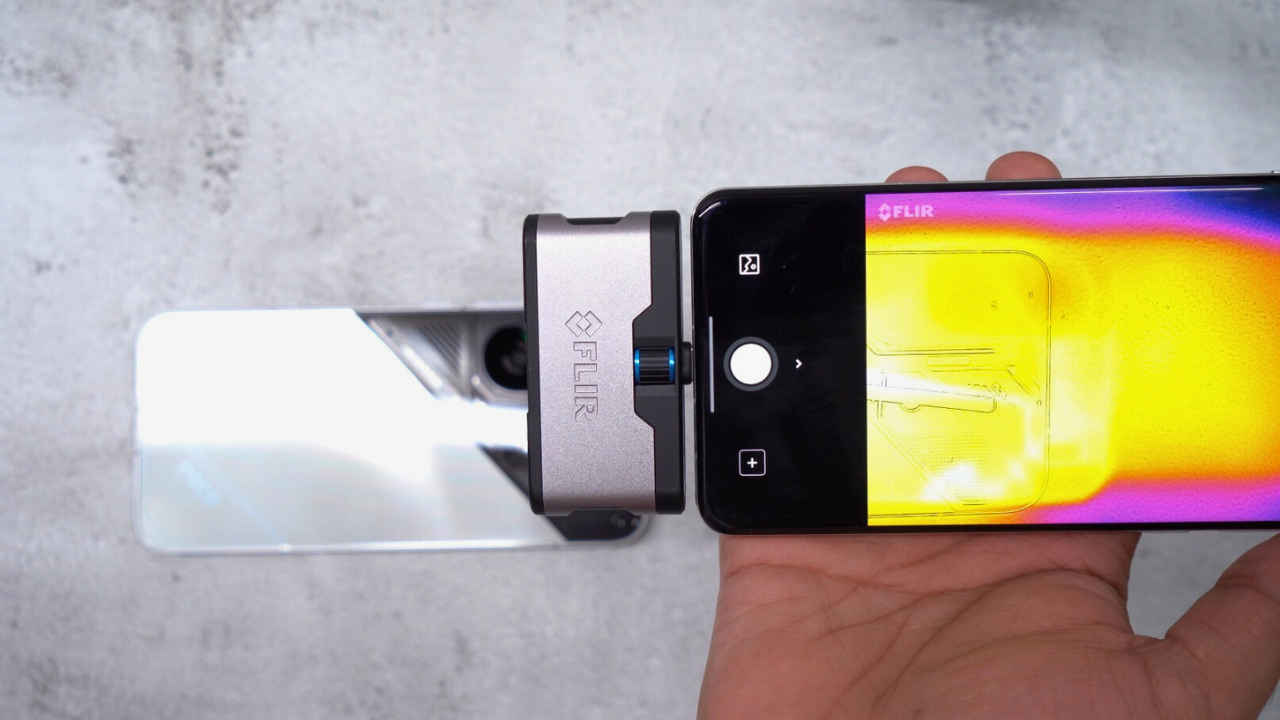
So, it’s not just about raw power. It’s how well that power is managed. The POCO F7’s IceLoop cooling system works silently in the background to maintain thermal balance, letting you play longer without performance throttling or battery drain spikes. Whether it was BGMI, Call of Duty Mobile, or Asphalt 9, the F7 delivered a consistently smooth experience that made gaming feel more immersive and less interrupted.
To cut it short, the POCO F7 is easily one of the most refined and capable performers you can buy under ₹30K.
Unmatched Battery Endurance
If battery life is a deal breaker for you, the POCO F7 makes that decision even easier. With its ultra-large 7550mAh Silicon Carbon battery, it comfortably delivered a screen-on time of 7 hours and 48 minutes in our extensive drain test. The test spanned a mix of activities, including gaming, extensive benchmarking, 4K video recording, streaming, and social media use. The iQOO Neo 10 lasted about 22 minutes less, while the Moto Edge 60 Pro, wrapped up nearly an hour earlier.
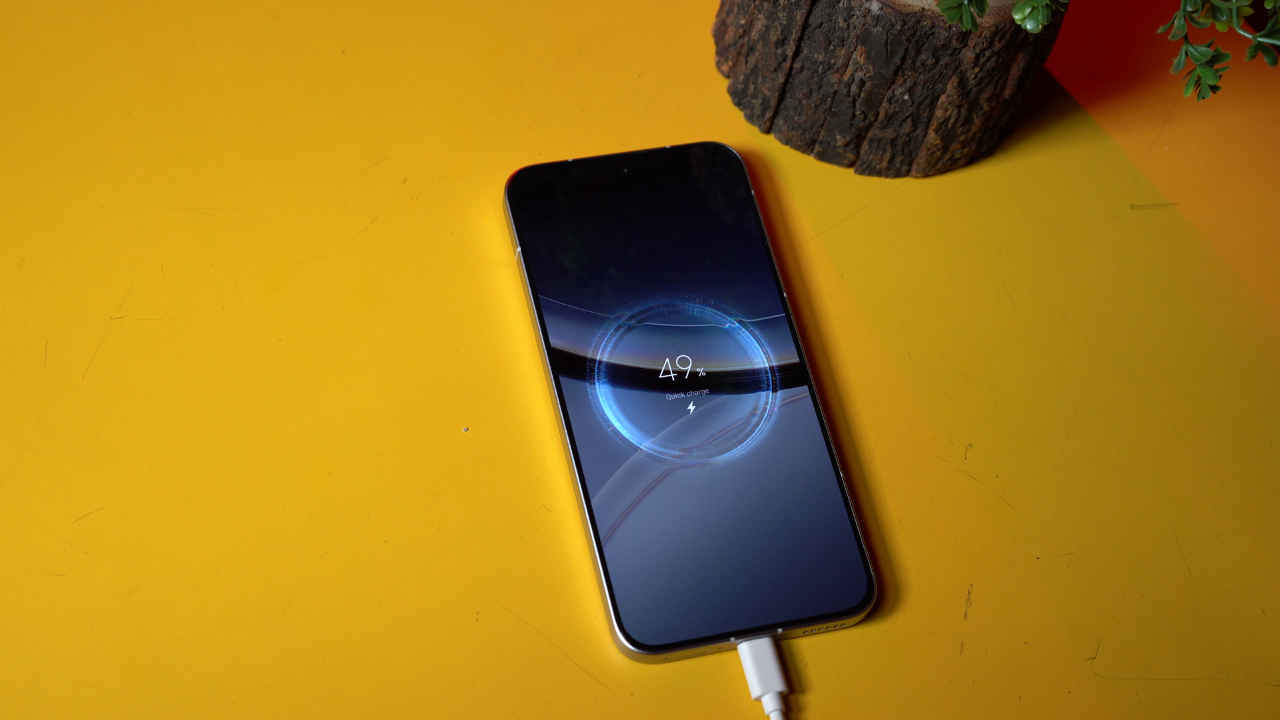
What makes this even more impressive is how evenly the POCO F7 consumed power across different tasks. It maintained steady efficiency during video playback, photo capture, gaming, and even social media browsing. This suggests a well-optimised power management system, not just a big battery slapped on. When it comes time to charge, the F7’s 90W fast charger gets the job done swiftly. And if you need to power up other devices, the phone supports 22.5W reverse charging as well and doubles as a power bank!
Design that balances brawn with polish
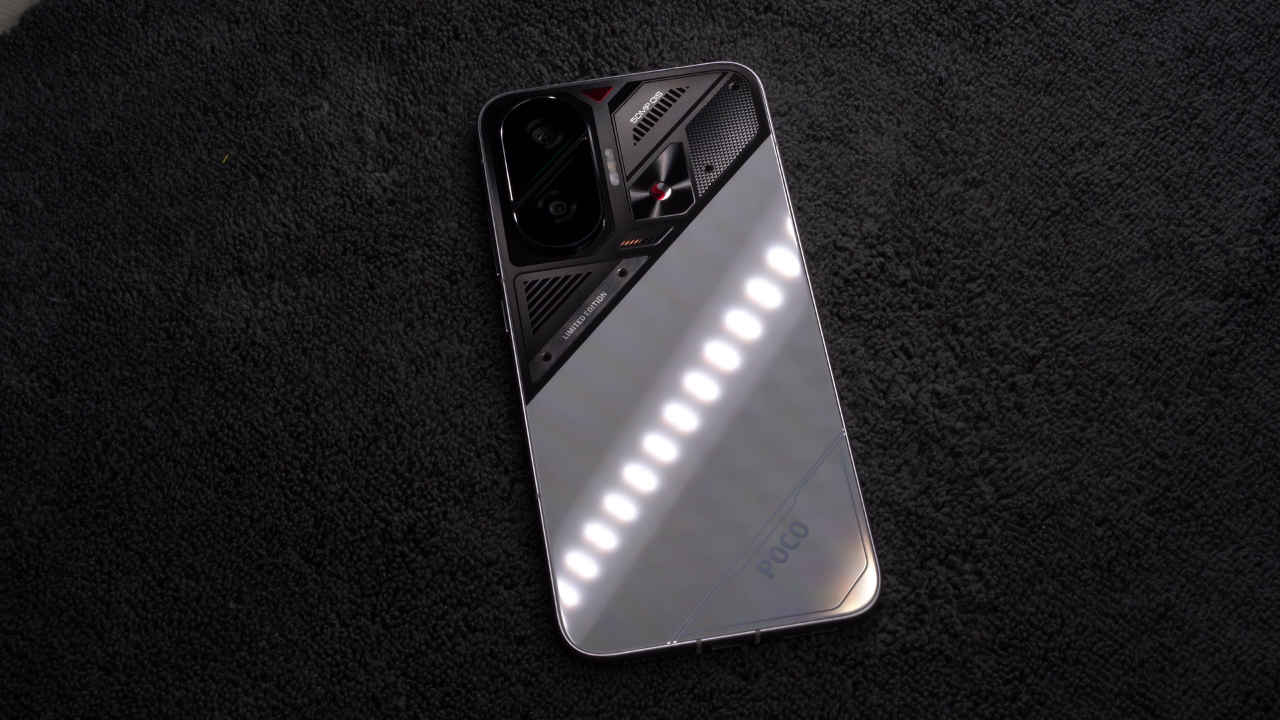
There’s a subtle art to making a phone feel premium without making it look like it’s trying too hard. The POCO F7 finds that balance. With a glass back, metal B-frame, and a camera deco that adds just enough flair, the F7 feels every bit as polished as devices that cost twice as much. But what really earns it points is how it combines that aesthetic with durability. Corning Gorilla Glass 7i on both front and back, IP69 dust and water resistance, and a surprisingly slim 7.98mm profile – even with that giant battery inside – make for a phone that’s not just nice to look at, but tough enough to handle everyday mishaps.
The 6.83-inch 1.5K AMOLED display is vibrant and responsive. It complements the build with high brightness, smooth 120Hz scrolling, and TÜV-certified eye protection. Whether you’re streaming late into the night or glued to a text thread all day, your eyes are less likely to protest. That’s the kind of feature you only notice when it’s missing and appreciate when it’s not.
A camera system that complements the package
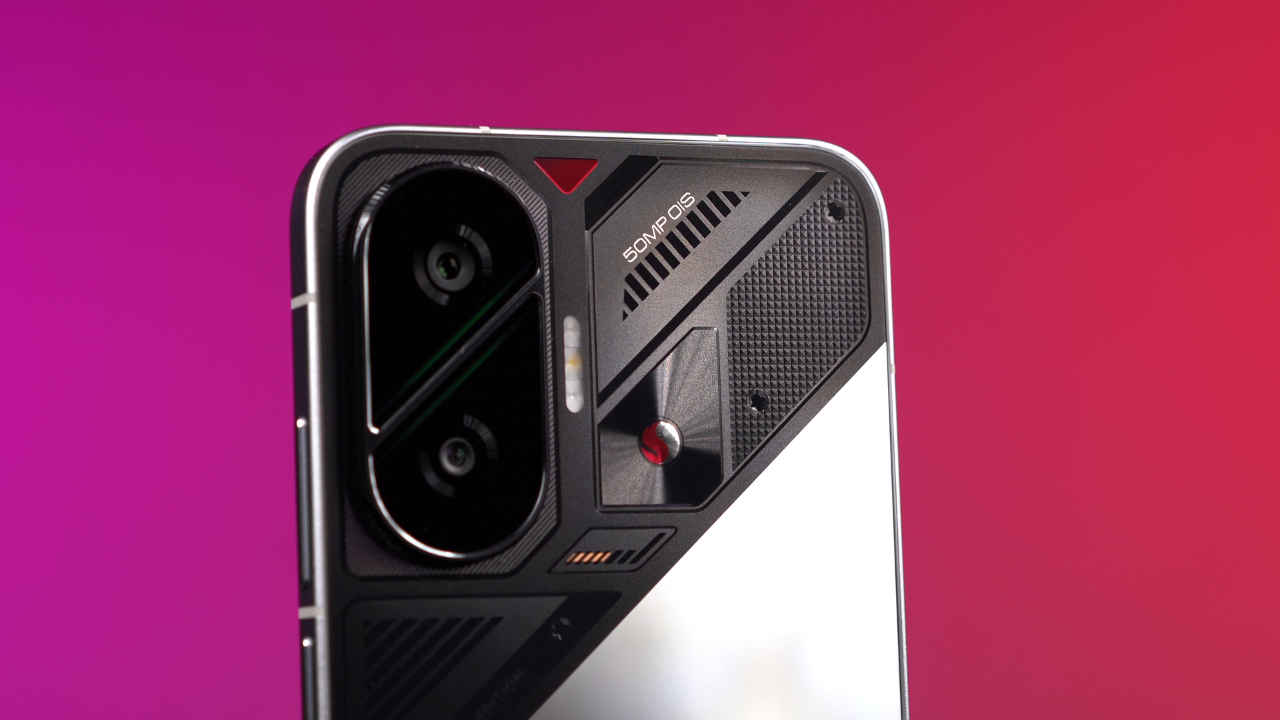
The POCO F7’s camera system doesn’t shout for attention, but it shows up where it counts. The 50MP IMX 882 main sensor with OIS handles everything from food shots to fast-moving street scenes with surprising clarity. Add an 8MP ultrawide and a 20MP selfie camera, and you’ve got a setup that’s versatile enough for most social media creators.
There’s also a sense of speed here. The camera app launches quickly, shutter lag is almost nonexistent, and the overall experience feels reliable or something you can count on, not second-guess. And that, really, is what matters most.
Why POCO F7 Emerges as the Smart Buy
The iQOO Neo 10 and Moto Edge 60 Pro are not bad devices. But they’re limited. The Neo 10 stumbles on thermal efficiency and lacks the latest memory tech, and its lower RAM configuration (8GB) at the same price as POCO’s 12GB model leaves less headroom for heavy users. The Moto Edge 60 Pro, on the other hand, can’t match up in processing capabilities and underwhelms in intensive tasks despite decent thermal control.
POCO F7, priced at ₹29,999 for the 12GB + 256GB variant, combines modern architecture with power efficiency and class-leading performance. It stays cooler under pressure, lasts longer in demanding usage scenarios, and charges faster with more utility. It also comes with design flourishes and build quality that feel more than just mid-range. Besides, when the rival iQOO Neo 10 asks for nearly ₹10,000 more for the similar performance, POCO’s offering becomes even harder to ignore.
If you’re a user evaluating your next smartphone based on real-world experience, whether you’re a gamer, creator, or just a heavy smartphone user, the POCO F7 is the clear choice. It isn’t just another mid-range phone with big promises. It delivers where it counts. And right now, there’s nothing else in its segment that matches its balance of power, endurance, and polish.


